English
 Español
Content
- What Defines 3D Textured Upholstery Fabric?
- Construction Methods Behind 3D Texture
- How 3D Textured Upholstery Fabric Performs in Daily Use
- Selecting 3D Textured Upholstery Fabric for Sofas, Chairs, and Curtains
- Manufacturing Quality Checks That Matter
- Maintenance and Its Effect on Longevity
- Frequently Asked Questions
A furniture workshop in northern China cut after-sales complaints by 34 percent in six months after switching its bed-sofa cover from a flat printed twill to a 3D textured upholstery fabric. The replacement, an embossed velvet with fleece backing, cost 12 percent more per meter but stopped the visible pilling that customers kept photographing under daylight. That trade-off, paying more for surface structure to avoid paying later for re-upholstery, is the core logic driving the shift toward three-dimensional upholstery textiles.
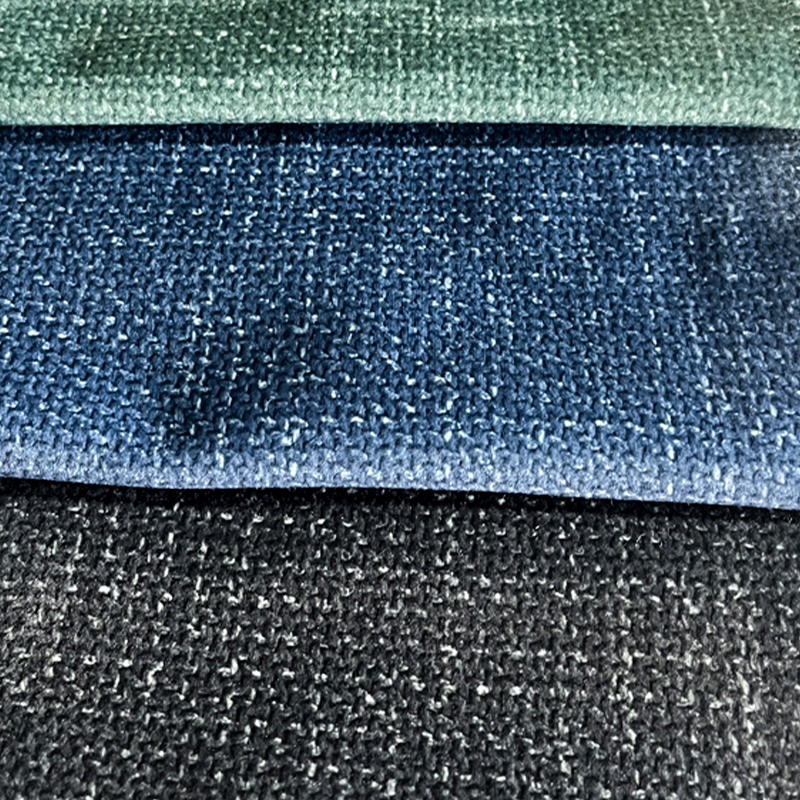
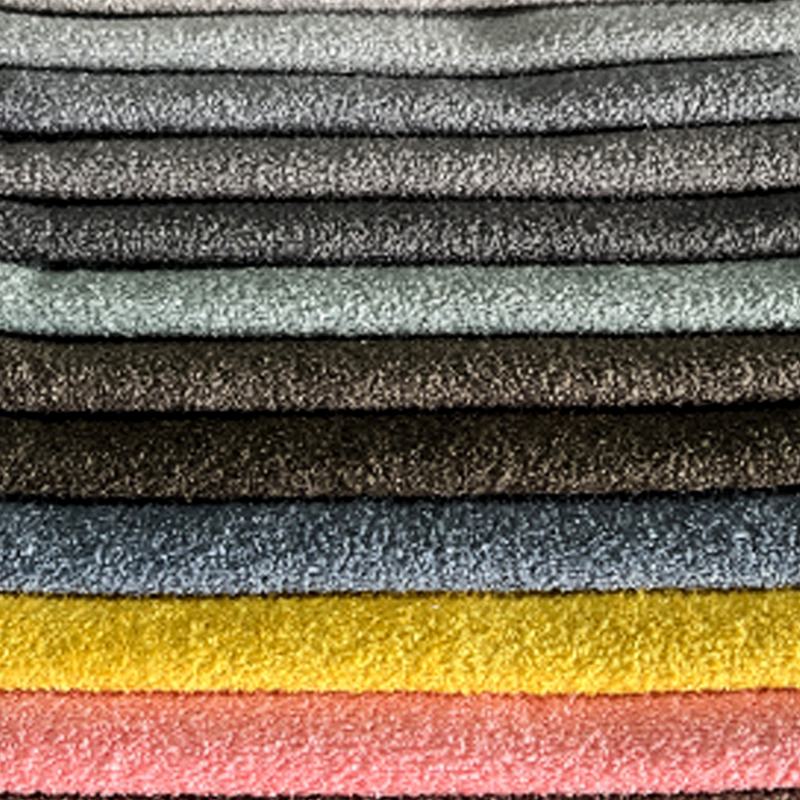
3D textured upholstery fabric is a furniture-grade textile whose raised surface, whether molded, looped, or ribbed, exists physically in the material rather than as a printed illusion. The texture changes abrasion behavior, light reflection, compression recovery, and how the fabric drapes over cushion edges. For furniture buyers, the practical question is not whether texture looks better, but which construction holds up in a specific application and at what cost.
What Defines 3D Textured Upholstery Fabric?
A fabric only qualifies as 3D textured upholstery fabric if its raised surface survives repeated compression and flexing without collapsing. A printed imitation of texture fails that test: the pattern sits on the surface, so any wear shows immediately. A genuine textured construction spreads contact stress across more fiber area, which is why it can outperform a same-weight flat fabric in abrasion tests.
The three construction families
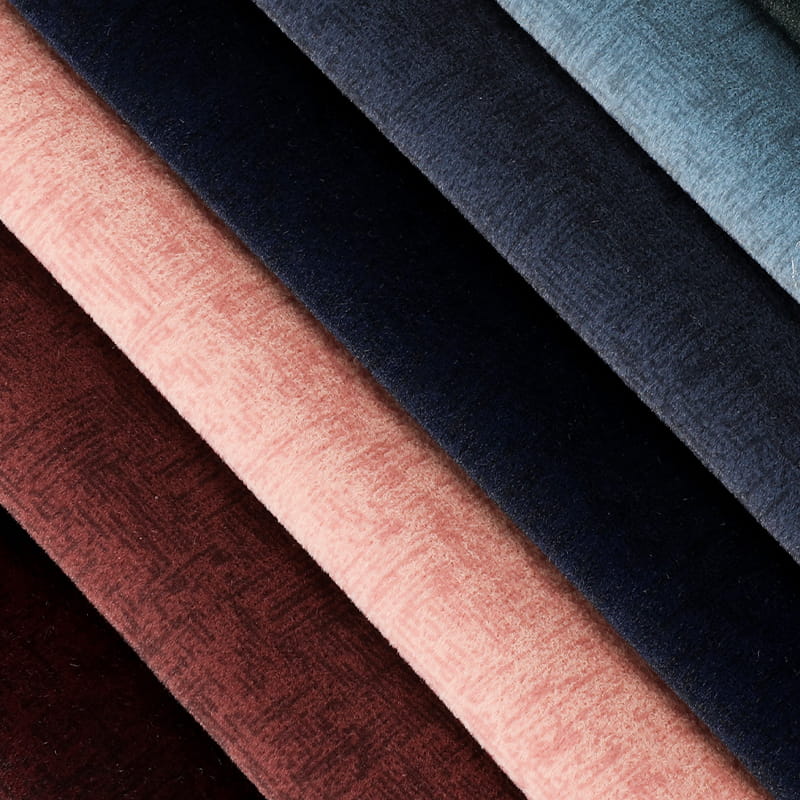
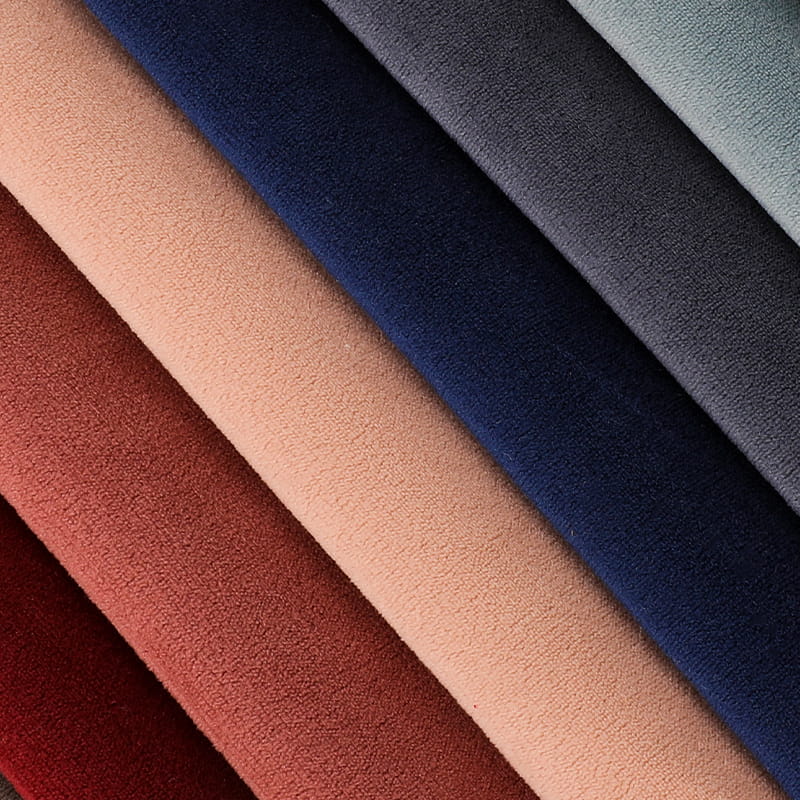
- Embossed pile fabrics: heated rollers press a pattern into velvet or suede surfaces; fiber type determines whether the pattern stays. Polyester holds embossing well, while looser cotton blends tend to flatten.
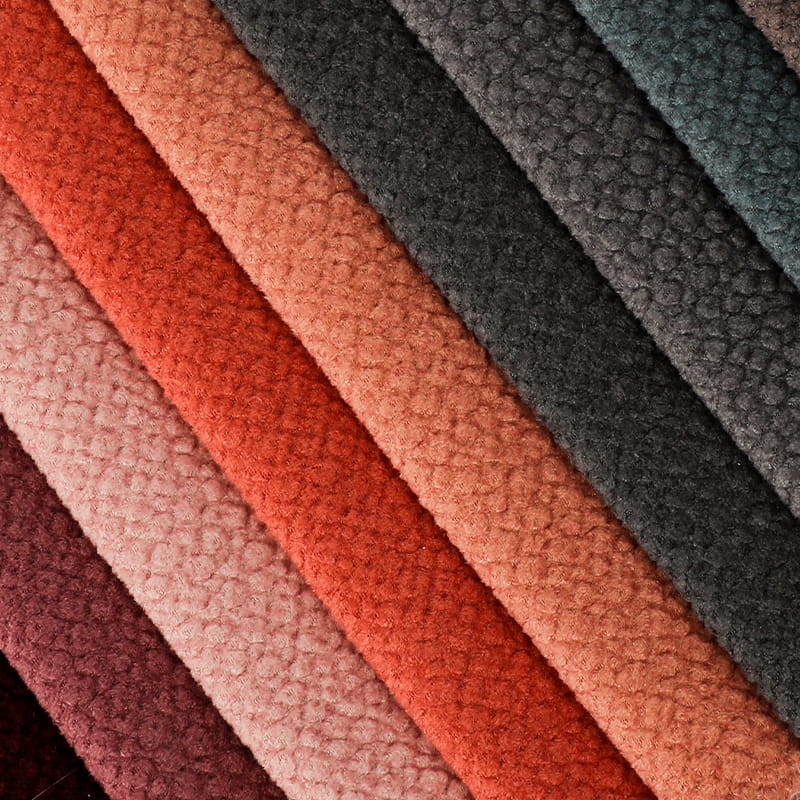
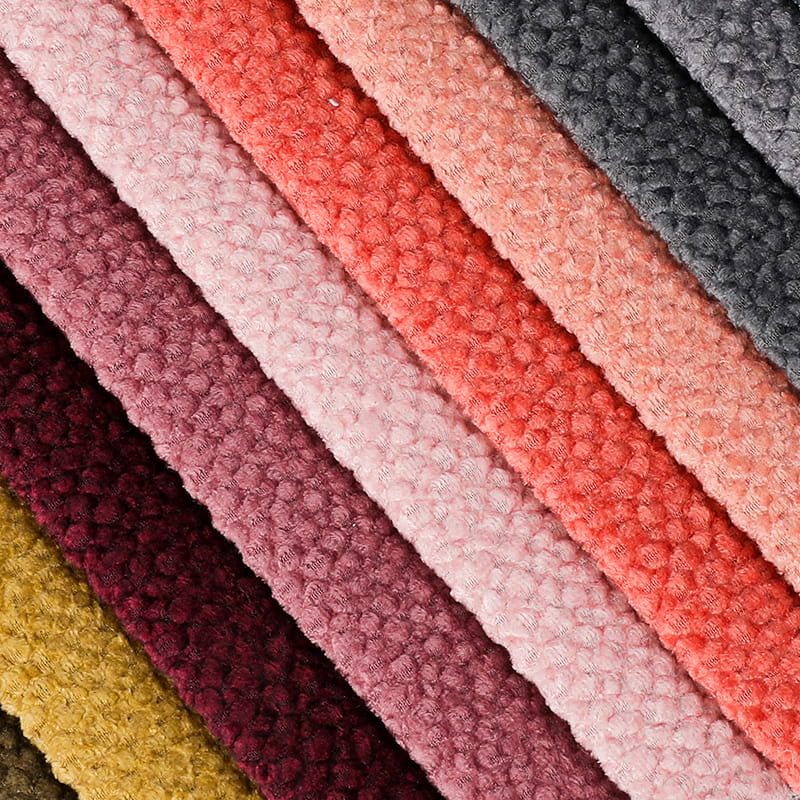
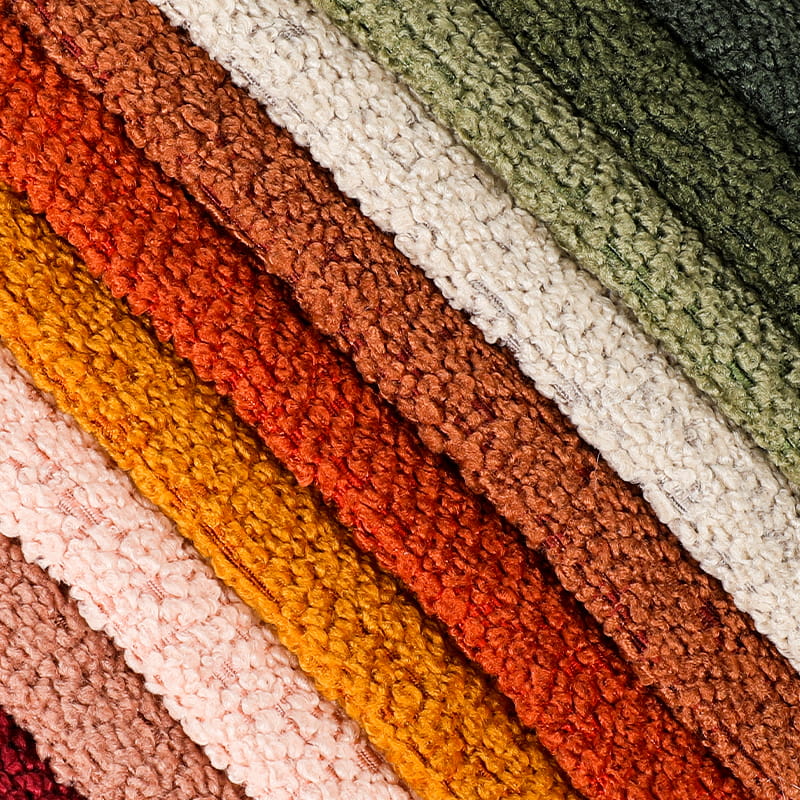
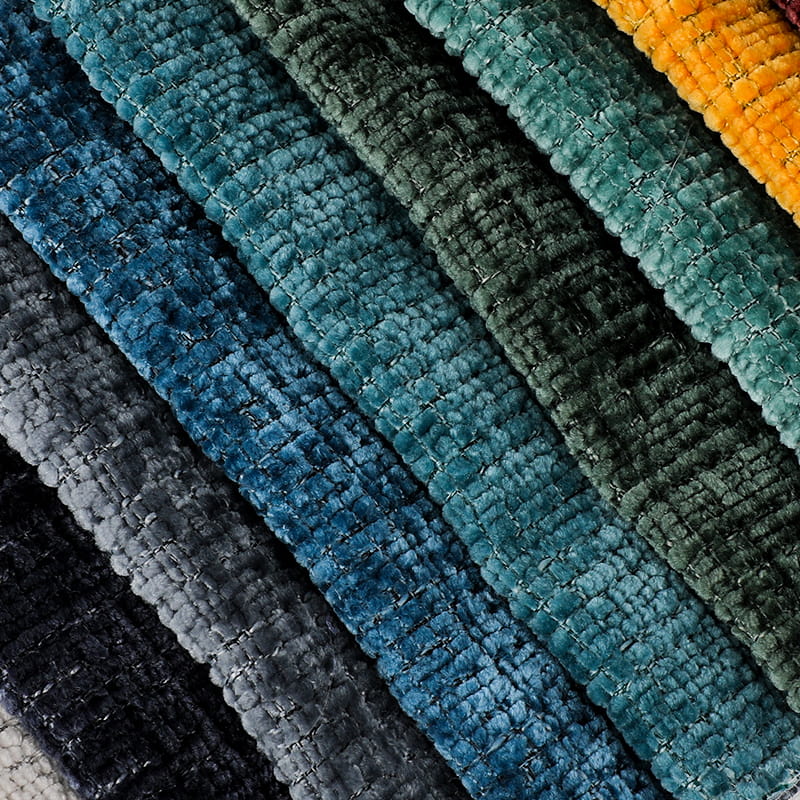
- Constructed textures: boucle loops, corduroy wales, and chenille ribs are formed during knitting, so the texture is part of the structure rather than a finish.
- Ultrasonic and bonding methods: sound waves cut and seal pile into grooves, creating patterns without heat distortion of the base cloth.
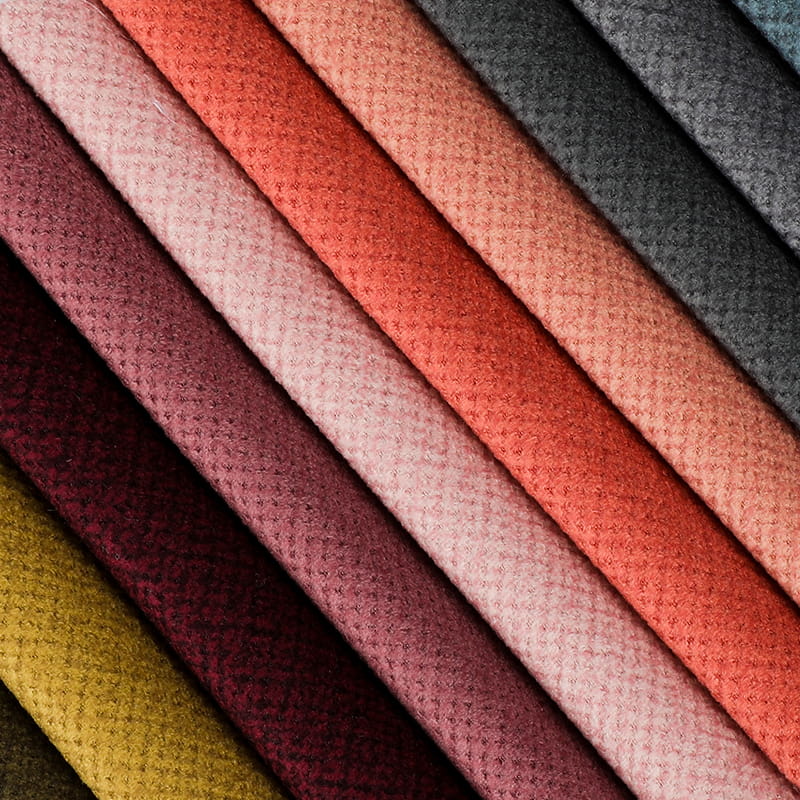
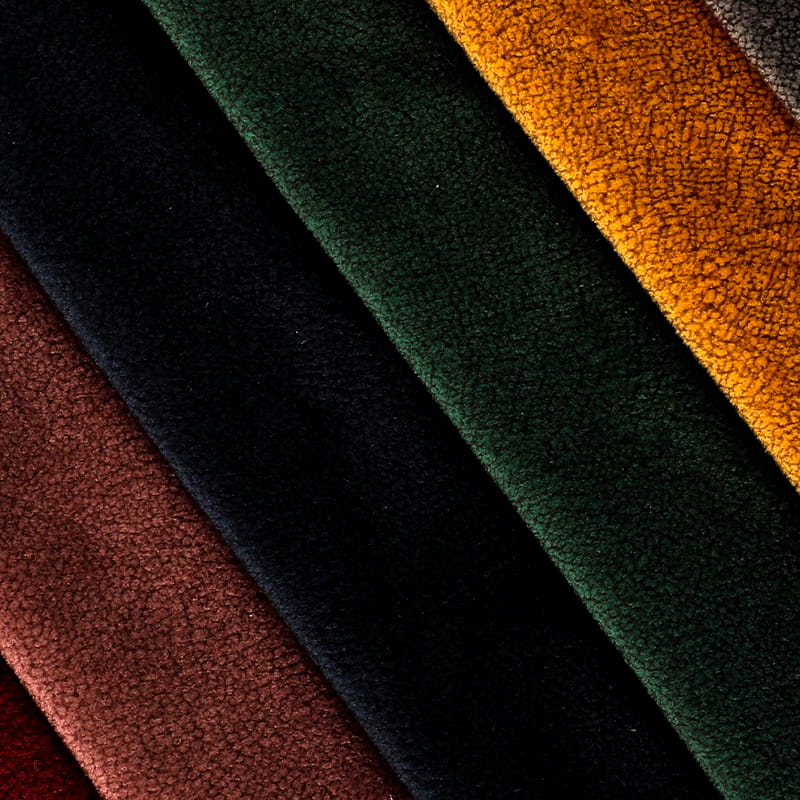
 Embossed Snowflake Velvet Upholstery Fabric with Genuine TextureThis velvet sofa fabric uses a real embossed construction rather than a printed pattern, so its raised surface can withstand compression and flexing while maintaining abrasion resistance for long-term upholstery use.View Product →
Construction Methods Behind 3D Texture
Four production methods dominate the market, and each produces a different balance of durability, hand feel, and cost. The table below summarizes typical specification ranges.
| Method | How it works | Typical weight | Abrasion level |
| Heat embossing | Heated rollers press a pattern into the pile | 300-410 gsm | High |
| Loop knitting | Boucle yarns form raised loops during knitting | 280-380 gsm | Very high |
| Wale ribbing | Cord yarns create vertical ridges | 250-350 gsm | High |
| Ultrasonic cutting | Sound waves cut and seal pile into grooves | 300-400 gsm | Medium-high |
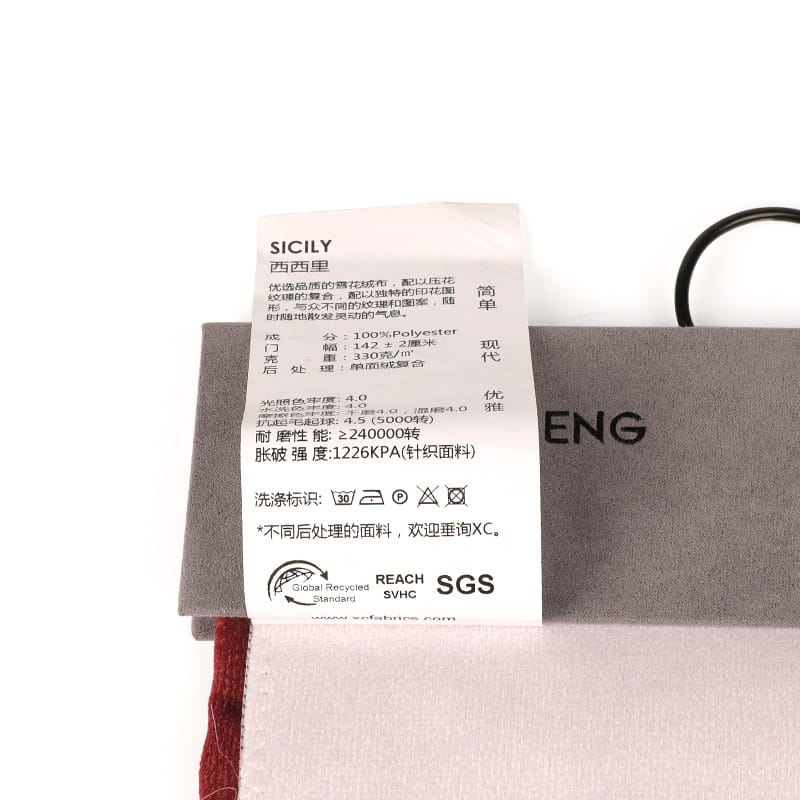
The specification that matters more than the method name is gram weight and backing. A 370 gsm printed pineapple sofa fabric with pongee backing behaves differently from the same construction with fleece backing; seam slippage, breathability, and perceived thickness all change. For textured fabrics, the backing is what holds the raised structure in place during upholstery stretching.
How 3D Textured Upholstery Fabric Performs in Daily Use
3D textured upholstery fabric outperforms flat equivalents in abrasion resistance because the raised pile takes the first contact and the base weave stays protected. In controlled Martindale tests, the differences are large enough to change a product's warranty terms.
For a family living room, commercial furniture makers usually specify 30,000 to 40,000 cycles. For contract seating in offices and waiting areas, the common threshold is 40,000 or more. Texture also affects perceived comfort: indentations from loop yarns create micro air channels that help heat escape, which is why boucle-heavy sofas feel cooler in summer than flat PVC-coated textiles.
Selecting 3D Textured Upholstery Fabric for Sofas, Chairs, and Curtains
Choose by traffic level first, then gram weight, then appearance. A fabric that works on a bedroom armchair can fail on a living-room sofa within two years of daily use.
- Define the traffic level: a family sofa needs 30,000+ Martindale cycles; contract seating needs 40,000+.
- Match gram weight to the frame: 250-350 gsm for lightweight chairs, 350-410 gsm for deep sofas and chaise ends.
- Verify the backing: fleece backing adds structure and warmth; pongee backing keeps the fabric lighter and more breathable.
- Test a sample on a curved cushion: textured surfaces behave differently on corners; check for gaping and pattern distortion.
For lounge sofas, boucle teddy constructions provide a soft, tactile surface that is also one of the most abrasion-resistant options available. For casual dining chairs, corduroy's vertical wales are easy to clean and wear evenly. Curtains, by contrast, need lighter weights around 200-300 gsm so the fabric drapes freely.
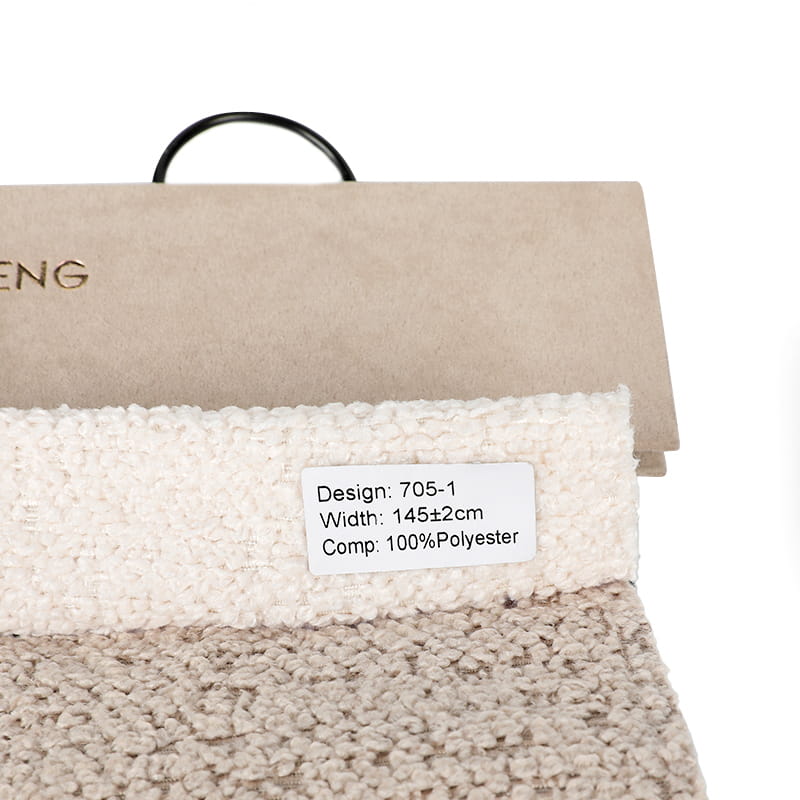 Boucle Teddy Bear Fabric for Durable Lounge Sofa UpholsteryA soft, tactile boucle teddy construction suited for lounge sofas, offering high abrasion resistance while keeping a plush hand feel, making it a practical choice for frequently used seating areas.View Product →
 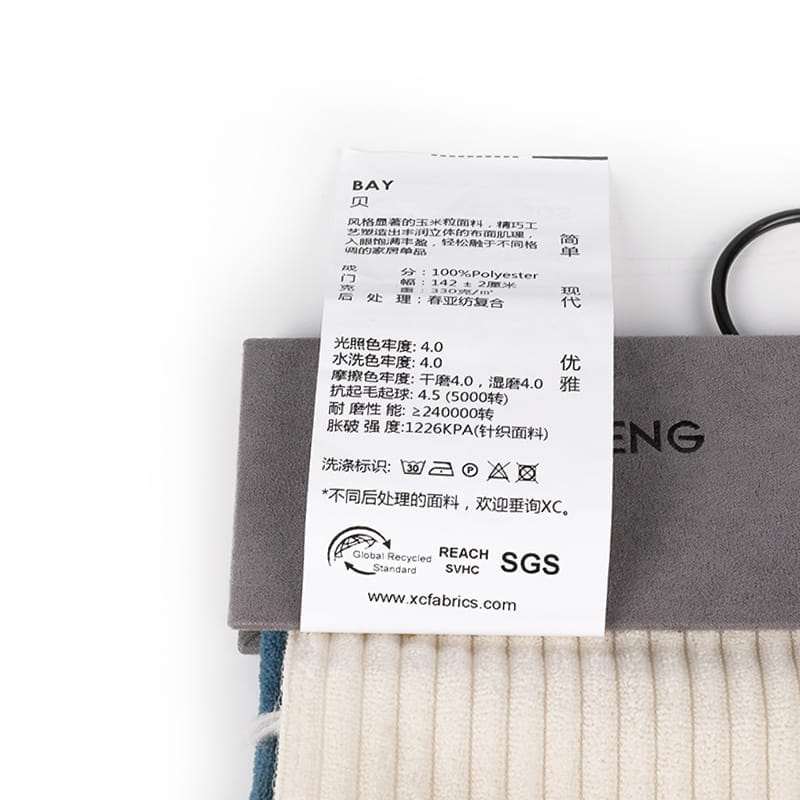 Corduroy Furniture Fabric with Vertical Wales for Even WearCorduroy's vertical wales make this furniture fabric easy to clean and wear evenly across the surface, a reliable option for casual dining chairs where durability and consistent appearance matter.View Product →
Manufacturing Quality Checks That Matter
Textured upholstery fabric only delivers its durability promise when the base cloth, pile height, and backing are manufactured to controlled tolerances. A factory that runs loose pile density today and tight pile density tomorrow will ship batches with different abrasion scores.
Zhejiang Xincheng New Materials Co., Ltd. operates 20 warp knitting machines from KARL MAYER, produces 100-500 gsm fabrics in widths from 100 to 300 cm, and ships about 1.5 million meters per month. Thirty quality-control staff work across the line, and the company backs that output with 21 years of production experience in finished sofa and interior decorative fabrics.
- Request Martindale and pilling test reports for each batch, not just the pre-production sample.
- Check backing adhesion: peel a corner of fleece-backed fabric; it should resist separation.
- Confirm color fastness to light and wet rubbing at the claimed level.
- Ask about seam slippage on high-stress cushion seams before cutting.
Maintenance and Its Effect on Longevity
A 3D textured upholstery fabric loses performance only when cleaning habits flatten the pile or strip the backing. Regular vacuuming with a soft brush attachment preserves the raised structure.
- Vacuum at low power weekly; avoid beating the pile.
- Blot spills immediately with a dry cloth; never rub a textured surface.
- Keep textured fabrics away from direct steam irons; high heat can crush the embossed pattern.
- Schedule professional cleaning every 18 to 24 months for high-use sofas.
For a closer look at how embossed patterns are engineered onto pile fabrics, read this analysis of embossed sofa fabric.
Frequently Asked Questions
Is 3D textured upholstery fabric more durable than flat printed fabric?
Yes, in most constructions. A true raised texture lets the pile absorb contact stress, which can add 20 to 50 percent more Martindale cycles compared with a flat weave of the same base weight. Durability still depends on fiber quality and backing.
Can the same 3D textured fabric be used for both sofas and curtains?
Some dual-purpose lines are labeled for both uses, but the ideal weights differ: sofas usually need 300 gsm or more, while curtains prefer lighter cloth so they drape. Check the product specification for width and weight before ordering a single roll for both.
How do I clean boucle or corduroy without flattening the texture?
Use a vacuum with a brush nozzle, blot liquids without rubbing, and avoid pressing hard on the raised areas. Professional cleaning with a low-moisture method every two years keeps the loop structure intact.
What backing should I choose for embossed velvet upholstery?
Fleece backing suits sofas that need body and structure, while pongee backing works for lighter chairs and curtains. Both backings reduce seam slippage, which is critical on deep-cushion sofa seams.