English
 Español
Content
- What Is Fleece Backed Sofa Fabric?
- Why Fleece Backing Improves Measured Performance
- Fleece Backed Sofa Fabric vs. Pongee Backing vs. No Backing
- What to Inspect Before Buying Fleece Backed Sofa Fabric
- How Much Difference Does the Backing Make in Test Data?
- How Fleece Backed Sofa Fabric Is Produced
- Frequently Asked Questions
When a sofa passes its frame tests but develops loose seams and a sagging cover within two years, the fault is usually in the backing, not the face yarn. Fleece backed sofa fabric exists to prevent exactly that failure: a brushed polyester fleece is bonded to the reverse of a knitted face cloth, creating a two-layer composite that holds its grain through cutting, sewing and daily use. On a standard 325-410 gsm polyester face, the fleece layer adds 100-150 gsm, so finished rolls land between 425 and 560 gsm.
What Is Fleece Backed Sofa Fabric?
Fleece backed sofa fabric is a two-layer upholstery textile in which a warp-knitted polyester face is bonded to a soft brushed fleece layer, forming one stable composite that handles like a single fabric during cutting, sewing and upholstery.
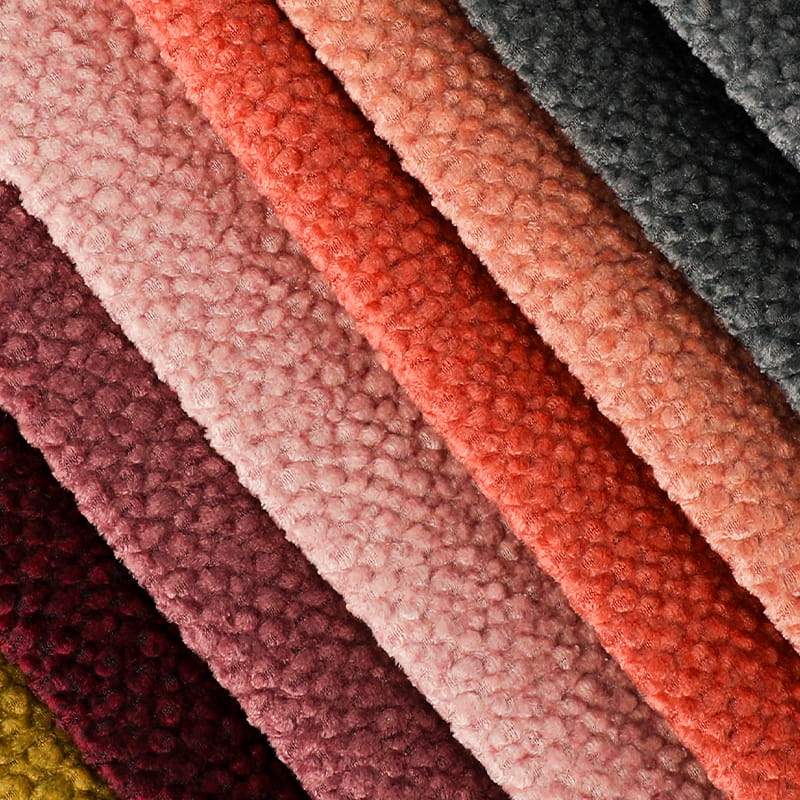
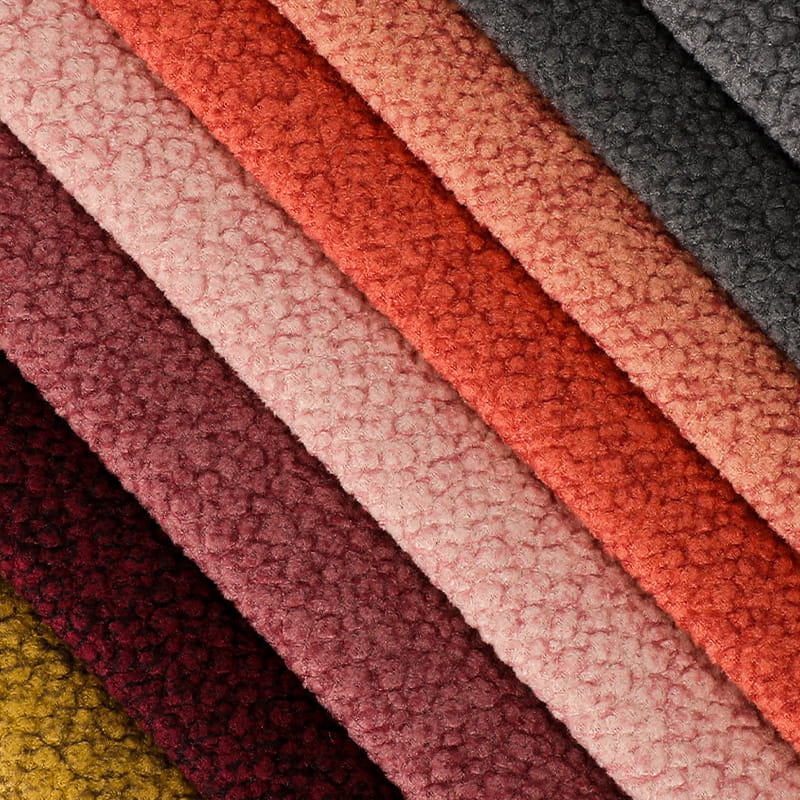
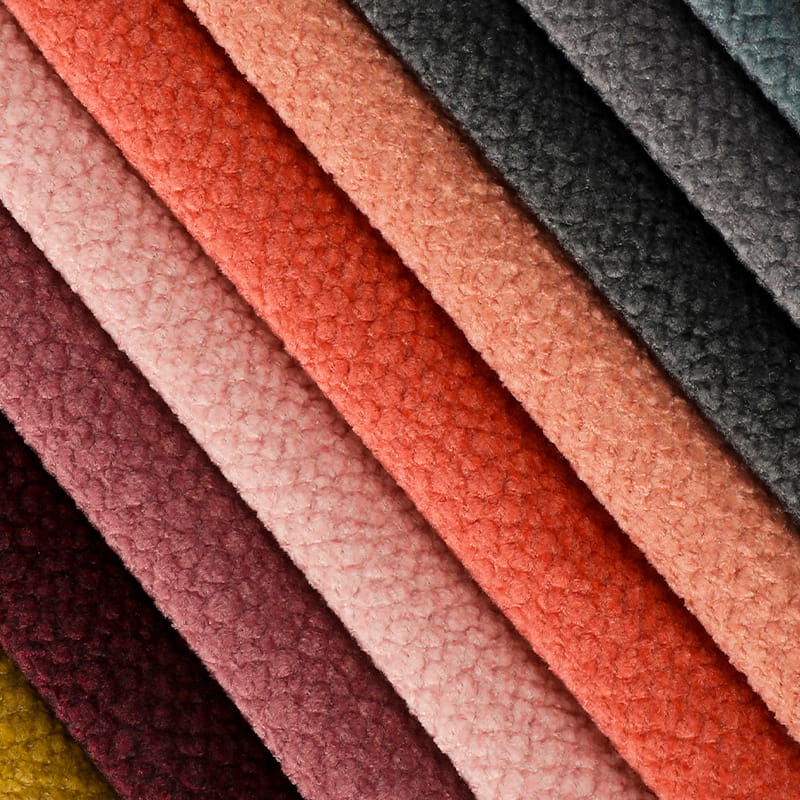
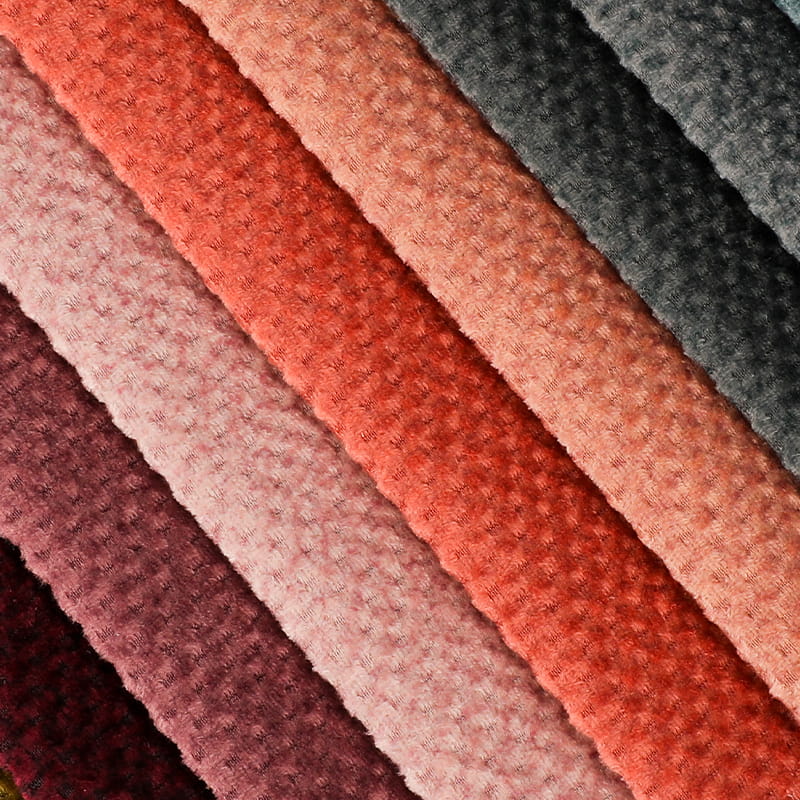
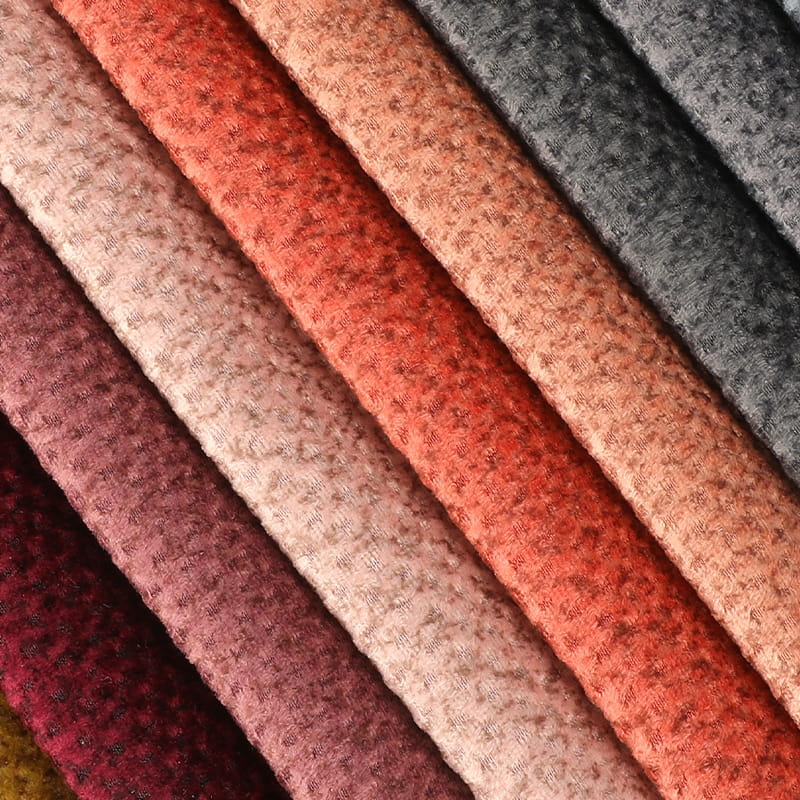
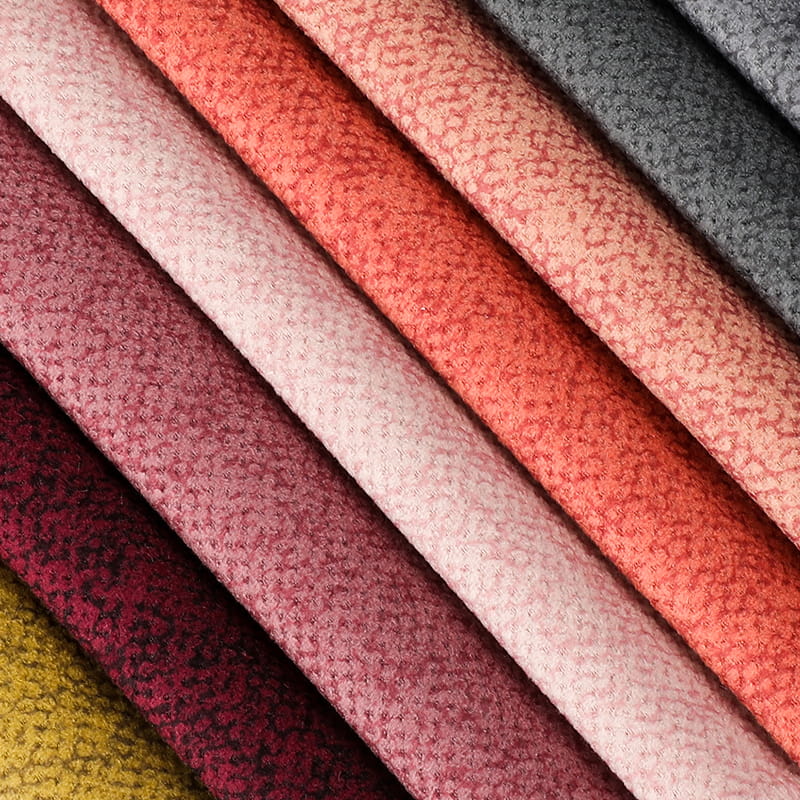
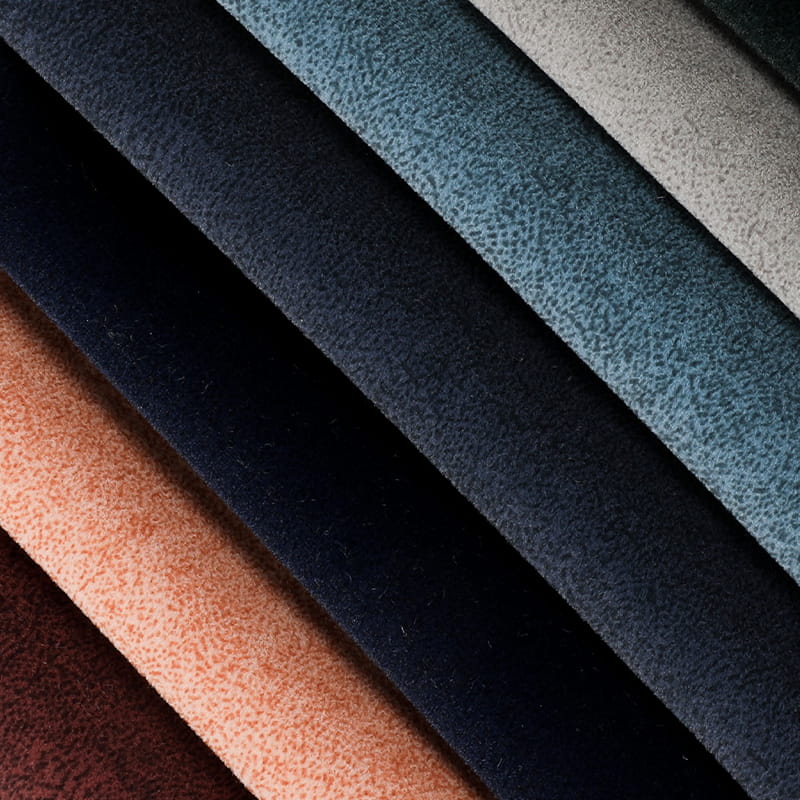
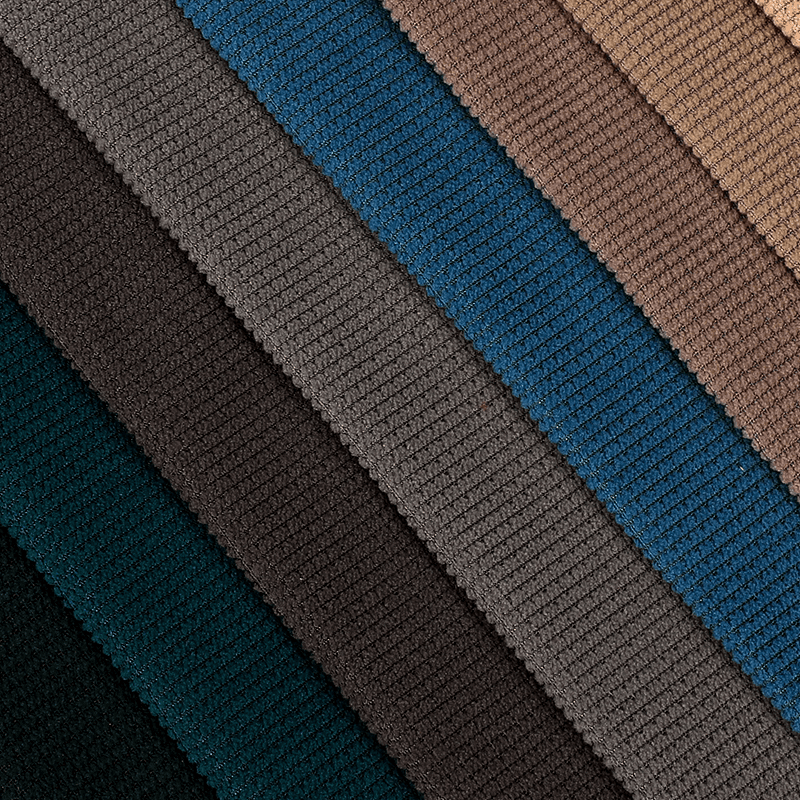
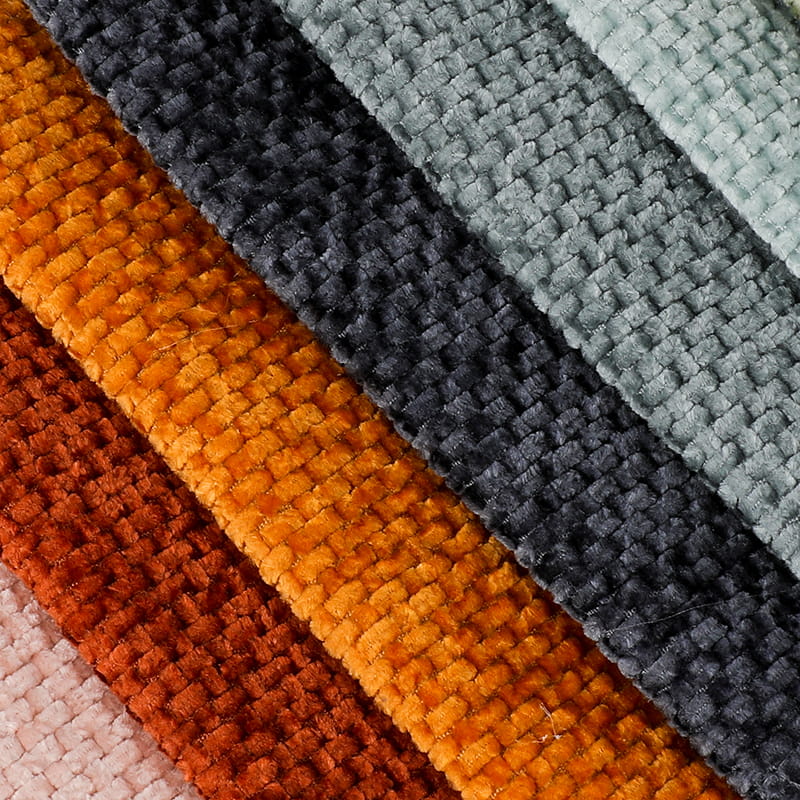
The face layer is usually a knitted pile cloth such as mosha velvet, pineapple, corduroy or snowflake velvet, while the reverse carries a dense, low-pile fleece brushed for a soft touch. The two webs are joined by flame lamination or a thin adhesive film, then pressed and cooled. The finished material has two structurally different surfaces: a fine short-pile face for appearance and a resilient fleece back that shields the face yarns from abrasion against foam and spring units.
Warp-knitted pile: mosha velvet, pineapple, corduroy, snowflake velvet. Delivers color, texture and cleanability.
Brushed polyester, 100-150 gsm. Stabilizes the ground weave, cushions the pile and hides foam show-through.
Upholsterers specify this construction when large cushions are cut on the bias and matched across panels, because the fleece stabilizes the weave, reduces stretch and prevents foam imprint from telegraphing through the cover.
A standard entry in this category is the company's fleece-backing sofa furniture fabric, which pairs a 325-370 gsm face with a balanced fleece reverse for residential use.
 Fleece Backing Sofa Furniture FabricIf you have any questions, inquiries, or concerns, our highly skilled and dedicated team of XINCHENG professionals is always at your disposal, ready to offer prompt an...View Product →
Why Fleece Backing Improves Measured Performance
Fleece backing measurably raises abrasion resistance, seam strength and cutting stability, so factories treat it as a performance upgrade, not a cosmetic extra.
The first difference appears at the cutting table. An unbacked knitted pile can stretch 3-5% off-grain; a fleece-bonded composite holds its grain within about 1%, reducing pattern waste and matching rejects. In use, the backing cushions the face pile against the foam core, distributes tension at the seams, and stops the reverse knit structure showing through on light colors.
- Seam slippage drops because backing fibres interlock with the face weave and share the seam load.
- Pile crush is reduced on velvet and mosha surfaces because the fleece absorbs compression.
- Foam show-through disappears, so manufacturers can use lower-cost foam.
- Cutting waste falls by roughly 2-3% in factories that switch to fleece-backed rolls.
Fleece Backed Sofa Fabric vs. Pongee Backing vs. No Backing
For a loose cushion cover, fleece backing is the right call; for a tight-back chair panel, pongee may be enough; for structured decorative work, no backing is acceptable.
Pongee is a thin, smooth woven polyester laminated at 60-90 gsm. It prevents foam show-through and adds slip resistance, but it does not cushion the face or improve abrasion. Fleece backs at 100-150 gsm add real bulk, softness and tear strength. Unbacked fabric is the cheapest and thinnest, but it demands a better face construction and careful handling in the workshop.
| Construction | Added weight | Hand feel | Main benefit | Typical use |
| Fleece backing | 100-150 gsm | Soft, padded | Stability, cushioning, durability | Sofas, recliners, pet covers |
| Pongee backing | 60-90 gsm | Smooth, thin | Foam show-through control | Cushion covers, light upholstery |
| No backing | None | Depends on face | Lowest cost and weight | Structured panels, decorative use |
What to Inspect Before Buying Fleece Backed Sofa Fabric
Four checks separate a durable fleece backed sofa fabric from a downgraded one: bond strength, backing density, weight tolerance and abrasion performance.
- Check peel strength on a cut edge: a good bond resists finger peeling. Ask for a lamination peel test report.
- Measure total GSM with a cutter across the roll width; tolerance should stay within +/-3%.
- Press the fleece side with a thumbnail: genuine fleece is brushed and uniform, glazed pongee is smooth and slippery.
- Review Martindale and seam slippage data. Residential sofas: 30,000+ cycles. Commercial seating: 50,000+. Seam slippage should stay under 3 mm at 100 N.
- Run a 20-rub wet crocking test on dark shades to confirm the dye does not bleed through the lamination.
For printed programmes on pineapple face cloth, the fleece backing pienapple sofa furniture fabric shows how lamination supports print stability and color depth.
 Fleece Backing Pienapple Sofa Furniture FabricIf you have any questions, inquiries, or concerns, our highly skilled and dedicated team of XINCHENG professionals is always at your disposal, ready to offer prompt an...View Product →
How Much Difference Does the Backing Make in Test Data?
Lab results on the same face fabric show that a 120 gsm fleece backing raises abrasion life from roughly 20,000 to 48,000 Martindale cycles and reduces cutting stretch by about 2%.
Seam slippage follows the same pattern: fleece-backed samples held below 2 mm at 100 N, while unbacked fabric exceeded 4 mm on bias-cut panels. Tear strength improved by roughly 25% because the backing shares the tearing load.
Comparative figures are typical manufacturer-side test results for a 370 gsm polyester velvet face with 120 gsm fleece and 75 gsm pongee backing.
How Fleece Backed Sofa Fabric Is Produced
Fleece backing is applied on a lamination line after the face fabric has been knitted and finished; it is not woven into the face structure.
- Warp knitting: the face fabric is knitted on high-speed KARL MAYER machines.
- Finishing: dyeing, brushing and heat setting prepare the face and the fleece web.
- Lamination: flame or adhesive bonding joins the two webs into one composite.
- Inspection: bond strength, weight tolerance and visual checks before batching.
Zhejiang Xincheng New Materials Co., Ltd. runs this process with twenty KARL MAYER warp knitting machines and reports a monthly capacity of 1.5 million metres at 100-500 gsm and 100-300 cm widths. New-design runs such as the fleece backing new design sofa furnitrue fabric carry the same stabilizing construction across seasonal aesthetics.
 Fleece Backing New Design Sofa Furnitrue FabricIf you have any questions, inquiries, or concerns, our highly skilled and dedicated team of XINCHENG professionals is always at your disposal, ready to offer prompt an...View Product →
For maintenance and wear behaviour across backing types, start with the guide to choosing a durable and easy-care upholstery home textile before you finalise the specification.
Frequently Asked Questions
Is fleece backed sofa fabric more durable than unbacked fabric?
Yes. On identical face fabrics, fleece-backed samples typically record 40,000+ Martindale cycles versus about 20,000 unbacked, and seam slippage stays below 2 mm at 100 N. The backing also protects the face pile from foam abrasion.
How do you clean fleece backed sofa fabric?
Vacuum regularly, blot spills with a dry solvent cleaner and avoid machine washing. Prolonged wet exposure can weaken the lamination bond, so keep steam cleaning short and dry fast afterwards.
What is the difference between fleece backing and pongee backing?
Fleece is a brushed, padded layer of 100-150 gsm that cushions, stabilizes and improves abrasion. Pongee is a thin 60-90 gsm layer that mainly blocks foam show-through. Fleece costs more and suits sofas and recliners; pongee fits lighter cushion covers.
Why do printed sofa fabrics need a fleece backing?
Printed pile fabrics distort during paste application and heat setting. The fleece stabilizes the ground weave, reduces bowing and skewing, and hides print strike-through, so patterns stay aligned across large cushions.