English
 Español
Content
- What Qualifies as Holland Velvet Sofa Fabric
- Martindale Ratings: How Holland Velvet Sofa Fabric Compares
- Weight, Backing, and Pile Density Change the Felt Performance
- Finish Variants: Printed, Embossed, Waterproof, Bronzed
- Care and Cleaning: What Keeps Holland Velvet Sofa Fabric Looking New
- Bulk Order Checks for Holland Velvet Sofa Fabric
- Frequently Asked Questions
Ordering Holland velvet sofa fabric for a production run comes down to three lines on a spec sheet: fabric weight, Martindale abrasion rating, and backing type. A 250 gsm unbaked Holland velvet can look identical to a 380 gsm fleece-backed version in a swatch folder, yet behave completely differently on a three-seat frame after six months of daily use. This guide explains what those numbers mean, where Holland velvet sits against competing upholstery fabrics, and which finish and backing decisions to lock in before placing a bulk order.
What Qualifies as Holland Velvet Sofa Fabric
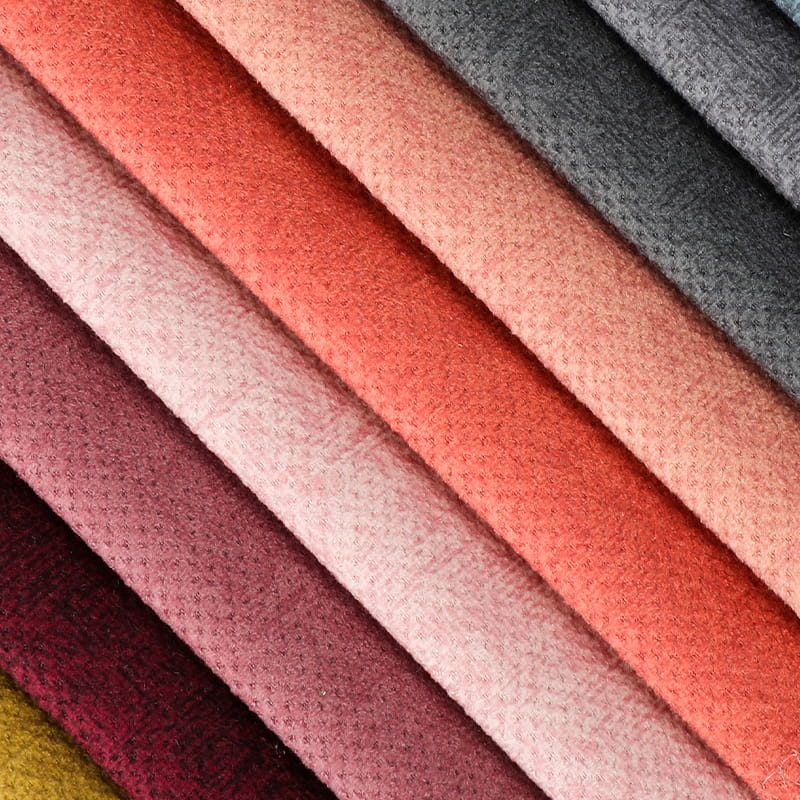
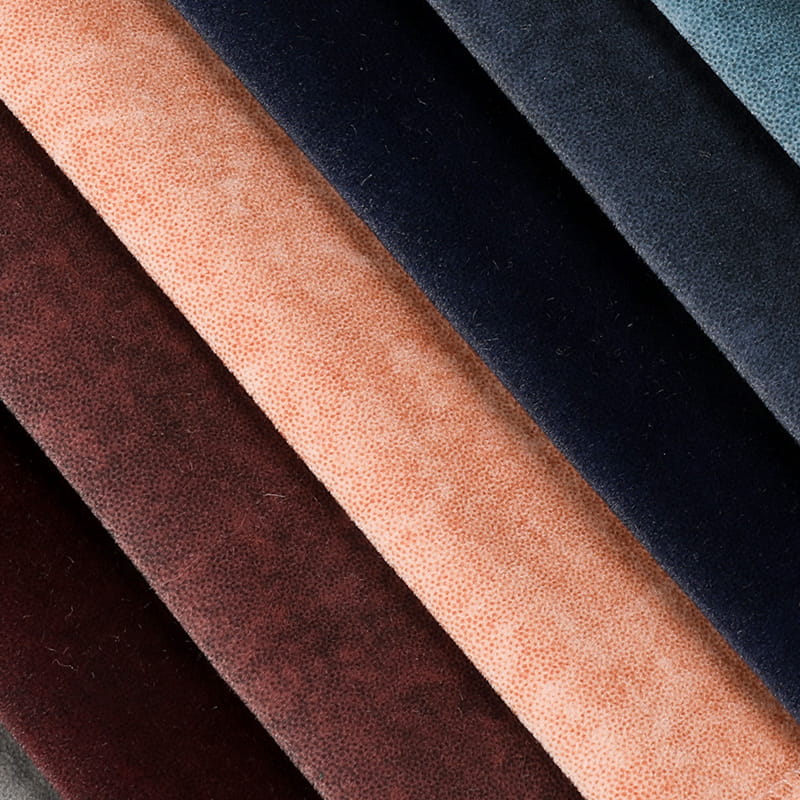
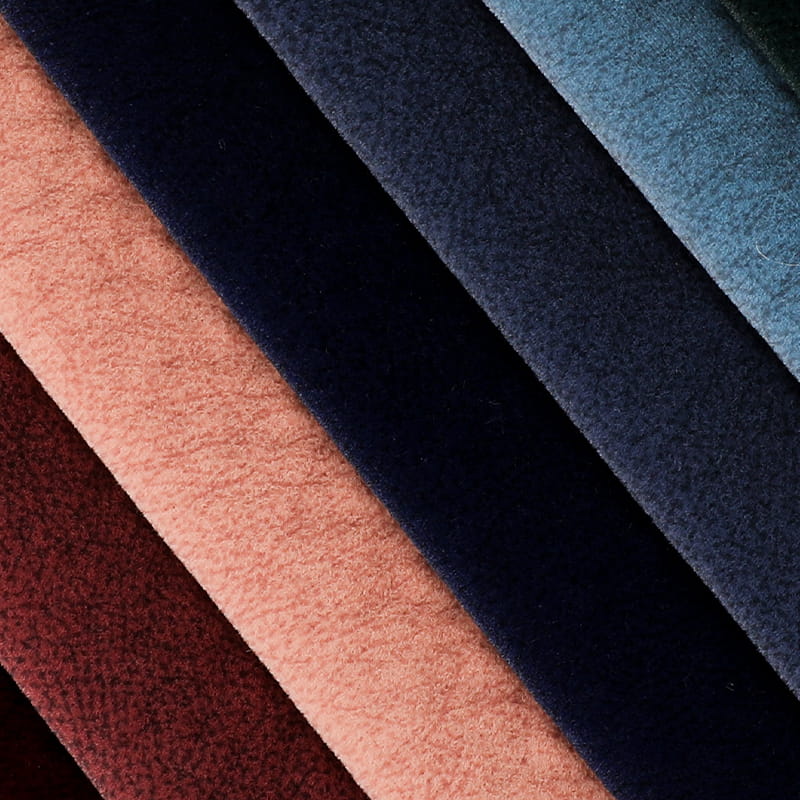
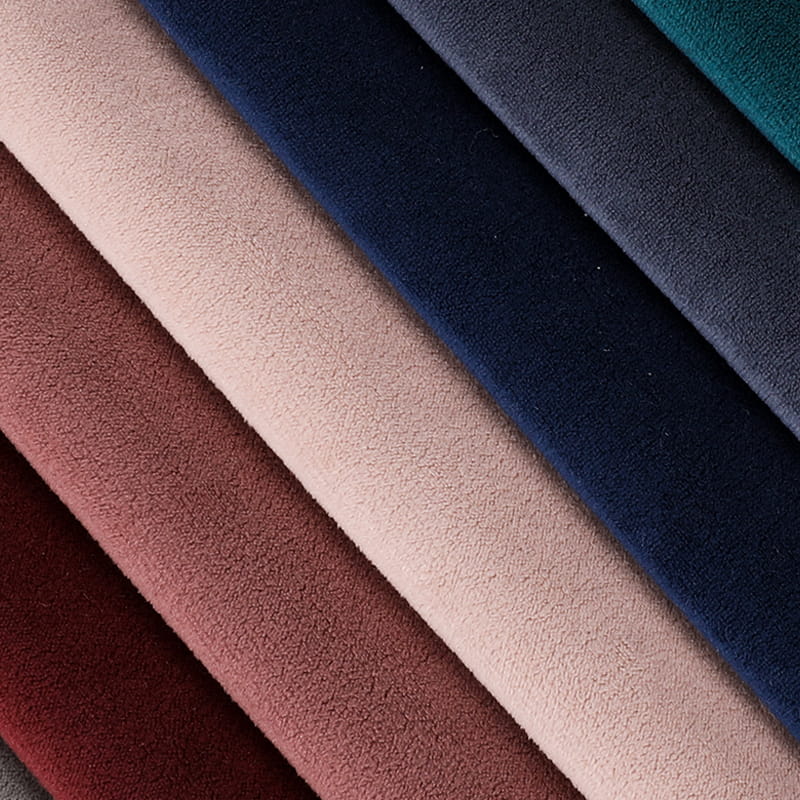
Holland velvet sofa fabric is a warp-knitted 100% polyester velvet with a dense, short pile and a smooth, suede-like touch, produced on tricot machines and then brushed and finished for upholstery use.
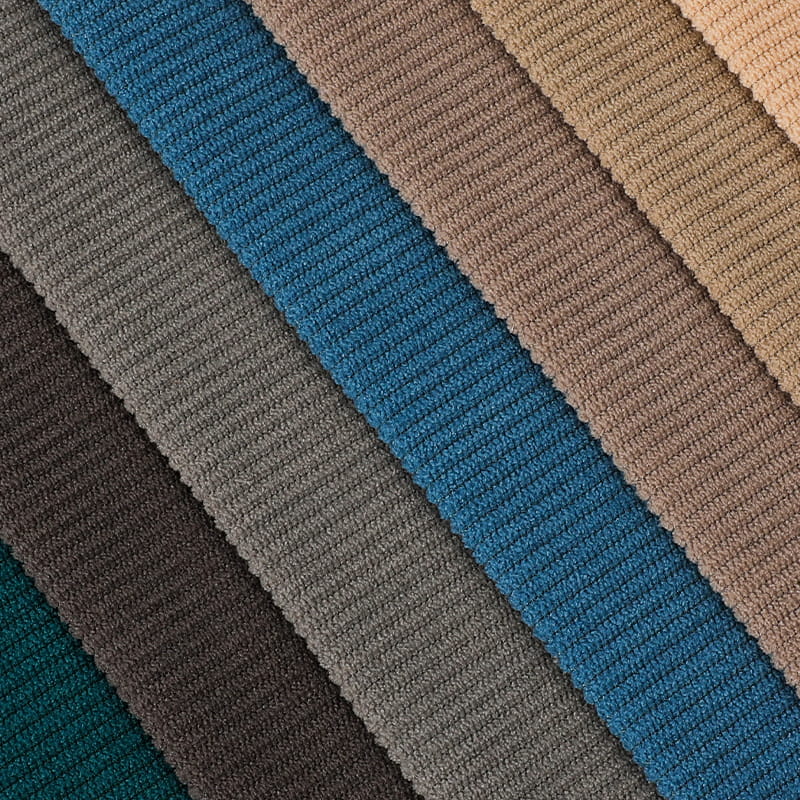
Unlike woven silk or cotton velvet, Holland velvet starts as polyester yarn knitted on warp-knitting machines. The construction gives it dimensional stability: it does not stretch out of shape the way weft-knitted velvets can, and the dense pile resists crushing under seating pressure. Chinese mills, including Zhejiang Xincheng New Materials Co., Ltd., produce this category in fabric weights from 100 to 500 gsm and widths up to 300 cm, with sofa-grade material usually running from 250 to 410 gsm.
Definition: Holland velvet, also called Dutch velvet or Holand fabric, is a warp-knitted polyester pile fabric whose short, densely packed fibers are sheared and brushed to create a soft surface that mimics the hand feel of natural velvet at lower manufacturing cost and with higher abrasion resistance.
Because the base is knitted rather than woven, the fabric also recovers better after stretching, a decisive property when upholsterers pull the material over curved arms and deep seat corners. This recovery is why Holland velvet sofa fabric has become so popular for sofas in mid-range and premium furniture lines.
- Construction: warp knitted from 100% polyester yarn
- Typical sofa weight: 250 to 410 gsm
- Usable width: 100 to 300 cm, common rolls at 140-160 cm
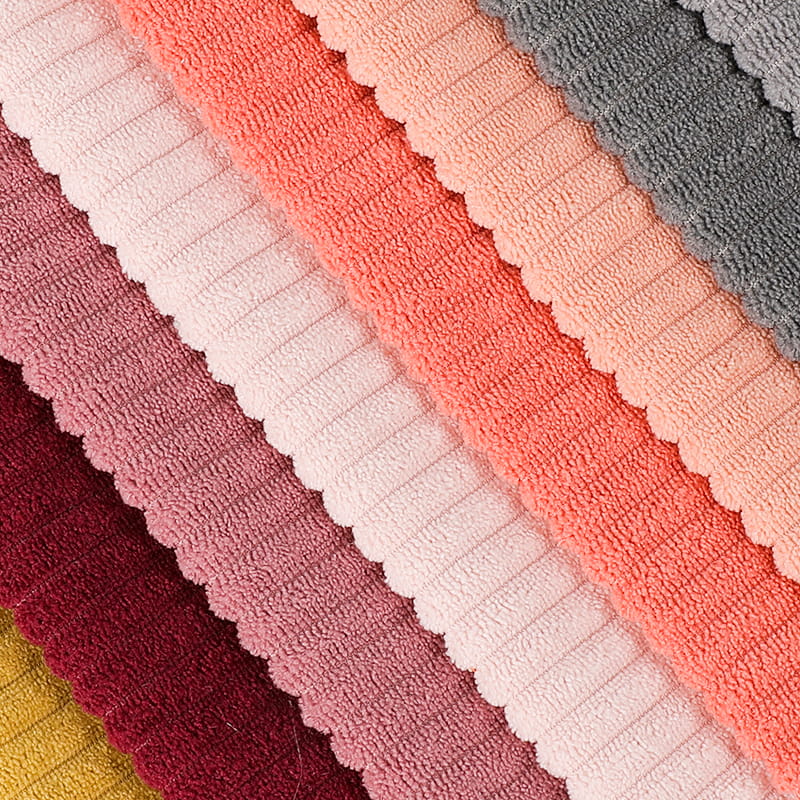
- Surface finish options: brushed and sheared, then printed, embossed, waterproofed, or bronzed on demand
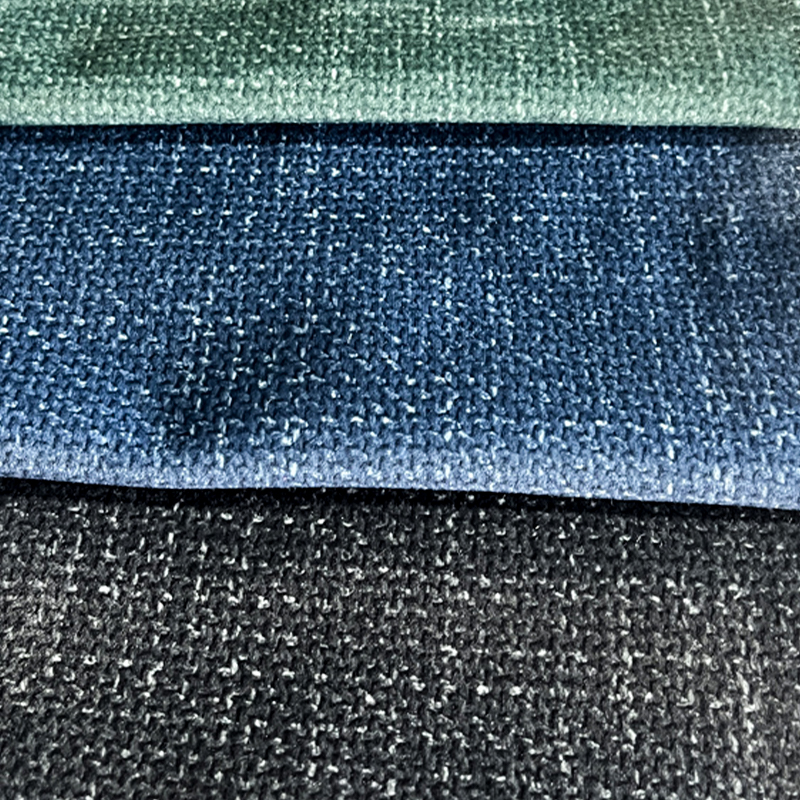 Holland Double Velvet Upholstery Fabric from ManufacturerThis double velvet fabric offers softness, warmth, and clarity of pattern. Its knitted base aids recovery over curved sofa frames, suiting mid-range and premium upholstery lines.View Product →
Martindale Ratings: How Holland Velvet Sofa Fabric Compares
Commercial-grade Holland velvet reaches 40,000 to 100,000+ Martindale rubs, which places it above cotton velvet, woven chenille, and plain linen in standard abrasion testing and on par with laminated technical fabrics used in contract seating.
The Martindale test rubs the fabric against worsted wool under controlled pressure until fibers break. A residential sofa spec usually accepts 20,000 rubs; heavy commercial upholstery asks for 40,000 or more. Fabric suppliers in Haining, the main velvet manufacturing cluster in China, typically certify Holland velvet between 40,000 and 100,000 rubs depending on pile density and finish.
| Fabric | Typical weight | Martindale rubs | Pilling risk | Cleaning ease |
| Holland velvet (polyester) | 250-410 gsm | 40,000-100,000+ | Low | Moderate |
| Polyester microfiber suede | 200-350 gsm | 50,000-70,000 | Low | Easy |
| Woven chenille | 260-450 gsm | 25,000-40,000 | Medium | Moderate |
| Cotton velvet | 220-420 gsm | 15,000-30,000 | High | Difficult |
| Plain linen | 150-350 gsm | 10,000-20,000 | High | Moderate |
A 100,000-rub Martindale result means the fabric survived 100,000 abrasion cycles without the pile breaking through, roughly equivalent to more than a decade of residential sofa use. Most European and Chinese upholstery standards regard 20,000 rubs as acceptable for general household use, so a certified 100,000-rub Holland velvet gives a wide margin for family rooms and rental properties.
Pile density, finish, and backing change the test result more than the base polymer does. A lightweight printed Holland velvet at 230 gsm may certify at only 25,000 rubs, while the same construction at 380 gsm with fleece backing can exceed 100,000 rubs. Always read abrasion data together with fabric weight rather than in isolation.
Holland Velvet Sofa Fabric for Furniture UpholsteryA sofa-grade velvet that performs best when weight and backing match seating needs. Reviewed here for weight ranges and abrasion data to guide fabric selection.View Product →Weight, Backing, and Pile Density Change the Felt Performance
Sofa-grade Holland velvet sits in the 250-410 gsm range; rolls below 230 gsm work for vertical surfaces and decorative cushions but crush too quickly on seat areas, while weights above 420 gsm become stiff and harder to upholster over curved frames.
The backing choice changes handling more than most buyers expect. Fleece-backed Holland velvet, commonly sold in 325-410 gsm constructions, adds thickness and seam strength, hides frame shadows, and reduces wrinkling over time. Pongee-backed versions are lighter, drape cleaner, and cut faster, but show cushion compression sooner. Unbacked cloth works only for vertical panels and decorative accents because the open knitted back does not hold staples well on frames.
Order a fleece-backed 370 gsm roll if your priority is a long service life and a plush seat. Choose a pongee-backed 250-280 gsm version when you are prototyping or producing lightweight occasional chairs where cost per meter drives the decision. The same color and surface finish are available across all three weights, so you can match seating and decorative pieces without a visible difference.
Finish Variants: Printed, Embossed, Waterproof, Bronzed
Holland velvet accepts post-finishing treatments that plain woven velvet cannot handle at scale; printed, embossed, waterproof, and bronzed versions all start from the same warp-knitted base and differ only on the finishing line.
The finish determines where the fabric can be used and how it must be cleaned:
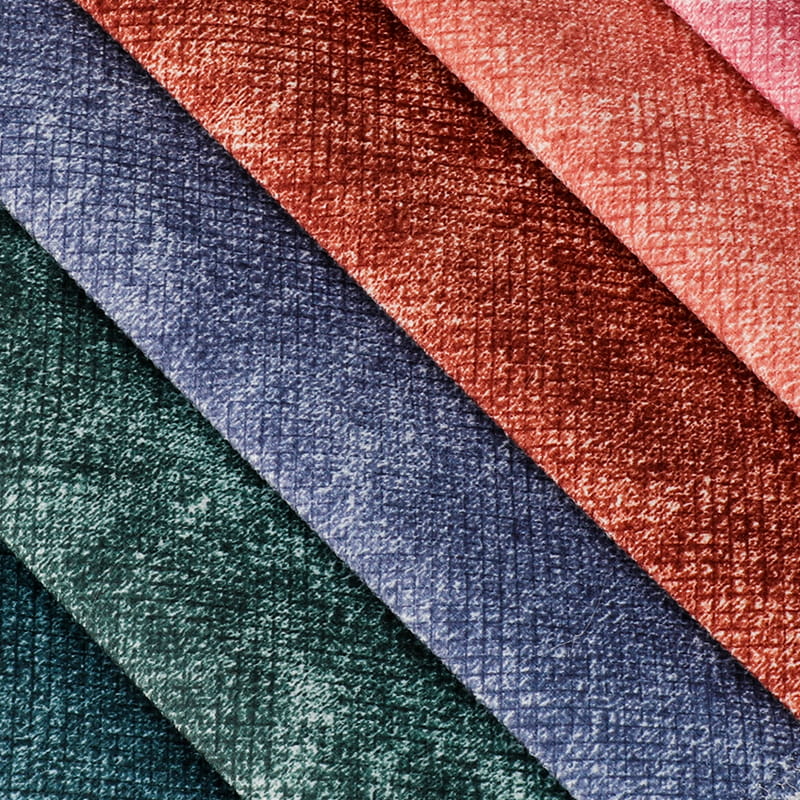
- Printed Holland velvet: rotary or digital printing on the brushed pile, used for floral and geometric sofa patterns
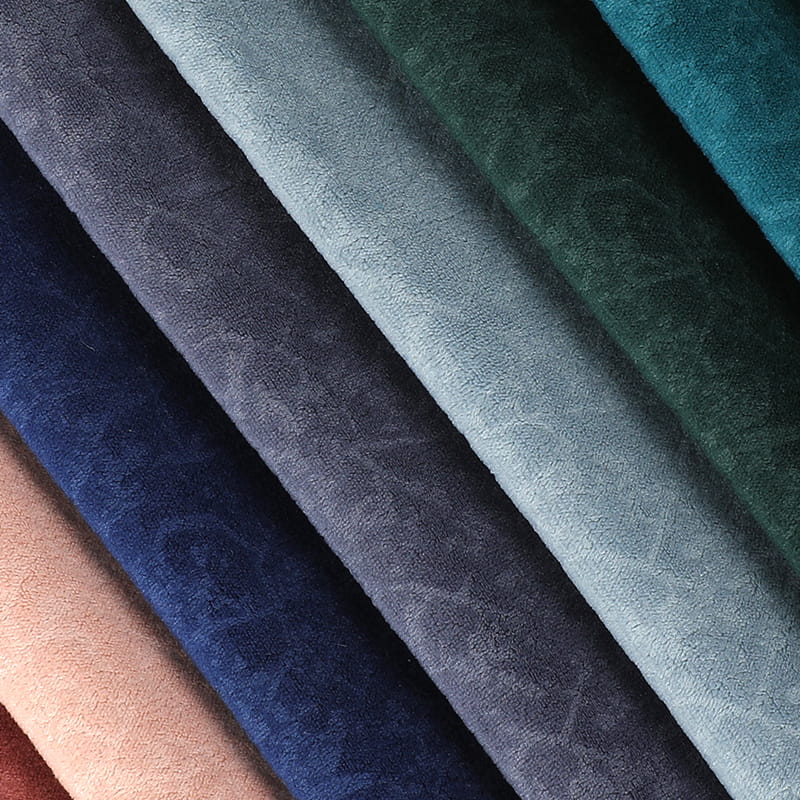
- Embossed Holland velvet: heat and pressure create a permanent textured pattern that increases visual depth without adding weight
- Waterproof Holland velvet: a laminated or coated backer blocks liquid, practical for dining chairs and family sofas
- Bronzed metallic Holland velvet: foil transfer adds a subtle shine, common in premium showroom pieces
- Burnout and ultrasonic embossed variants: chemical or ultrasonic bonding creates openwork details with clean edges for high-end designs
Choose the finish before you spec the backing: printing and embossing do not interfere with fleece lamination, but waterproofing works best on tighter pongee-backed substrates because a thick fleece traps the coating and reduces breathability.
Care and Cleaning: What Keeps Holland Velvet Sofa Fabric Looking New
Vacuum the surface weekly with a soft brush attachment, rotate seat cushions monthly, and blot liquid spills within ten minutes; rubbing breaks the pile and creates permanent bright patches on the velvety surface.
Holland velvet is polyester, so it resists water-based staining better than cotton velvet, but the pile structure makes every flattening action visible. The routine is short and mechanical:
- Weekly: vacuum with a soft brush at low suction, no beater bar
- Monthly: rotate and flip seat cushions to spread wear
- After spills: blot with a white cloth from edge to center, never scrub
- Twice a year: schedule professional solvent-based upholstery cleaning
Do not machine-wash Holland velvet sofa fabric. Water combined with mechanical agitation distorts the warp-knitted ground and makes the pile separate into visible streaks. Use a dry-cleaning solvent or professional upholstery equipment for deep cleaning, and confirm the solvent is color-safe if the pattern was applied by printing.
Bulk Order Checks for Holland Velvet Sofa Fabric
Before committing to a bulk order, verify four items: a Martindale test certificate, dye lot continuity, shrinkage data, and a full-width cutting sample of the exact backing and finish your production line will use.
Pile density and shade vary between dye lots. A manufacturer such as Zhejiang Xincheng New Materials Co., Ltd., which runs a 1,500,000-meter monthly capacity with 30 quality-control staff on site, controls production internally, but the buyer still carries the risk if inspection is skipped.
- Request abrasion and pilling test reports from an accredited textile laboratory
- Ask for a full-width cut sample, not a small swatch, to confirm pile density and hand feel
- Check shade matching across at least two dye lots before approving mass production
- Confirm shrinkage stays below 3 percent after the first commercial dry clean
- Lock delivery terms for Shanghai port or Ningbo port, the two main export routes from Haining mills
A safe bulk order combines a certified Martindale report, a 250-410 gsm weight range, fleece backing for seating sections, and a finish matched to the backing. Verify these four points and Holland velvet becomes one of the most predictable upholstery materials you can buy. To discuss roll widths, backing options, and sampling for your next collection, contact the Xincheng team directly.
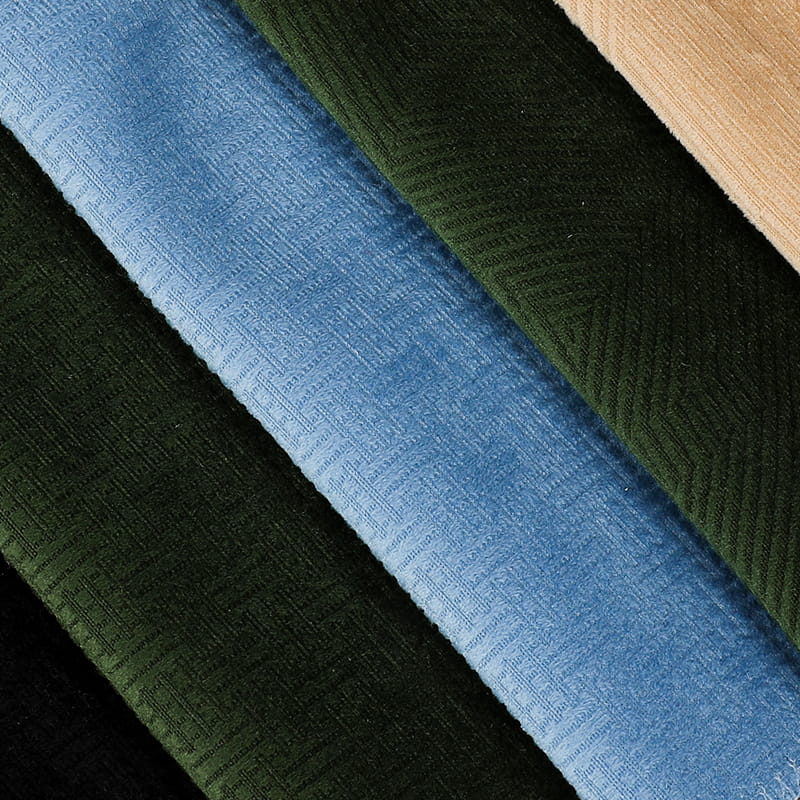 Velvet Sofa Fabric Options from Furniture Fabric ManufacturerManufacturer offering velvet, linen, and imitation leather for sofas. Useful when comparing seating fabrics that balance comfort, breathability, and durability in residential use.View Product →
Frequently Asked Questions
Is Holland velvet good quality for a sofa?
Yes, when the weight and backing are specified for seating. A 250-410 gsm fleece-backed Holland velvet with a Martindale rating above 40,000 rubs performs well on residential sofas and lasts years under normal use. Below 230 gsm, the same material belongs on decorative cushions rather than seat areas.
What does gsm mean in Holland velvet sofa fabric?
GSM stands for grams per square meter, the fabric mass per unit area. Sofa-grade Holland velvet runs from 250 to 410 gsm. Higher gsm means a denser pile and firmer hand feel, but also higher stiffness and cost per meter.
Can Holland velvet sofa fabric be washed?
Machine washing is not recommended. Water and agitation distort the knitted ground and flatten the pile. Vacuum regularly, blot spills, and use professional solvent-based cleaning for deep cleaning. Waterproofed variants can be wiped with a damp cloth but should still avoid soaking.
How do I tell real Holland velvet from ordinary polyester velvet?
Check the construction. Holland velvet is warp-knitted, so turn a corner of the fabric and look for a stable knitted structure rather than a woven edge. Genuine Holland velvet also has a very short, dense pile of roughly 1-2 mm and a tighter back that resists stretching across the width.
Specification summary: choose 250-410 gsm, ask for a Martindale certificate above 40,000 rubs, select fleece backing for seat sections, match the finish to the backing, and approve samples from at least two dye lots before production.