English
 Español
Content
Pet ownership is one of the most significant factors in sofa fabric selection for residential furniture buyers. The combination of claws, fur, moisture, and frequent contact that comes with a pet-friendly household subjects sofa fabric to conditions well beyond normal human use — and the wrong fabric choice results in visible damage, odor retention, or constant maintenance that makes the sofa unusable within months. The right fabric choice, however, is barely affected by the same conditions and maintains its appearance through years of daily pet use.
For furniture manufacturers, upholsterers, and retail buyers sourcing sofa fabrics for the residential market, understanding which fabric properties make a sofa truly pet-friendly — and which common fabric choices are poor performers despite their initial appeal — is commercially important information. Pet ownership rates in major markets exceed 60% of households, and fabric suitability for pets is one of the most frequently cited purchase criteria for sofa buyers in consumer research.
The Four Challenges Pets Present to Sofa Fabric
Evaluating pet-friendly fabric performance requires addressing four distinct challenges that pets create, each of which requires different fabric properties to manage effectively:
1. Claw Damage (Snagging and Scratching)
Cat claws, in particular, are the most destructive force that most sofa fabrics will encounter. A cat's claw engages loops, pulls individual yarns, and, in aggressive scratching, removes pile and breaks yarn entirely. Dog claws on upholstery create abrasion rather than snagging — the mechanical scraping of blunt claws removes pile surface and wears through fabric over time.
The fabric properties that resist claw damage are: tight weave or knit construction (fewer loops or open areas for claws to catch), high abrasion resistance (resistance to surface pile removal), and a strong interlocking yarn structure that does not unravel when individual yarns are pulled.
2. Fur and Hair Accumulation
Pet fur accumulates on upholstery and can be difficult to remove from certain fabric types. Long, loose pile fabrics trap fur between fibers in a way that makes removal difficult without the fur working deeper into the pile structure. Smooth, tight-surface fabrics allow fur to sit on the surface where it is easily removed by hand, lint roller, or light vacuuming.
3. Moisture, Odor, and Staining
Wet fur, muddy paws, pet accidents, and general pet-associated moisture create staining and odor challenges for sofa fabric. Fabrics that absorb moisture readily retain odor-causing compounds in the fiber structure; fabrics that repel moisture do not allow liquids to penetrate and are much easier to clean and deodorize. For sofa fabrics in pet households, some degree of moisture resistance or water repellency is essentially a requirement rather than a luxury feature.
4. General Abrasion from Regular Contact
A pet that uses a sofa regularly creates abrasion through repeated contact — paws, claws, fur, body weight — that accelerates surface wear beyond normal human-use abrasion rates. Fabric rub resistance (Martindale test) is a relevant performance indicator, but the practical test is whether the fabric maintains its appearance in the specific areas (typically seat cushion edges, armrests, cushion corners) where pet contact is concentrated.
The Best Fabric Types for Pet-Friendly Sofas
Microfiber / Ultra-Fine Warp-Knitted Velvet
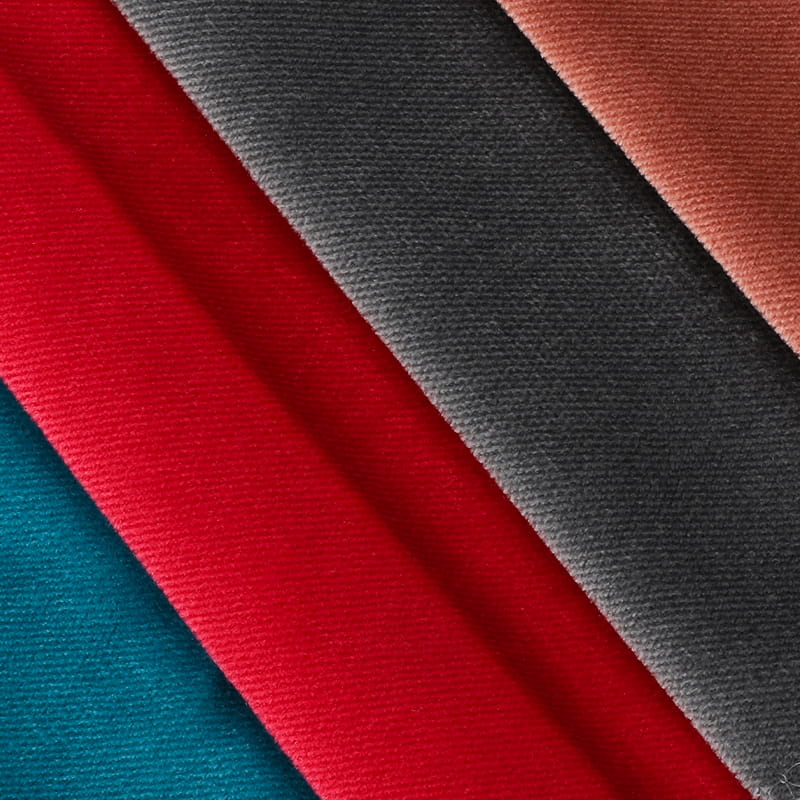
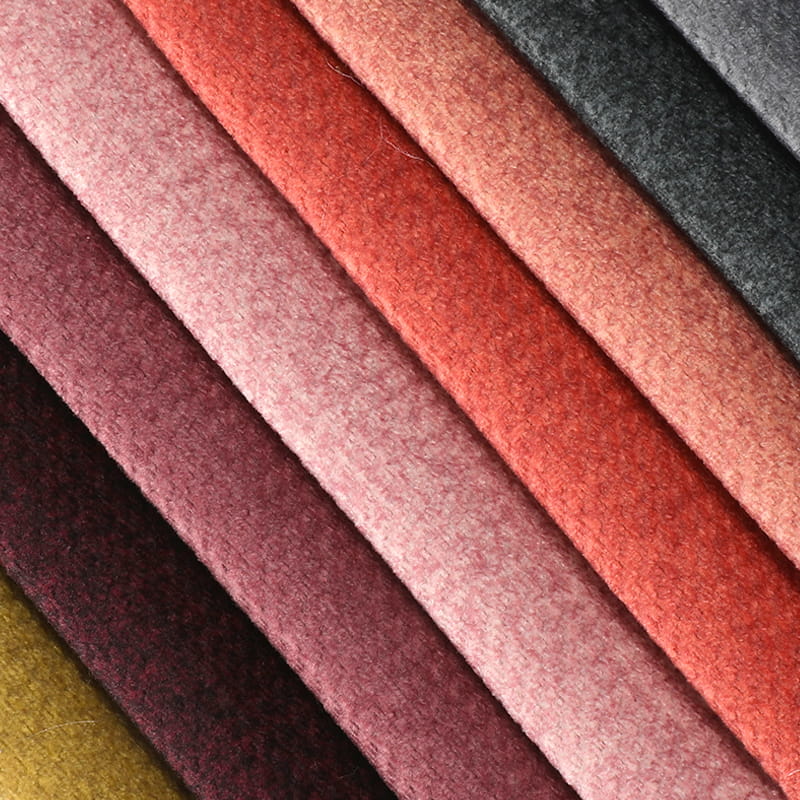
High-quality warp-knitted velvet and technology velvet with tight, dense pile structures are among the best-performing sofa fabrics for pet households, counterintuitively to many buyers who assume all velvet is bad for pets. The key is construction density and finishing:
- A tight, high-density warp-knitted pile surface has fewer individual loop ends for cat claws to catch compared to loose-loop or low-density constructions
- Fine-denier polyester pile fibers are inherently smooth and do not allow pet fur to embed deeply — fur sits on the pile surface where it can be removed with a lint roller or vacuum attachment
- Technology velvet with waterproof or water-repellent finishing resists moisture penetration from wet fur and pet accidents, allowing liquid spills to be blotted away before they reach the base fabric
- Martindale rub resistance of 50,000–100,000 rubs for furniture-grade technology velvet far exceeds the abrasion generated by normal pet use
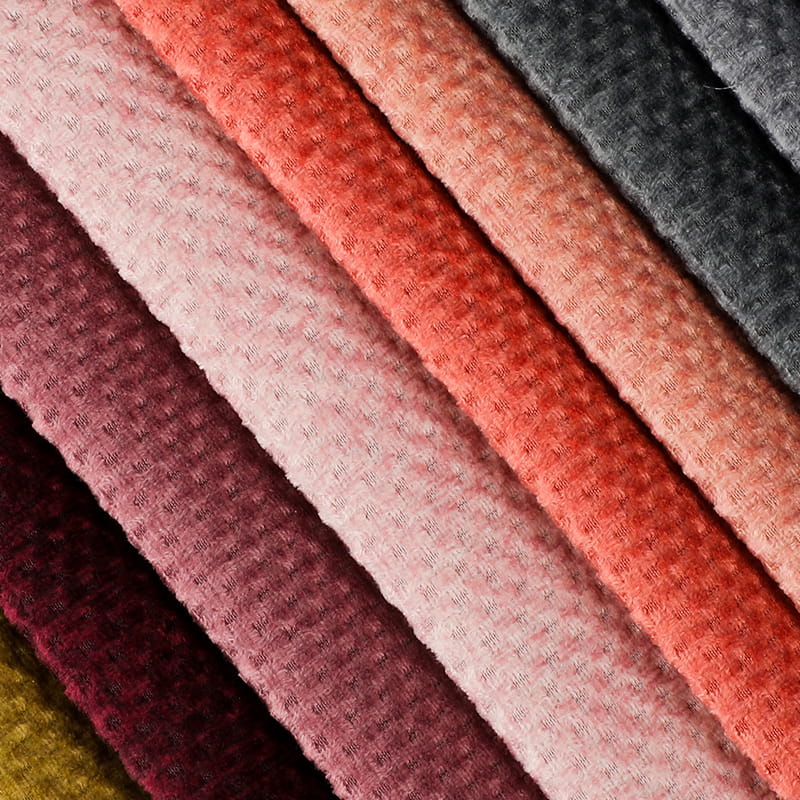
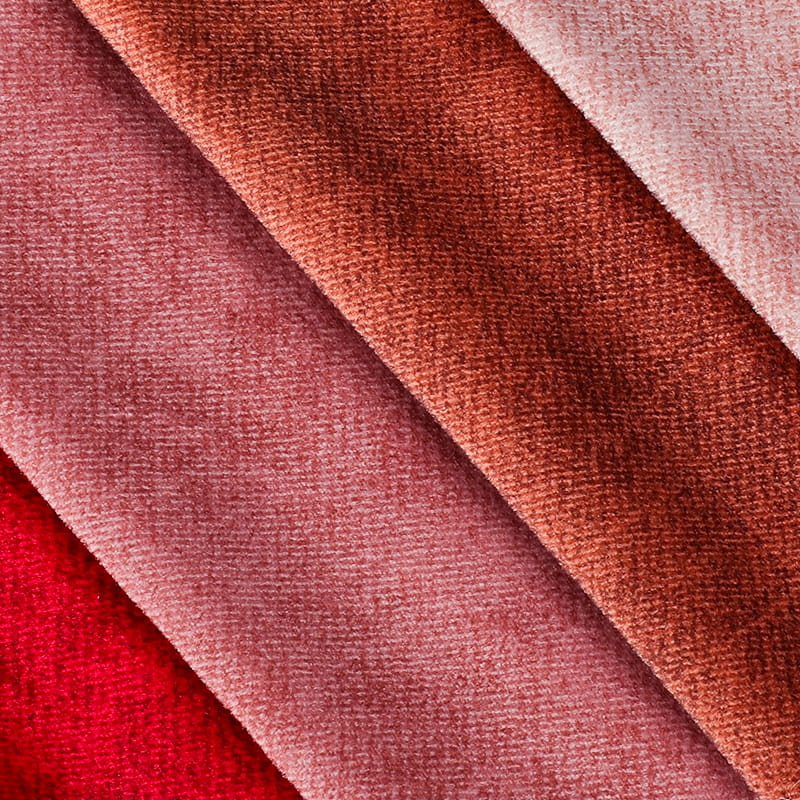
The caution with velvet in pet households is pile direction — velvet pile that is stroked against its natural direction looks different from areas stroked with the direction, which can make claw-created directional disturbance visible. High-quality technology velvet with good pile resilience recovers from directional disturbance; lower-grade velvet does not. Burnout and embossed velvet, where the surface pattern already incorporates areas of different pile density, are more forgiving of directional variation than solid-surface velvet.
Canvas and Tightly Woven Polyester / Olefin
Tightly woven flat fabrics in canvas, denim, or olefin (polypropylene) construction are among the most claw-resistant and easy-clean options for pet-friendly sofas. The flat, tight weave structure gives cat claws very little to engage — there are no loops, no pile ends, and minimal surface texture for claws to catch. Olefin (polypropylene) fabrics specifically are inherently stain-resistant — the fiber is essentially non-absorbent and does not absorb dye or staining compounds, making them among the most cleanable fabric options for pet households.
The trade-off is aesthetic: tightly woven flat fabrics lack the visual richness and tactile luxury of velvet or pile fabrics. For buyers prioritizing practical performance over aesthetic quality, they are excellent choices. For buyers who want the luxurious appearance of a premium fabric with pet-friendly performance, high-quality waterproof technology velvet is the better specification.
Leather and Faux Leather (Bonded PU)
Genuine leather and quality faux leather (polyurethane-coated fabric) offer excellent liquid resistance, easy cleaning, and fur removal. Cat claw scratches on leather surfaces, however, are often more visually prominent than the same damage on fabric — a scratch in leather or faux leather creates a visible mark in the surface that fabric pile can disguise. Bonded leather (low-quality construction using leather scraps bonded with polyurethane) is particularly vulnerable to peeling and delamination over time, which is accelerated by pet claws. For cat households specifically, quality leather performs well but faux leather and bonded leather are high-risk choices.
Performance Fabrics with Moisture Barrier Technology
The most comprehensive pet-friendly specification for high-performance sofa fabric is a warp-knitted velvet or woven fabric with an integrated or applied waterproof membrane — typically a polyurethane (PU) laminate or fluoropolymer coating — that prevents any liquid from reaching the base fabric or foam substrate. These "barrier" fabrics are specified for healthcare seating and contract hospitality furniture where spillage management is critical, and they are directly applicable to pet-friendly residential furniture.
Xincheng's waterproof technology velvet range incorporates water-repellent and waterproof-finish options that provide meaningful liquid protection while maintaining the soft, luxurious surface character of velvet. These fabrics combine the visual appeal of premium upholstery with the practical cleanability required in pet households.
Fabrics to Avoid in Pet Households
Several popular sofa fabric categories perform poorly in pet-heavy use and should be avoided or selected with awareness of their limitations:
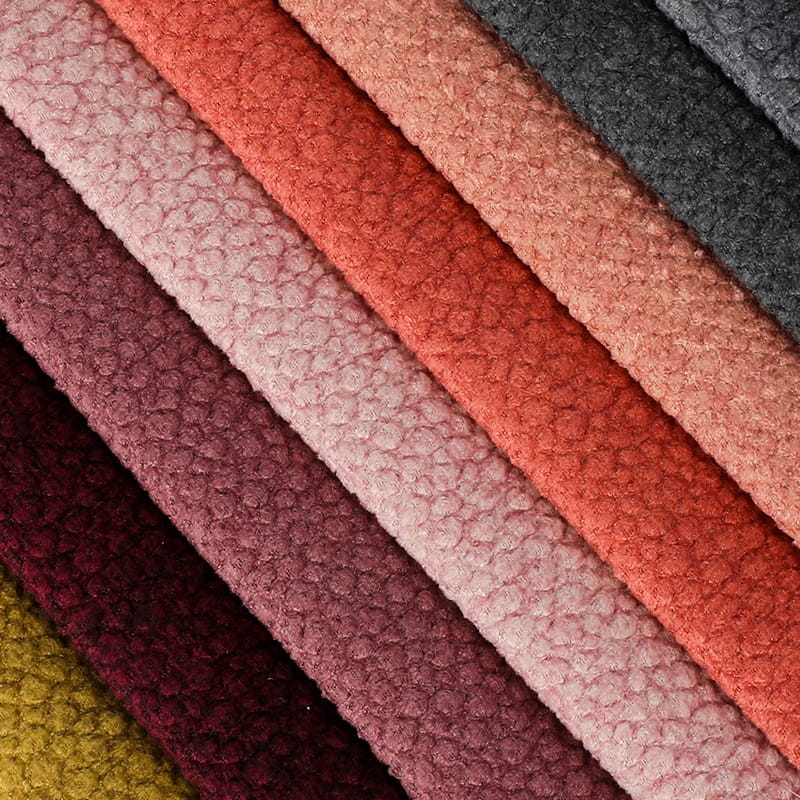
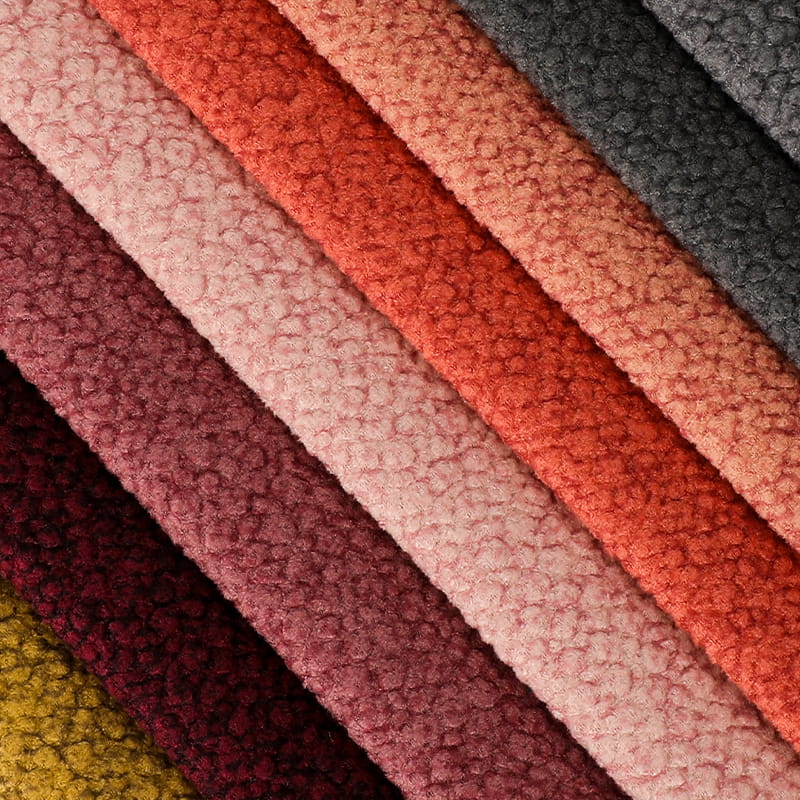
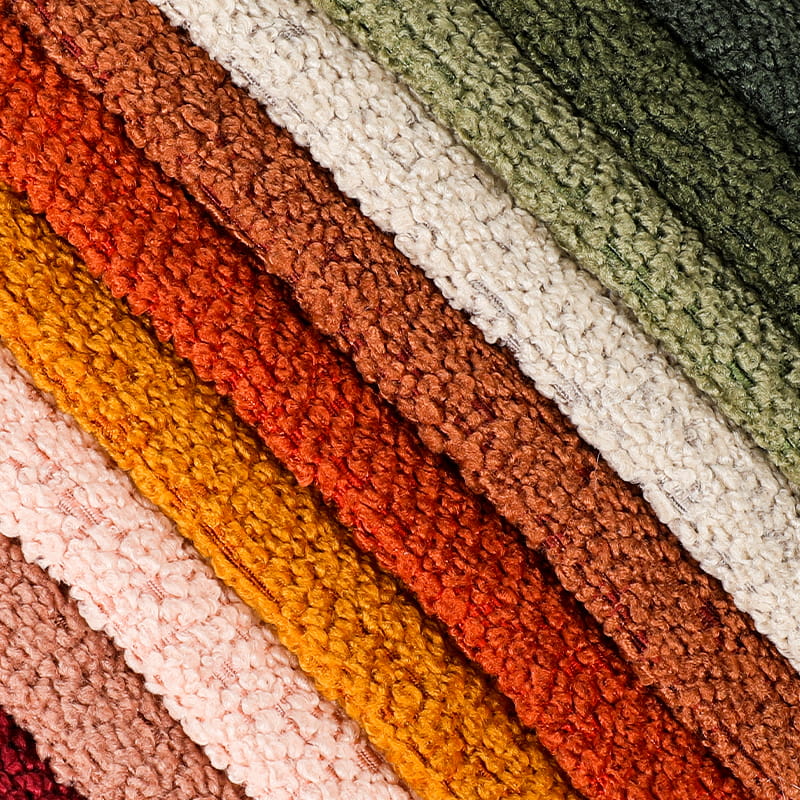
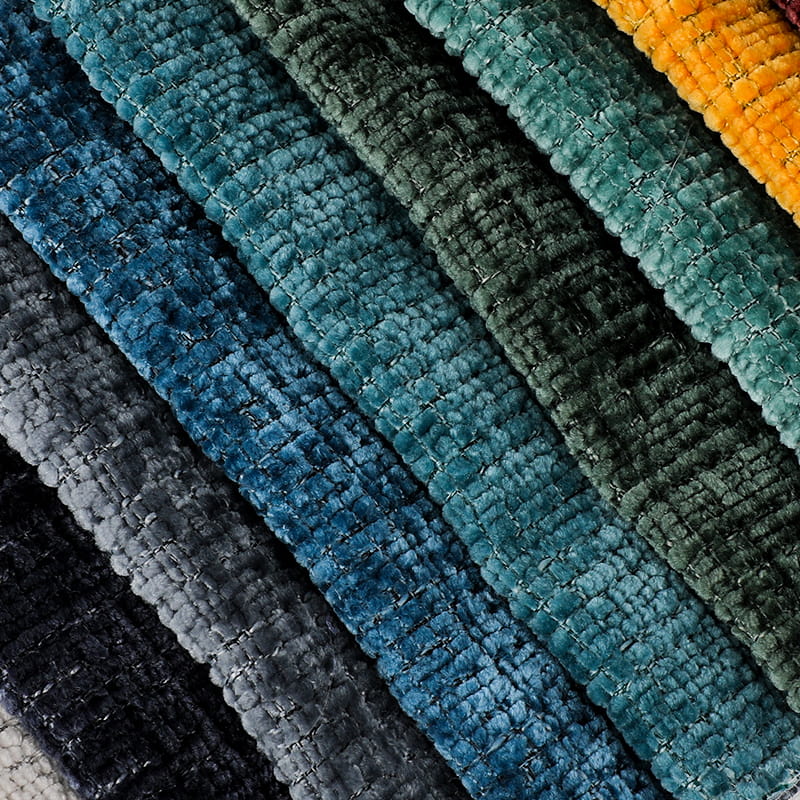
- Chenille: Chenille's fluffy pile structure is highly susceptible to cat claw snagging. Individual pile tufts are easily pulled out, creating visible bald patches in high-contact areas within weeks of cat use. Despite its soft, appealing hand, chenille is one of the worst-performing fabrics for cat households.
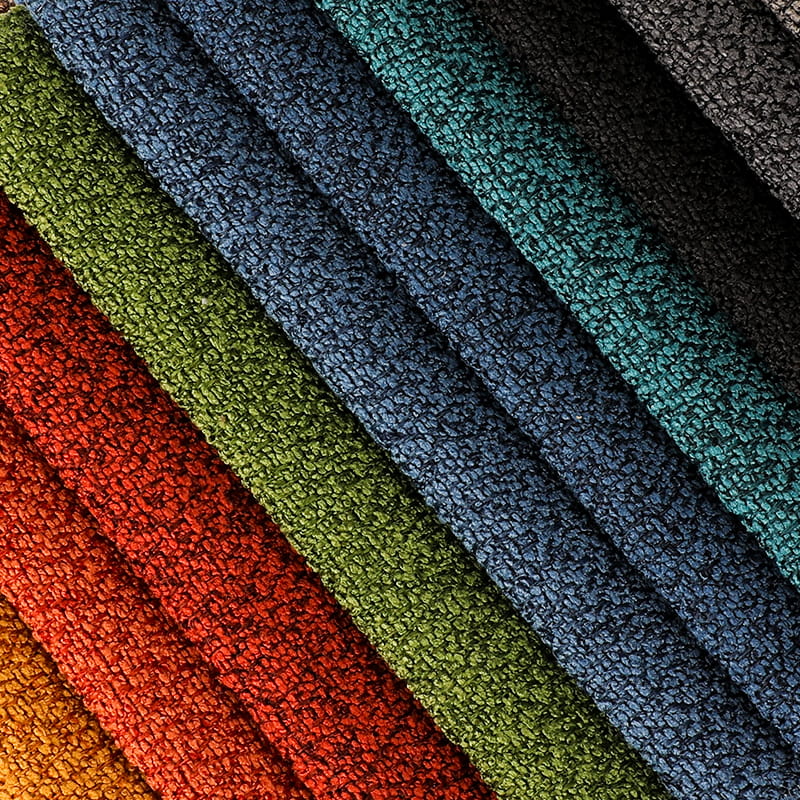
- Tweed and woven-texture fabrics: Open-weave tweed constructions trap pet fur deeply in the weave gaps, making removal difficult and time-consuming. The textured surface also presents more claw-catch opportunities than smooth constructions.
- Velvet with loose pile (low density): Low-quality velvet with sparse pile density and poor backing allows claws to penetrate to the base fabric and cause more serious structural damage. The density and quality of the pile construction is critical — high-density warp-knitted velvet performs well; low-density woven velvet with loose pile structure does not.
- Linen and natural-weave fabrics: Natural linen and loosely woven natural fiber fabrics snag easily, attract and hold pet fur, and are difficult to clean without waterproofing treatment. They are aesthetically desirable but practically poor choices for pet-heavy households without functional finishing.
- Silk and silk-look fabrics: Delicate, expensive, and not cleanable — silk and high-sheen synthetic silks are completely inappropriate for sofa upholstery in pet households.
How to Evaluate Pet-Friendly Fabric Performance When Sourcing
For furniture manufacturers and upholstery buyers sourcing fabric for the residential pet-owner market, specifying performance requirements in objective terms allows effective comparison between supplier offerings:
| Performance Property | Recommended Minimum Specification | Relevant Test Standard |
|---|---|---|
| Abrasion resistance | 50,000 Martindale rubs minimum (residential pet use) | ISO 12947 / ASTM D4966 |
| Pilling resistance | Grade 4 or above | ISO 12945 |
| Colorfastness to rubbing | Grade 4 dry / Grade 3–4 wet minimum | ISO 105-X12 |
| Water repellency/stain resistance | Spray rating 80 or above; stain resistance Grade 4+ | ISO 4920 / AATCC 193 |
| Snag resistance | Grade 4 or above | ISO 13936 / ASTM D5362 |
| Colorfastness to light | Grade 4 or above | ISO 105-B02 |
Frequently Asked Questions
Is velvet actually good for cat owners?
High-quality warp-knitted technology velvet with dense pile and waterproof finishing can actually perform well in cat households — better than many buyers assume. The critical factors are pile density (a high-density pile has fewer loop ends for claws to catch than a low-density or loose-loop constructions), pile backing quality (firmly anchored pile resists pulling better than loosely anchored pile), and surface finishing (waterproof-finished velvet prevents liquid penetration from accidents). The main vulnerability of velvet to cats is directional pile disturbance from scratching — the pile visibly changes direction where claws have contacted it. High-resilience technology velvet partially recovers from this; lower-quality velvet retains the directional marking more persistently.
What color sofa fabric hides pet hair best?
The most practical color choice for minimizing the visibility of pet hair on sofa fabric is a color that closely matches your pet's fur color — black fabric shows white pet hair very prominently, while medium gray fabric shows both black and white hair less than either extreme. Patterned fabrics (including printed and embossed velvet) disguise pet hair more effectively than solid-color fabrics because the pattern breaks up the visual uniformity that makes scattered hair strands prominent. For households with mixed-color pets, a medium-toned fabric with texture or a subtle pattern is typically the best practical camouflage strategy.
How often should a pet-friendly sofa be professionally cleaned?
For sofas in pet households, professional upholstery cleaning once every 12 to 18 months is generally recommended alongside regular home maintenance (weekly vacuuming with a pet hair upholstery attachment, prompt spot-cleaning of stains and accidents). High-traffic sofas with daily pet use may benefit from cleaning every 6 to 12 months. Waterproof-finished fabrics reduce the frequency required because liquid incidents do not penetrate the fabric and odor-causing compounds do not reach the substrate, reducing the soil buildup between professional cleaning cycles that accelerates in unfinished fabrics.
Can you apply pet-resistant treatment to an existing sofa fabric?
Aftermarket fabric protection products — fluoropolymer spray treatments marketed under brand names such as Scotchgard — can be applied to existing sofa fabric to improve stain and water resistance. These treatments provide meaningful improvement for liquid-based staining on unfinished fabrics. They do not, however, improve claw resistance or abrasion performance — these properties are determined by the fabric construction and cannot be modified by topical treatments. For sofas already in service with an existing fabric, an aftermarket protectant application extends the time between cleanings and reduces liquid staining; it is not a substitute for specifying the correct pet-friendly fabric at the time of upholstery selection.
Pet-Friendly Sofa Fabrics from Xincheng
Zhejiang Xincheng New Materials Co., Ltd. manufactures technology velvet, sofa fabric, and upholstery fabrics with waterproof, stain-resistant, and high-abrasion-resistance performance options specifically suited to demanding residential use, including pet households. With 21 years of warp-knitting and fabric manufacturing experience on 20 Karl Mayer machines, and a monthly production capacity of 1,500,000 meters, Xincheng supplies furniture manufacturers and upholstery buyers across global markets with consistently high-quality performance upholstery fabrics at competitive factory prices.
Contact us to request fabric samples with performance test data, waterproof finish options, and wholesale pricing for your furniture production requirements.
Related Products: Technology Velvet Fabric | Sofa Fabric | Holland Velvet Fabric | All Furniture Fabrics