English
 Español
Content
- Step 1: Define Your Light Control Requirement
- Step 2: Assess the Room's Aesthetic Direction
- Step 3: Consider Fabric Weight, Drape, and Heading Style
- Step 4: Evaluate Fiber Type and Care Requirements
- Step 5: Calculate the Fabric Quantity Required
- Frequently Asked Questions
- Curtain Velvet Fabrics from Xincheng
The curtain fabric you choose for a living room does more than block light — it determines the room's acoustic character, its thermal comfort, the way natural light is filtered and diffused through the space, and a significant proportion of the room's visual personality. The range of fabric options available, from sheer voile to velvet, is wide enough that choosing between them without a framework for evaluation leads to decisions that look good in a showroom sample but underperform in the finished room.
This guide covers the key criteria for evaluating curtain fabric choices for living room applications — light control, weight and drape, durability, fiber type, and construction — with specific guidance on when velvet curtain fabric is the appropriate specification and what to look for when sourcing it.
Step 1: Define Your Light Control Requirement
Light control is the primary functional requirement that determines which category of curtain fabric belongs in a specific living room. The four main light control categories are:
Sheer and Semi-Sheer Fabrics
Sheer curtains (voile, organza, lightweight chiffon) transmit most incoming light while providing daytime privacy. They soften and diffuse light, reducing glare and harsh shadows without significantly darkening the room. Semi-sheer fabrics (lightweight linens, cotton muslins, loosely woven polyester) provide more diffusion than pure sheers while maintaining the open, airy quality of a light-transmitting window treatment.
Sheers are appropriate for living rooms where natural light is valued, and daytime privacy from street level is the main concern — city apartments above street level, rooms facing gardens or private outdoor spaces, or rooms where the occupants want to maintain a visual connection with the outdoor environment during the day.
Lightweight Opaque Fabrics
Fabrics that block some but not all light — cotton, linen, viscose, and medium-weight polyester in solid or printed constructions — provide privacy and partial light control while allowing some light transmission through the fabric weave. These are the most commonly used curtain fabrics in residential living rooms where some light admission is desirable but full blackout is not required.
Blackout Fabrics
Lined curtains with blackout interlining, or fabrics with an integral blackout back-coating, provide near-complete light exclusion. Blackout curtains are appropriate for living rooms used for home cinema, for rooms where shift workers need daytime sleep, or for rooms with east- or west-facing windows that admit strong morning or afternoon sunlight at uncomfortable angles.
Velvet Curtains
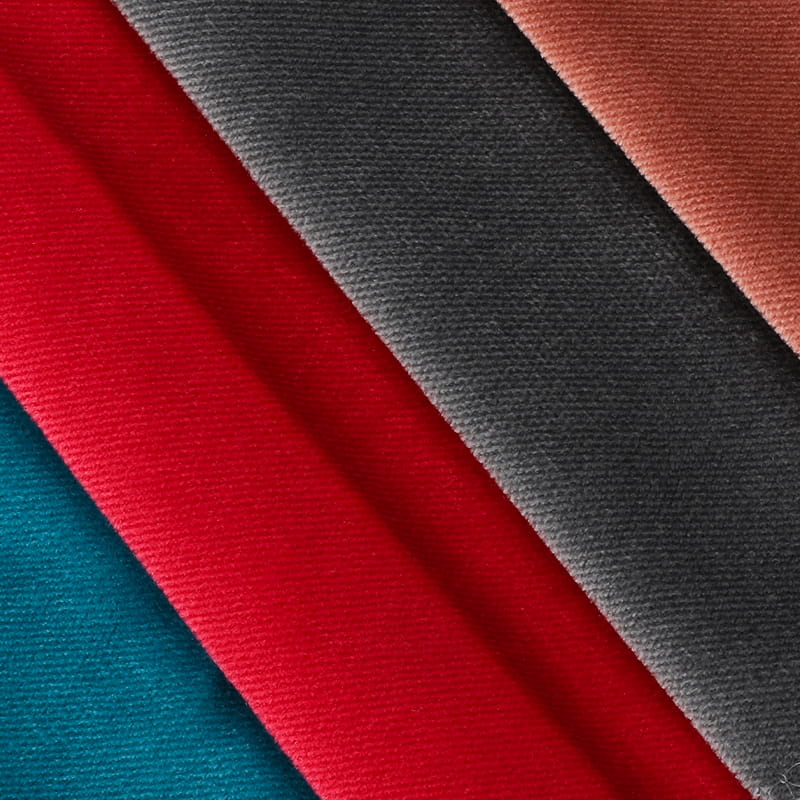
Dense velvet fabric occupies a specific position in the light control spectrum: it is not a blackout fabric in its own right, but its high pile density significantly attenuates light transmission compared to lightweight woven fabrics. A good-quality velvet curtain in a dark color, fully lined, will substantially darken a room without complete blackout. The pile structure of velvet also provides excellent sound absorption — heavy velvet curtains noticeably reduce both the transmission of external noise and the acoustic reverberation within the room, making them particularly effective in living rooms where acoustics are a consideration.
Step 2: Assess the Room's Aesthetic Direction
Curtain fabric choice is one of the most impactful single decisions in a living room interior. The fabric type, weight, texture, and color collectively determine whether the window treatment reads as formal or casual, contemporary or traditional, restrained or expressive. Key aesthetic considerations:
Formal and Traditional Living Rooms
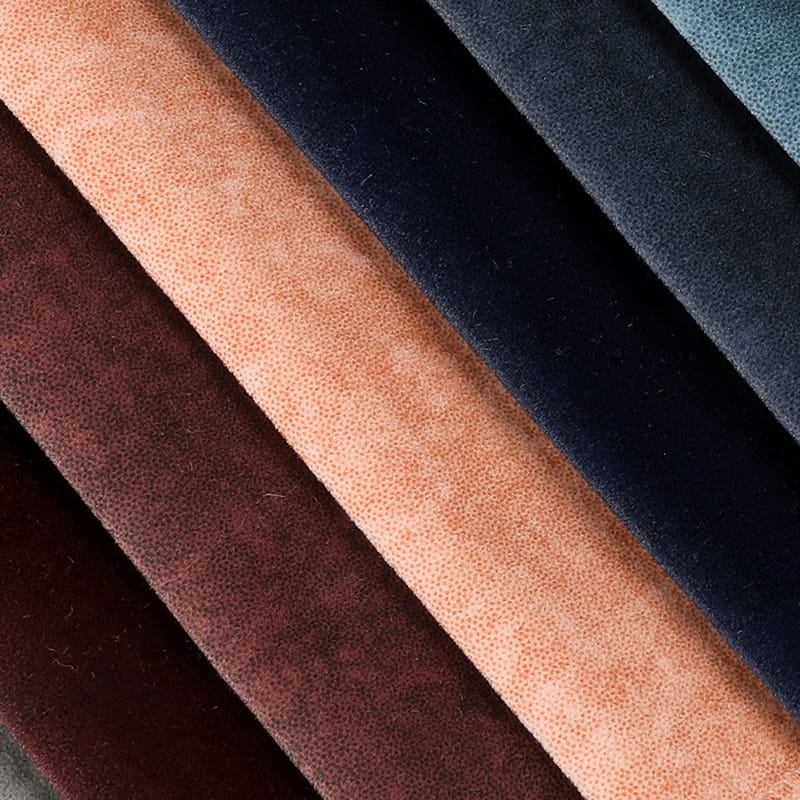
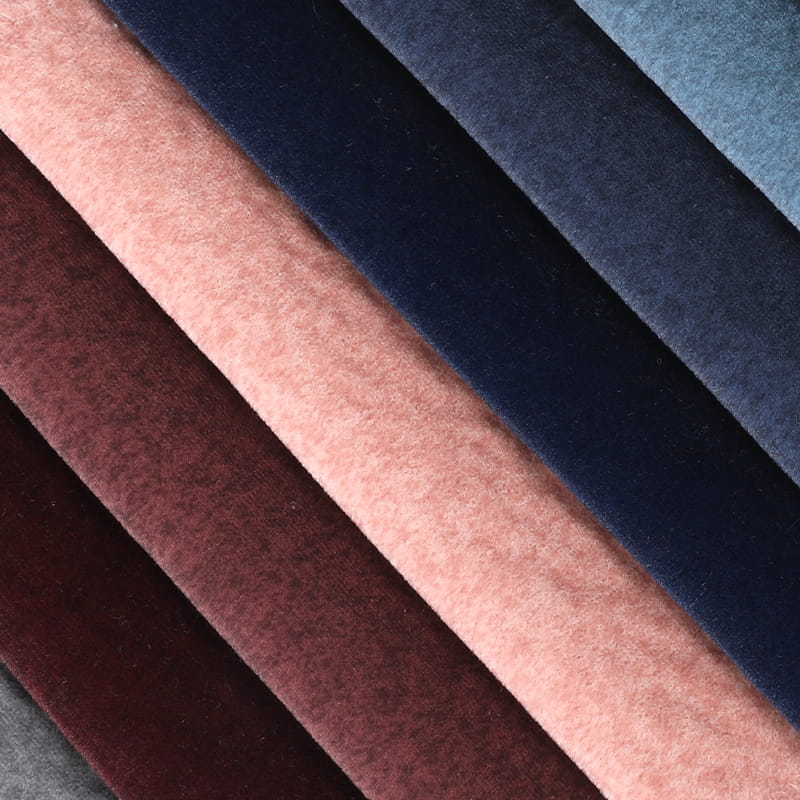
Heavyweight fabrics with structure and visual richness — velvet, damask, heavy linen, silk dupioni, jacquard — suit traditional and formal living room aesthetics. Velvet curtains in deep jewel tones (emerald, sapphire, burgundy, midnight blue) or neutral rich tones (charcoal, taupe, deep cream) are the canonical choice for formal living rooms in classical, Georgian, or Victorian-inspired interiors. The way velvet drapes in generous floor-to-ceiling pools creates the visual weight and gravity appropriate to formal room settings.
Contemporary and Minimalist Living Rooms
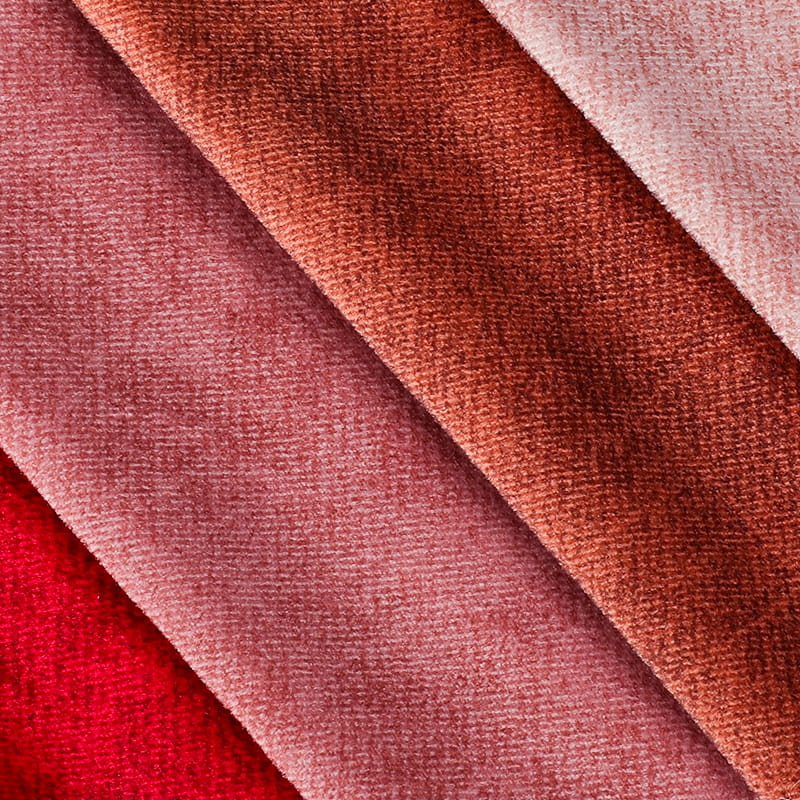
Contemporary living rooms typically suit lighter, cleaner fabric choices — linen blends, textured polyester, matte cotton — in neutral or muted palettes that contribute texture without visual complexity. Velvet in contemporary interiors works best in solid, muted colors (dusty pink, sage, stone, charcoal) in leaner, less gathered curtain styles (pinch-pleat or eyelet heading with controlled fullness) that avoid the traditional heaviness of velvet in a more pared-back architectural context.
Transitional and Eclectic Living Rooms
Transitional rooms — combining contemporary architecture with traditional furnishings, or mixing periods and styles — give the most flexibility in curtain fabric choice. Velvet, linen, printed fabrics, and textural weaves can all work within a transitional context, depending on the specific color palette and furnishing combination.
Step 3: Consider Fabric Weight, Drape, and Heading Style
Curtain fabric weight directly determines how the curtain hangs and moves. Heavy fabrics (velvet, lined jacquard, thick linen) hang with gravity, drape in generous folds, and have a sense of permanence and substance. Lightweight fabrics (sheer voile, cotton lawn) move with air currents, flutter, and have a more dynamic, airy quality.
The heading style — the way the curtain is gathered or pleated at the top — interacts with fabric weight to determine the finished appearance:
- Pencil pleat: The most common residential heading. Creates a series of narrow, uniform pleats when gathered. Works well with medium to heavy fabrics, including velvet; the structured pleats emphasize the fabric's weight and drape.
- Pinch pleat (double or triple): Hand-sewn or tape-formed groups of three pleats at regular intervals. Creates a more formal, controlled drape than a pencil pleat. The traditional heading for velvet and heavy drape curtains in formal rooms.
- Eyelet/grommet: Metal rings at the top through which the rod passes directly. Creates a contemporary, relaxed wave pattern. Works with most fabric weights but is typically associated with medium-weight fabrics and contemporary styling. Can work with velvet in contemporary room contexts.
- Tab top: Fabric loops attached at the top through which the rod passes. Creates a casual, relaxed hang — best with lightweight fabrics. Not appropriate for heavy velvet or structured formal curtains.
Step 4: Evaluate Fiber Type and Care Requirements
The fiber content of the curtain fabric determines its durability, light fastness, care requirements, and environmental performance:
Polyester Velvet (Warp-Knitted)
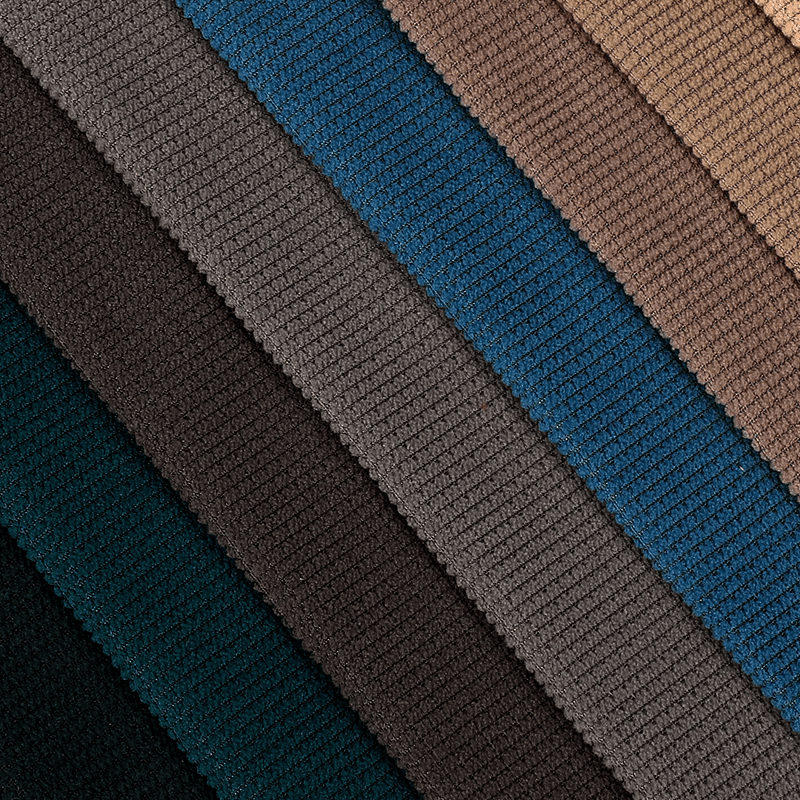
Polyester is the dominant fiber for curtain velvet in the contemporary market. Polyester velvet offers the combination of durability, color fastness, dimensional stability, and competitive cost that makes it the practical default for most residential and contract curtaining applications. Warp-knitted polyester velvet — the type produced by Xincheng — has a dense, uniform pile structure with good light fastness (Grade 4–5 or above under ISO 105-B02 testing) that maintains color through years of light exposure. Care is typically machine washable on a gentle cycle or dry clean, depending on the specific construction and any applied finishes.
Cotton Velvet
Cotton velvet has a slightly different aesthetic from polyester — a more matte, textured surface with less synthetic sheen — and is favored for certain traditional and artisan interior styles. Cotton velvet is less durable than polyester in high-wear applications and has lower light fastness than polyester equivalents. For curtaining in bright rooms with significant sun exposure, cotton velvet's lower UV resistance makes it a higher-risk choice than polyester without UV-protective lining.
Linen and Natural Weaves
Linen, cotton canvas, and natural-look weave fabrics for curtaining provide a casual, organic aesthetic with good durability and reasonable light control. They are an alternative to velvet for living rooms where texture and natural character are priorities, but the formality or visual richness of velvet is not appropriate to the room's design language.
Printed Fabrics
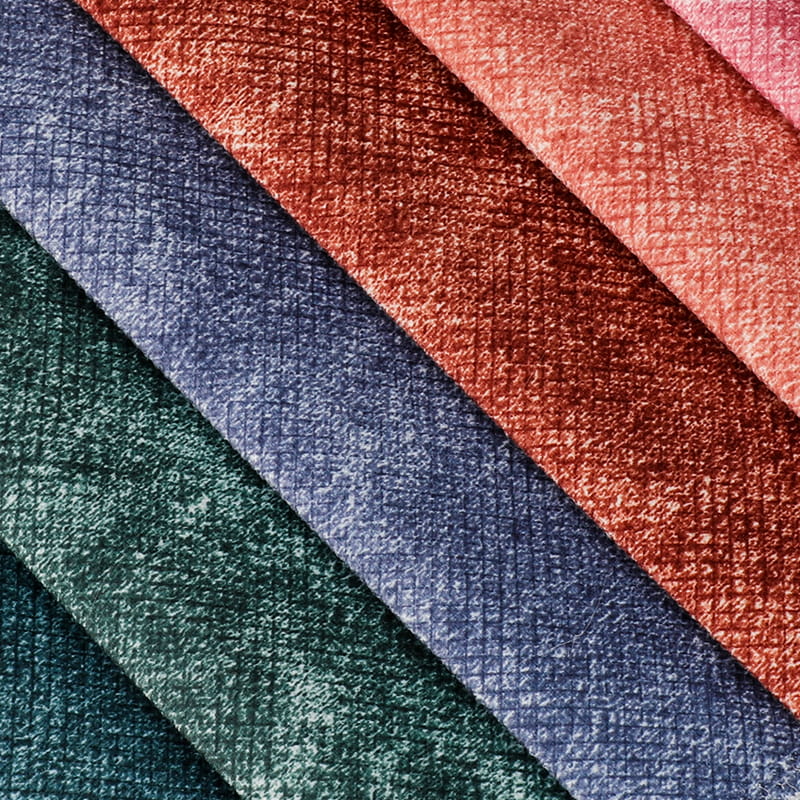
Printed curtain fabrics — whether digitally printed, screen printed, or rotary printed — introduce pattern interest and can anchor a room's color palette through the window treatment. Print fabrics for curtaining should be evaluated for light fastness (printed pigments vary significantly in UV resistance), repeat size (large pattern repeats require more fabric per drop to match patterns at seams), and whether the print is on a curtain-weight base fabric or a fashion-weight fabric that will not behave well at curtain scale.
Step 5: Calculate the Fabric Quantity Required
Curtain fabric quantity calculation is frequently underestimated. The general formula for standard pencil pleat or pinch pleat curtains is:
Fabric quantity (meters) = (Track width × fullness factor × number of widths) + (drop + heading + hem allowance) per width
For most pile fabrics, including velvet, a fullness factor of 2.0–2.5 times the track width is standard, meaning for a 2-meter-wide window, you need 4 to 5 meters of fabric width distributed across the curtain panels. For patterned fabrics, add one full pattern repeat per drop for pattern matching. For velvet, ensure all fabric panels are cut in the same pile direction to avoid shading differences between panels — this requires careful layout planning and usually increases the total fabric consumption by 5–10% over a plain fabric of equivalent dimensions.
Frequently Asked Questions
Is velvet a good choice for curtains in a room with children or pets?
Velvet curtains are durable and practical in family rooms with appropriate care. Modern warp-knitted polyester velvet is machine washable (check manufacturer care instructions), resists pile crushing better than older woven velvet constructions, and does not snag as easily as loose-loop pile fabrics. The dense pile of velvet also does not show pet hair as prominently as smooth, flat-woven fabrics — hair sits on the pile surface rather than embedding in a weave structure, making it easier to remove with a lint roller or light vacuuming. For curtains in rooms where frequent washing is expected, confirm the fabric's wash shrinkage behavior before making up the curtains, and allow appropriate hem length for post-wash adjustment if necessary.
How much fullness should velvet curtains have?
Velvet curtains typically look best with a fullness factor of 2.0 to 2.5 times the track/rod width — meaning the total fabric width across all panels is two to two-and-a-half times the width of the window or track. This fullness creates the generous, stacked folds that show velvet's drape at its best. Insufficient fullness (below 1.8 times) creates a flat, mean appearance that does not do justice to velvet's weight and character. Excessive fullness (above 3 times) in a heavy velvet creates an overpowering visual mass that can overwhelm smaller room proportions.
How do you prevent velvet curtains from looking dusty or flat?
The most common maintenance issue with velvet curtains is pile flattening and dust accumulation that dulls the surface sheen. Regular light vacuuming with a soft upholstery attachment — running in the direction of the pile — removes accumulated dust without disturbing the pile direction. For a pile that has been flattened by handling or storage, holding a steam iron above (not touching) the velvet surface and gently stroking the pile in its natural direction with a soft cloth while the steam softens the fibers will revive the pile's upright position. Avoid pressing a hot iron directly on velvet — direct heat contact causes permanent crushing and glazing of the pile surface.
What lining is recommended for velvet curtains?
Velvet curtains benefit significantly from lining. A standard cotton/polyester sateen lining adds body that helps the curtain hang cleanly and prevents the pile from shadowing through when backlit. For thermal or acoustic performance, an interlining (a thick flannel or bump fabric sandwiched between the curtain fabric and the outer lining) adds significant insulation and sound absorption — appropriate for rooms where thermal efficiency or noise control is a priority. Blackout lining behind velvet provides near-complete light exclusion for rooms where full light control is required. Lining also protects the velvet fabric from UV damage from the window side, extending the curtain's life in bright rooms.
Curtain Velvet Fabrics from Xincheng
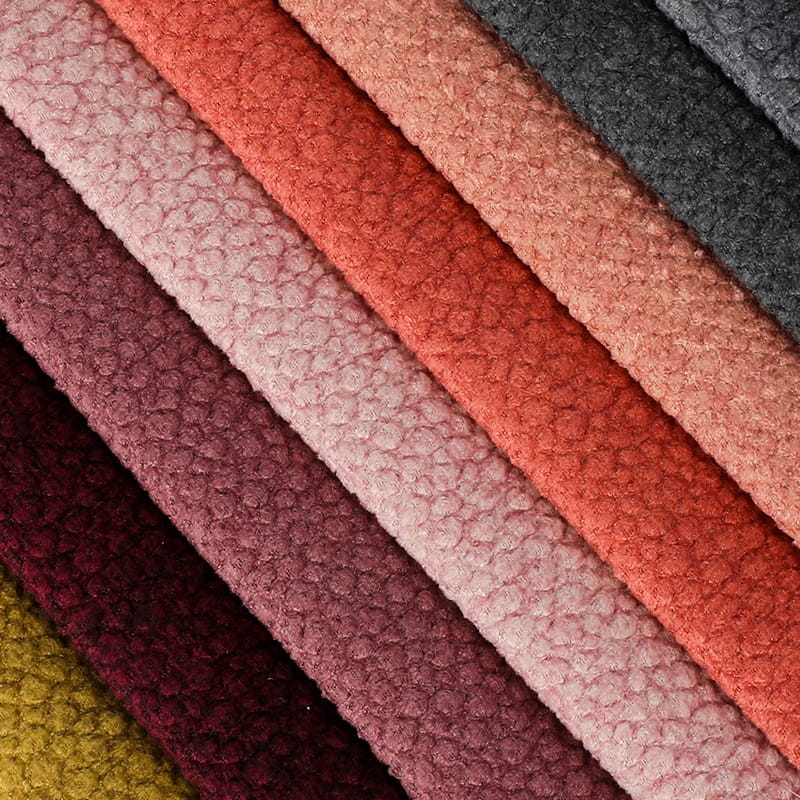
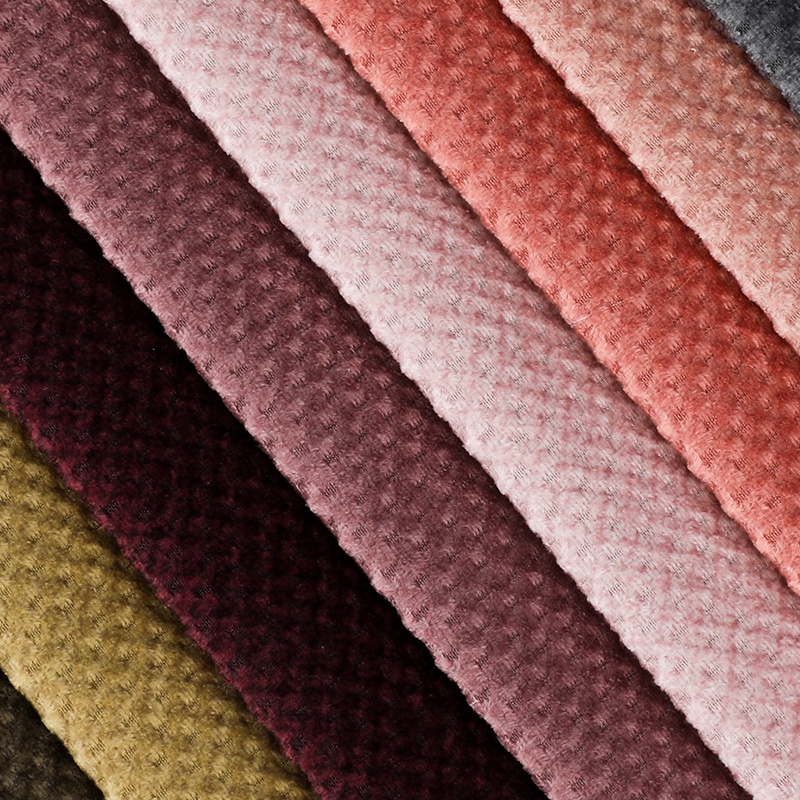
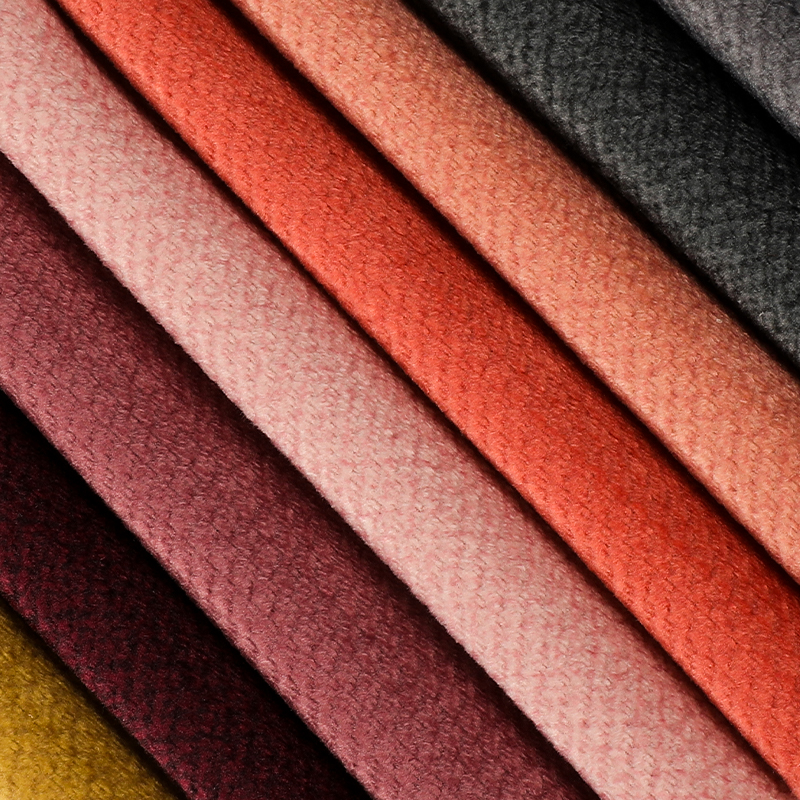
Zhejiang Xincheng New Materials Co., Ltd. manufactures curtaining velvet fabrics, including Holland velvet, technology velvet, and warp-knitted pile constructions specifically designed for window treatment applications. Wide color range, consistent pile quality, and competitive factory-direct pricing. Monthly production capacity of 1,500,000 meters. Custom color and specification development is supported for volume orders.
Contact us to request curtaining velvet samples, width and weight specifications, and wholesale pricing.
Related Products: Curtaining Velvets | Holland Velvet Fabric | Print Fabrics | All Decorative Fabrics