English
 Español
Content
Velvet and velour are both soft, pile-surface fabrics that share a visual resemblance — both have a dense, plush surface with a characteristic sheen and directional nap — but they are made by different processes from different fiber types, and they perform differently in upholstery applications. The confusion between them is common in retail and consumer contexts, and even in trade sourcing, the two terms are sometimes used loosely. Understanding the actual distinctions helps furniture buyers, upholsterers, and interior designers specify the right material for a given application.
What Is Velvet?
Velvet is a fabric defined by its manufacturing method: it has a cut pile surface produced either by the traditional double-cloth weaving method or by warp knitting with pile formation. The key characteristic of velvet's pile structure is that it is cut — the pile loops are cut open to produce upright fiber ends that form the characteristic dense, soft surface. Velvet can be made from silk, cotton, viscose, polyester, or blended yarns, and ranges from traditional luxury silk velvet to modern warp-knitted technology velvet for upholstery.
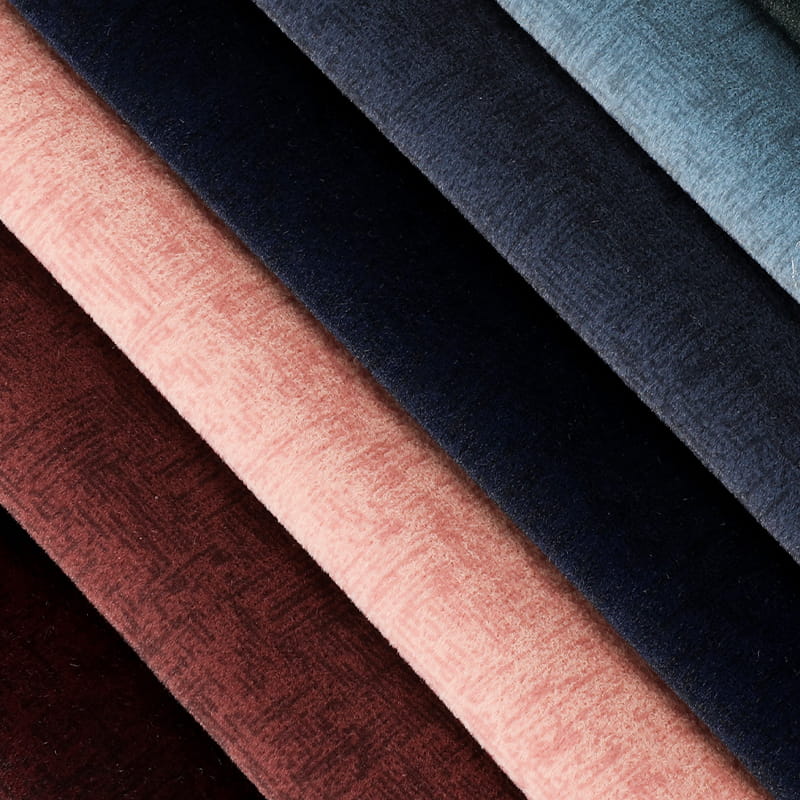
In upholstery contexts, "velvet" refers predominantly to woven velvet (in traditional and formal applications) or warp-knitted technology velvet (in contemporary furniture production). The pile surface of velvet reflects light directionally — the fabric appears to shift shade when viewed or touched from different angles, which is the distinctive visual property that gives velvet its luxurious appearance.
What Is Velour?
Velour is a knitted fabric — specifically, a weft-knitted (circular-knitted) fabric with a cut-pile or loop-pile surface created by napping or brushing the fabric surface after knitting. Unlike velvet's woven or warp-knitted base, velour has a circular-knitted base structure similar to jersey fabric. The pile surface of velour is created not by weaving pile yarns in during fabric construction but by raising fibers from the base yarns through mechanical brushing or napping — pulling fiber ends to the surface to create the plush appearance.
Velour is typically made from cotton, polyester, or cotton/polyester blends. It is the fabric of sweatshirts, tracksuits, and casual homewear, as well as lower-grade upholstery. Its circular-knit base makes it stretchier and more flexible than velvet, with a less structured surface that does not have velvet's directional sheen — velour appears more uniformly matte or soft-sheen rather than directionally lustrous.
Key Differences Side by Side
| Property | Velvet (Woven or Warp-Knitted) | Velour (Weft-Knitted) |
|---|---|---|
| Base construction | Woven or warp-knitted base | Circular (weft) knitted base |
| Pile formation | Pile yarns are integrated during weaving or warp knitting; cut to produce upright pile | Pile created by brushing/napping base yarn fibers to the surface after knitting |
| Pile structure | Dense, uniform, firmly anchored in base structure | Less dense, softer anchoring — fibers raised from base yarns |
| Directional sheen | Yes — characteristic directional light reflection | Less pronounced — more uniform appearance |
| Stretch | Minimal stretch (woven velvet) to moderate (warp-knitted) | Significant stretch — the knitted base is inherently elastic |
| Durability for upholstery | Good to excellent — warp-knitted velvet engineered for furniture-grade | Lower — not typically specified for high-wear furniture applications |
| Typical applications | Sofas, chairs, upholstered headboards, and curtains | Casual furniture, soft furnishings, clothing, sportswear |
| Price position | Mid to premium in furniture fabrics | Economy to mid — lower production cost than velvet |
Why Velvet Is the Standard Choice for Quality Sofa Upholstery
In the furniture industry, velvet — particularly warp-knitted technology velvet — is the dominant pile fabric specification for quality sofa upholstery. The reasons are practical:
Pile Density and Durability
Velvet's pile yarns are integrated into the fabric structure during production, creating a firmly anchored pile that resists abrasion and maintains its appearance under sustained use. Furniture-grade warp-knitted velvet is typically tested to 50,000–100,000 Martindale rub cycles — the industry standard for measuring abrasion resistance — and high-quality products maintain their pile density and surface appearance at these test levels. Velour's brushed pile is less firmly anchored and has lower abrasion resistance, making it less suitable for high-wear seating surfaces.
Dimensional Stability
Velvet's woven or warp-knitted base provides better dimensional stability than velour's circular-knit base. This stability is important in upholstery applications: fabric that stretches and distorts during the fitting and stapling process, or that bags and pulls after extended use, creates quality problems in the finished furniture. The stable base of furniture-grade velvet maintains its geometry through the upholstery construction process and in use.
Surface Appearance Over Time
A key quality differentiator between velvet and velour for sofas is how each fabric looks after months of use. Furniture-grade velvet, with its firmly anchored cut pile, maintains its appearance consistently with normal use — the pile recovers from seating pressure and does not permanently mat or flatten in the way that less dense or poorly anchored pile fabrics can. Velour, with its lighter pile structure, is more prone to developing worn, flat areas in high-contact zones (seat cushion centers, armrest tops) over time.
Holland Velvet: Where It Fits
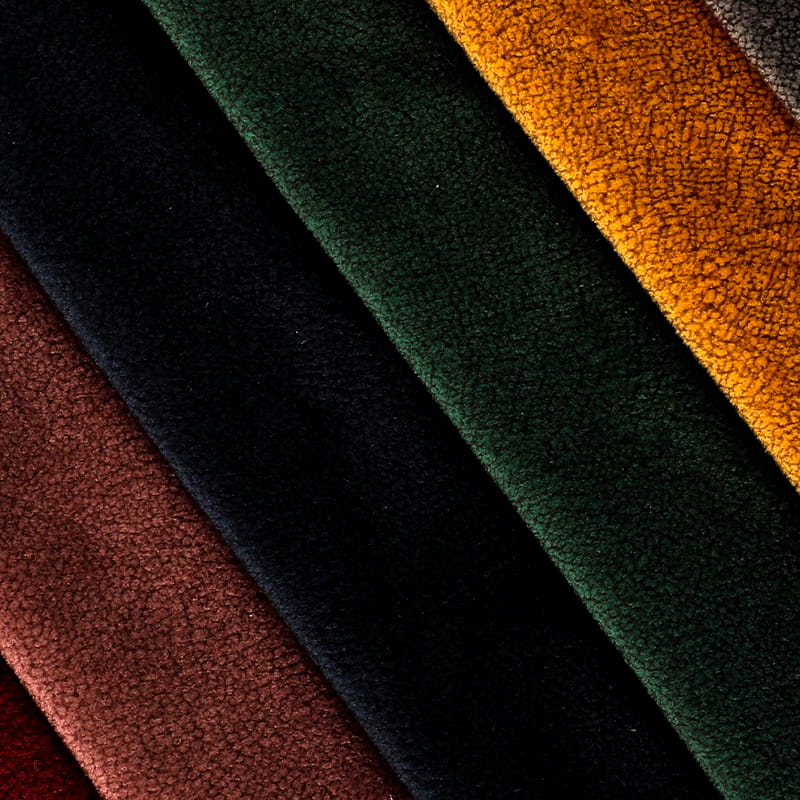
Holland velvet — one of Xincheng's key product lines — is a specific type of warp-knitted velvet distinguished by its particularly fine, dense pile structure and its characteristic smooth, lustrous surface with excellent directional sheen. Holland velvet is produced on high-speed warp knitting machines using ultra-fine polyester filament yarns, and the combination of fine yarn denier, high pile density, and specialized finishing produces a surface that closely resembles the visual quality of traditional silk velvet at a fraction of the cost.
Holland velvet occupies the premium tier of the warp-knitted velvet category — positioned above standard technology velvet in terms of surface refinement and visual quality, while retaining the durability and performance advantages of warp-knitted construction over traditional woven velvet. It is specified for premium residential sofas, upholstered furniture for boutique hotels and hospitality applications, and decorative upholstery where visual richness is a priority.
Choosing Between Velvet Types for Your Application
Within the velvet category, the choice between standard technology velvet and Holland velvet for a specific sofa application depends on the combination of performance requirements, aesthetic priorities, and budget:
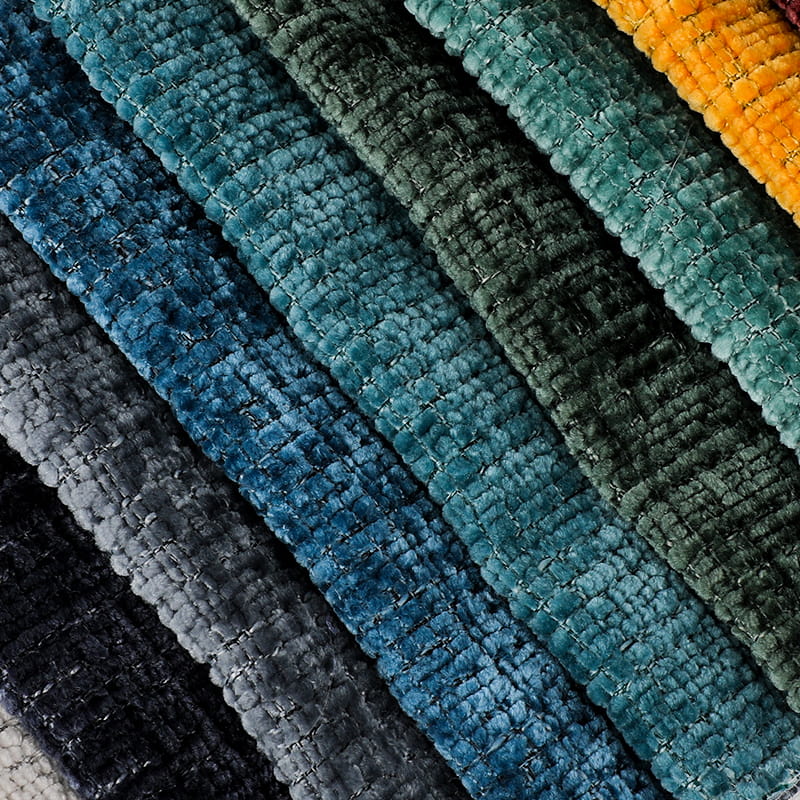
- Standard technology velvet: Best for mainstream residential sofas and contract furniture where durability, cleanability, and competitive pricing are the primary criteria. Available with waterproof, stain-resistant, and other functional finishes. Broad color range and pattern options, including embossed and burnout constructions.
- Holland velvet: Best for premium residential upholstery and decorative applications where visual richness, surface refinement, and a luxurious appearance are the design objectives. Higher pile density and finer yarn construction deliver a more refined surface at a higher material cost.
- Super soft velvet: Best for applications where tactile softness is the primary consumer-facing selling point — sofa cushions, decorative throws, and upholstered beds where the first-touch impression of extreme softness is commercially important.
Frequently Asked Questions
Can velour be used for sofa upholstery?
Velour can be used for casual sofa covers and lower-price-point upholstered furniture where the durability and appearance-retention requirements are less demanding. In loose-fit sofa covers (slipcovers) that are removed and washed periodically, velour's stretch and flexibility can actually be an advantage — it conforms to the furniture shape more easily than dimensionally stable velvet. For fixed upholstery on quality furniture intended for years of heavy use, warp-knitted velvet is the appropriate specification — its superior abrasion resistance, pile density, and dimensional stability better meet the wear demands of upholstered seating.
How do I tell velvet and velour apart when evaluating fabric samples?
The most reliable way to distinguish velvet from velour when handling fabric samples is to check the stretch behavior: velour stretches significantly in multiple directions because of its circular-knit base; velvet has minimal stretch (woven velvet is essentially non-stretch; warp-knitted velvet has limited stretch). Checking the back of the fabric also helps — velvet has a structured woven or warp-knitted back with visible technical construction; velour has a jersey-like back that looks like a knitted sweater fabric. Directional sheen is more pronounced in velvet than velour — hold the sample at different angles and check whether the apparent color changes significantly with viewing angle.
Does velvet fade in sunlight?
Standard polyester velvet has moderate light fastness — it will fade if exposed to prolonged direct sunlight, though polyester is more UV-resistant than cotton or viscose velvet. For upholstery positioned near windows with significant sun exposure, specifying velvet with enhanced light fastness (ISO 105-B02 light fastness Grade 5 or above) reduces fading risk. Holland velvet and technology velvet from Xincheng are produced with polyester yarns that provide good base light fastness, and finishing treatments can further improve UV resistance for applications where light exposure is a concern.
What is the best way to clean velvet sofa fabric?
Cleaning recommendations for velvet sofa fabric depend on the specific product finish and construction. Waterproof-finished technology velvet can be spot-cleaned with a damp cloth — liquid spills bead on the surface and can be blotted away without penetrating the fabric. Unfinished velvet should be spot-cleaned with a small amount of mild upholstery cleaner applied with a soft cloth, working in the direction of the pile; avoid saturating the fabric with water. For thorough cleaning, professional upholstery cleaning is recommended for all velvet types to avoid pile crushing, watermarking, or color damage from incorrect home cleaning methods.
Related Products: Technology Velvet Fabric | Holland Velvet Fabric | Sofa Fabric | Curtaining Velvets