English
 Español
Content
- What Mill Specs Reveal About Holland Velvet Fabric
- Holland Velvet vs. Standard Velvet: Spec-by-Spec Comparison
- Matching GSM and Backing to Sofa, Chair, and Curtain Use
- How Printing, Embossing, and Coating Change Performance
- Is Holland Velvet Fabric Durable Enough for Daily Upholstery Use?
- What to Verify Before Bulk Ordering Holland Velvet
- Frequently Asked Questions About Holland Velvet Fabric
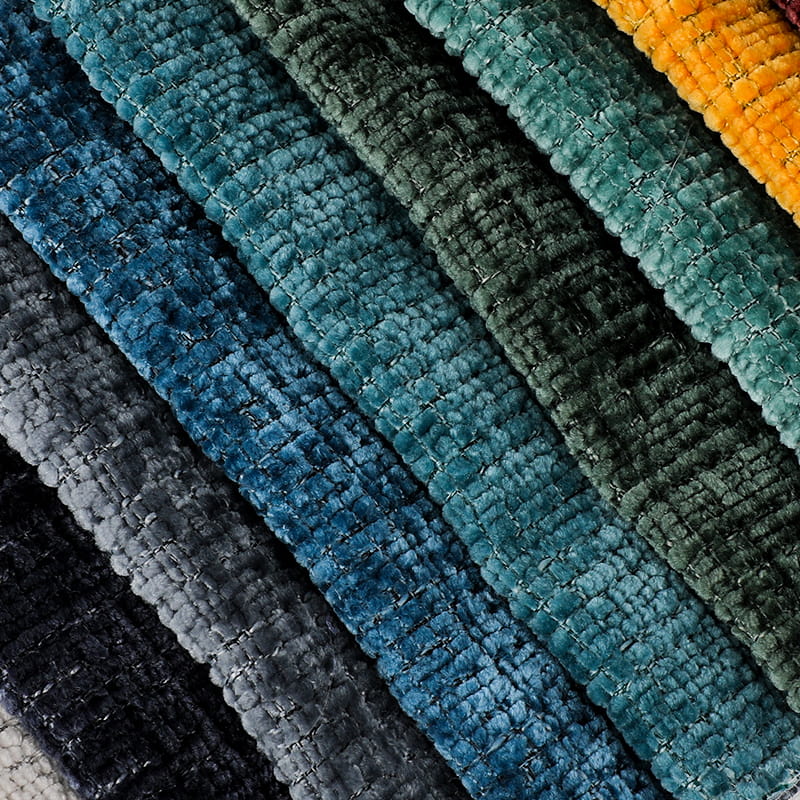
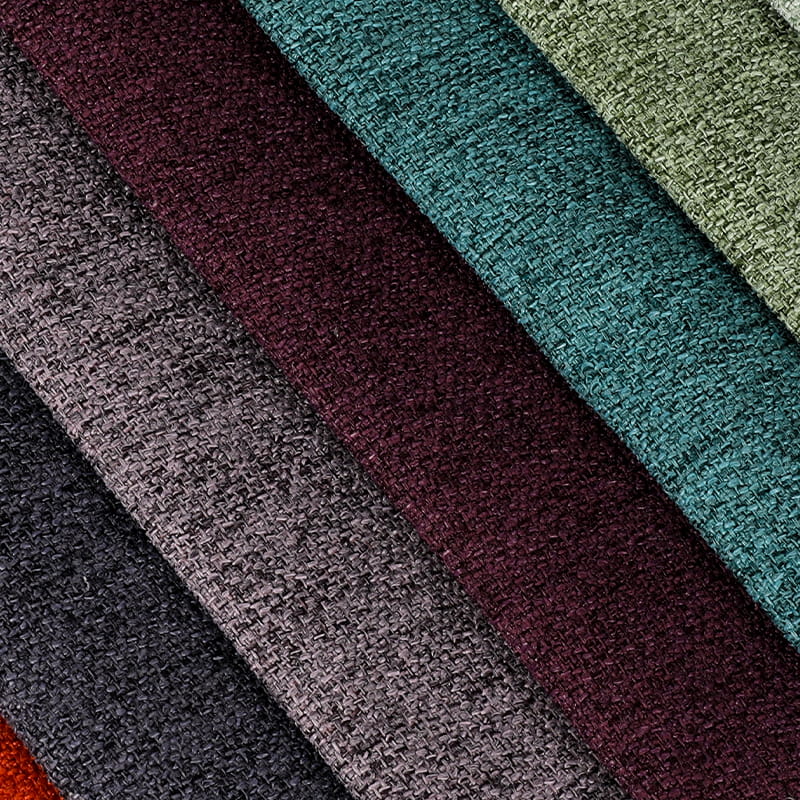
When a furniture maker lays out a new upholstery program, the swatch that gets circled first is usually holland velvet fabric. Three characteristics drive that decision: a warp-knit pile structure that behaves predictably on the cutting table, a weight range broad enough for sofas, chairs, and curtains, and a finishing line that can print, emboss, or coat without shifting the hand feel. The company that misses on any of the three pays for it in returns and re-upholstery. Holland velvet fabric is a warp-knitted pile textile, almost always 100% polyester, finished with a short, dense pile that reads as velvet at a fraction of the cutting and care cost of traditional woven velvet.
What Mill Specs Reveal About Holland Velvet Fabric
Holland velvet is defined by construction, not by a place name: the ground is a tricot-knitted polyester base, and the pile is raised, sheared, and brushed to a controlled height. That knit base is what separates it from woven velvet. A knitted ground recovers better after stretch, holds stitches more predictably, and resists the seam slippage that appears on cheap woven velvet frames.
Reference specifications like weight, width, and backing come first in any mill datasheet. Zhejiang Xincheng New Materials, an upholstery fabric manufacturer operating since 2002, lists 100-500 gsm weights and 100-300 cm working widths, with a fleet of KARL MAYER warp-knitting machines supporting about 1.5 million meters of monthly output.
- Weight: 100-500 gsm; typical sofa grade 210-280 gsm
- Width: 100-300 cm; selvedge and width tolerance confirmed per production lot
- Pile construction: filament polyester, sheared and brushed to a uniform height
- Stability: the knit ground reduces bias stretch during tufting and sewing
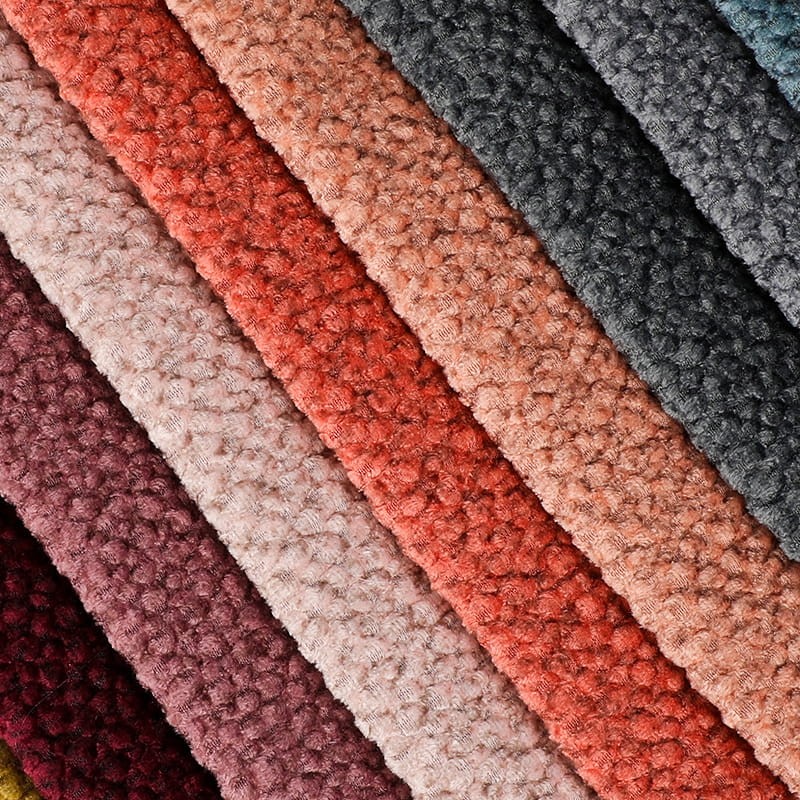
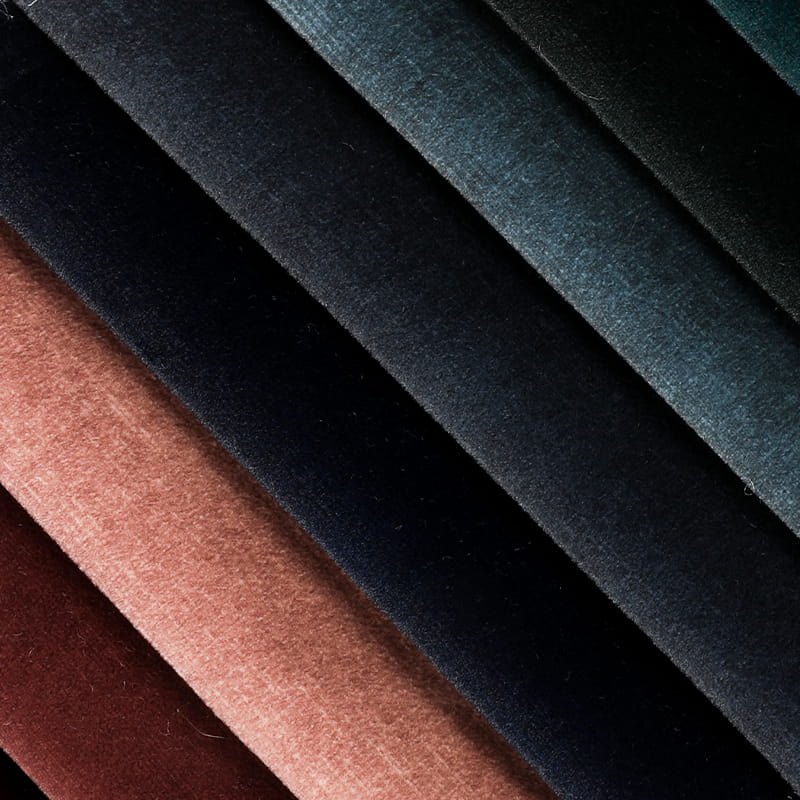
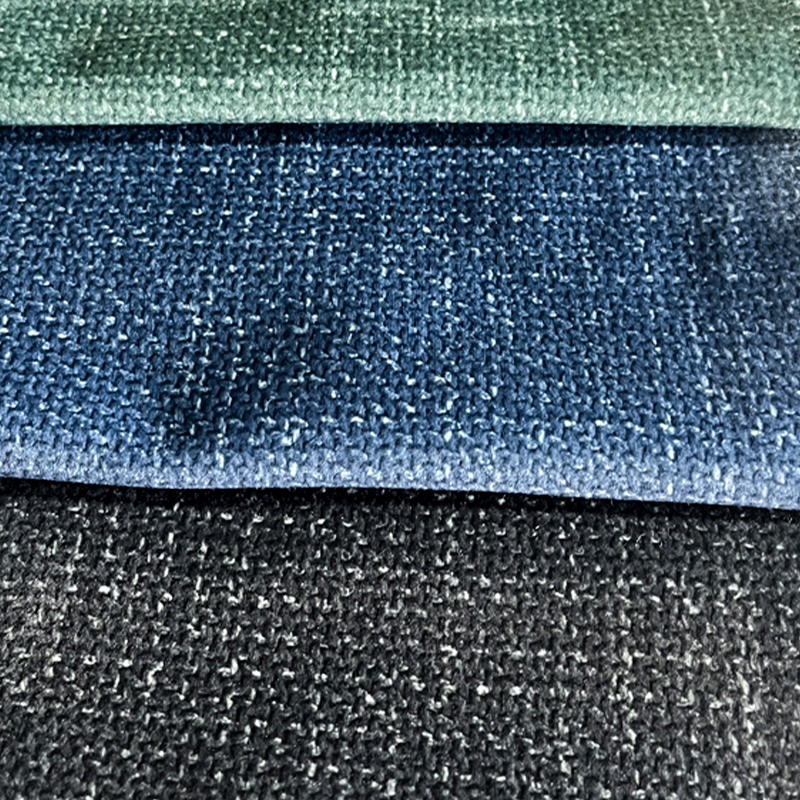 Holland Double Velvet Fabric with Mill SpecificationsThis listing covers Holland double velvet, highlighting softness, warmth retention, and decorative gloss. Review the given weight, width, and backing data before comparing it against standard woven velvet in the same colorway.View Product →
Holland Velvet vs. Standard Velvet: Spec-by-Spec Comparison
The fastest way to evaluate holland velvet fabric is to put it next to a standard woven velvet in the same colorway and read the numbers, not the marketing copy. The table below summarizes typical upholstery-grade values for both constructions.
| Property | Holland velvet | Standard velvet |
| Construction | Warp-knitted pile | Woven pile, often double cloth |
| Primary fiber | Polyester filament | Cotton, rayon, or blends |
| Weight range | 100-500 gsm | 180-420 gsm typically |
| Martindale abrasion | 25,000-40,000 rubs | 15,000-25,000 rubs |
| Stretch and recovery | Moderate, good recovery | Low, creases on folding |
| Cutting behavior | Stable with backing | Slippery, needs pinning |
| Relative cost | Lower material cost | Higher material cost |
| Care | Faster drying, low shrink | Higher shrink with water |
Matching GSM and Backing to Sofa, Chair, and Curtain Use
Choose weight first, backing second. The 210-280 gsm band covers most residential sofas; anything below 200 gsm reads as a throw fabric, and anything above 350 gsm is contract territory with heavier cost and stiffer drape.
Weight selection by application
- 160-210 gsm: chair shells, headboards, cushion covers, light valances
- 210-280 gsm: sofas, loveseats, recliners, ottomans
- 280-350 gsm: deep-seat loungers and family rooms with heavy use
- 350-500 gsm: contract seating, hospitality, acoustic panels
Backing choice changes the hand feel and the upholstery behavior. Fleece backing softens the cloth and cushions the pile against foam abrasion; pongee backing adds dimensional stability, which helps tailored seams hold a crisp line during button tufting. For curtain programs, a lighter pongee backing preserves drape while reducing transparency.
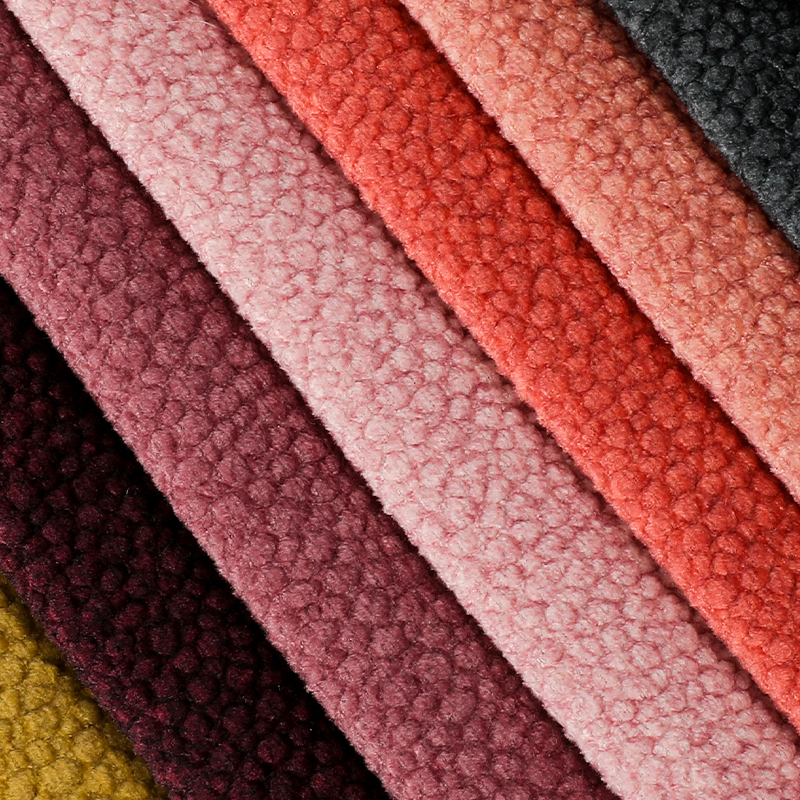
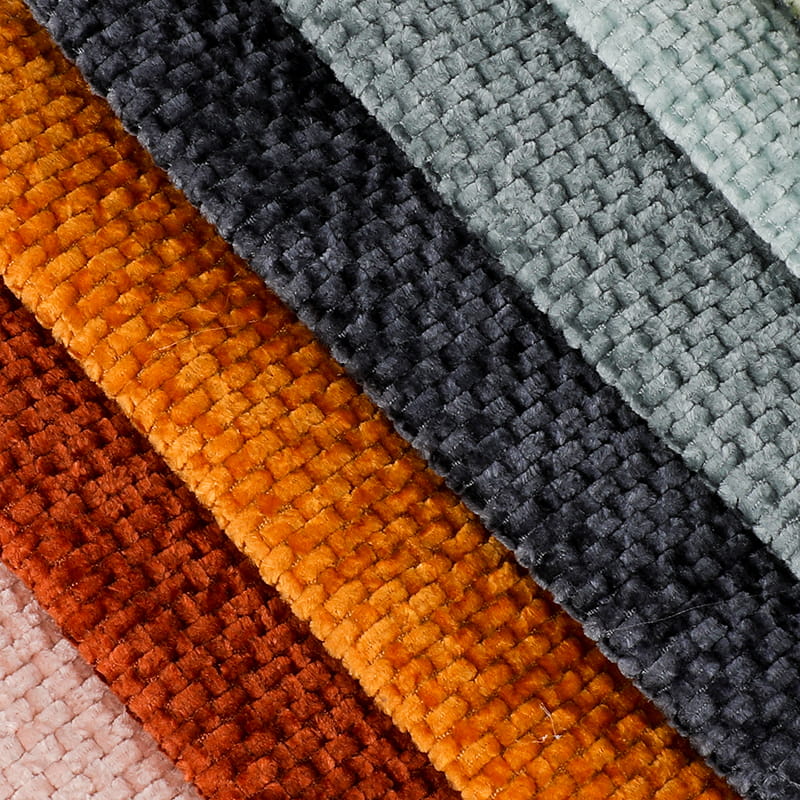
Holland Velvet Sofa Fabric with Fleece and Pongee BackingsThis Holland velvet for sofas is available with fleece or pongee backing. Fleece adds softness and cushions the pile against abrasion, while pongee improves dimensional stability for crisp tailored seams and better curtain drape.View Product →
Sofa and chair criteria
Specify fleece backing, a Martindale report above 25,000 rubs, and a colorfastness plan matched to the cleaning chemicals an end customer will actually use.
Curtain and drapery criteria
Specify a heavier construction for drape, avoid stiff backings, and confirm that printing or embossing does not reduce lightfastness below grade 4.
How Printing, Embossing, and Coating Change Performance
Finishing is where a commodity holland velvet becomes a differentiated product. Each process changes the pile structure or the surface chemistry, and each has a measurable effect on durability, so the finishing decision should happen at the sampling stage rather than after bulk fabric arrives.
Key finishing routes
- Pigment printing: enables custom patterns; requires curing and a soft-hand binder to avoid stiffening the pile.
- Embossing: heated rollers compress the pile into relief textures; adds visual depth and disguises wear in high-contact areas.
- Ultrasonic shaping: bonds fibers into grooved patterns without thread; works well on panel upholstery and bedding edges.
- Waterproof coating: a barrier layer blocks liquid stains on family sofas and office chairs while keeping breathability in the base knit.
- Bronzing and metallic film: small-batch accent lines; verify adhesion on the pile before scaling up.
Printing is the most order-sensitive route because pattern repeat and registration depend on width tolerance. Mills that finish printed holland velvet in-house control this better than brokers who ship greige goods to a third party, and they can test crocking fastness before the bulk batch is cut.
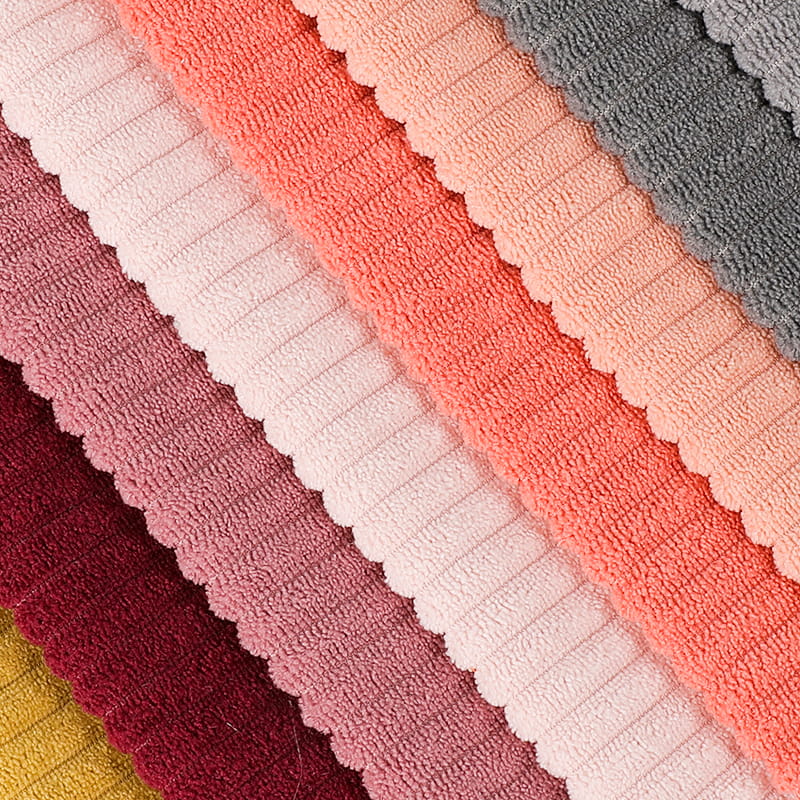
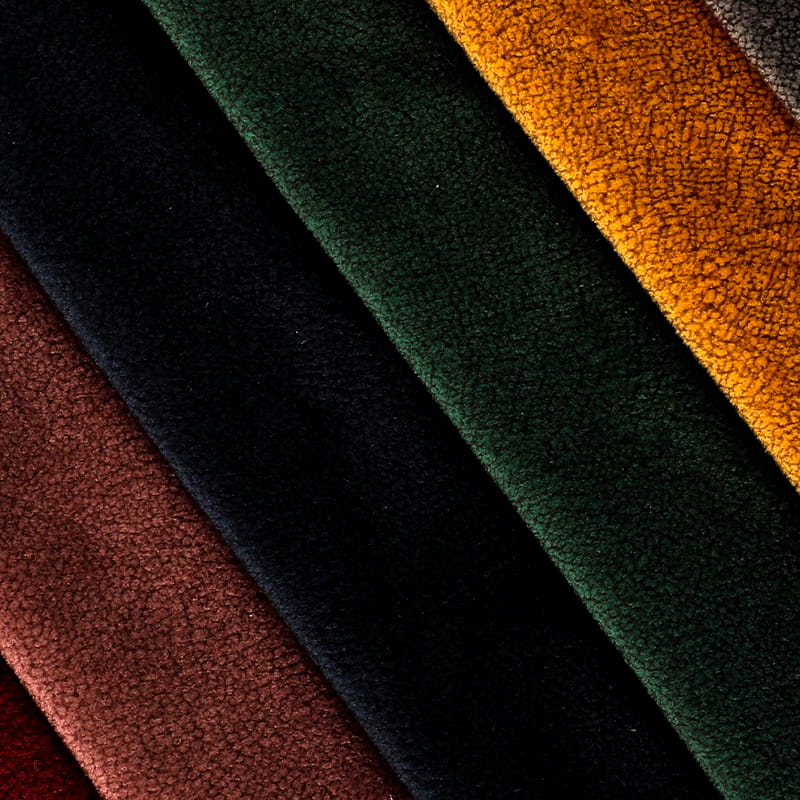
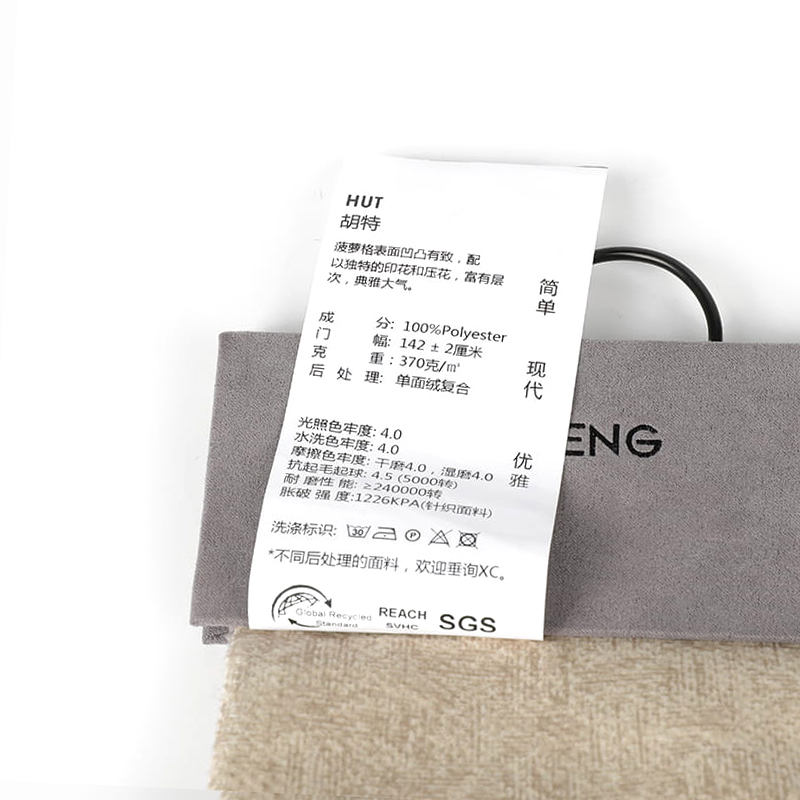 Printed Holland Velvet Upholstery Fabric with Abrasion RatingsThis sofa fabric features multiple printed patterns and is finished in-house to control registration and crocking fastness. With Martindale abrasion typically ranging from 25,000 to 40,000 rubs, it meets common residential upholstery thresholds.View Product →
Is Holland Velvet Fabric Durable Enough for Daily Upholstery Use?
Yes, when the construction and application are matched. The relevant number is Martindale abrasion: holland velvet typically ranges from about 25,000 to 40,000 rubs, which clears the 20,000-rub threshold most furniture brands set for residential sofas.
Value bands reflect typical upholstery-grade reports; always request the supplier test certificate for your batch.
Care and color stability matter equally for daily use. Polyester holland velvet dries fast, resists shrinking, and keeps its pile shape under vacuum cleaning or light brushing; hot washing, bleach, and aggressive stain solvents are the main causes of pile collapse.
- Vacuum weekly on a low-suction setting
- Blot spills immediately; never rub the pile
- Use professional low-moisture cleaning methods
- Keep printed styles away from direct afternoon sun
For a closer look at real-world performance, our durability report on holland velvet for daily upholstery covers pilling grades and cleaning tests in more detail.
What to Verify Before Bulk Ordering Holland Velvet
Bulk orders fail at the margins, not at the center of the fabric. Verify width tolerance, dye-lot consistency, backing adhesion, and finishing calibration before the container is loaded, because each of those factors generates costly rework when missed.
- Request a one-to-two meter strike-off from the production machine, not from the showroom archive.
- Ask for the Delta E value between the first production lot and the approved sample; a target below 0.8 suits most sofa lines.
- Confirm that the backing fully covers the reverse surface to prevent foam strike-through on the frame.
- Review the finishing temperature range for any printed or coated order before signing the production contract.
Zhejiang Xincheng New Materials operates from Zhejiang province, about 110 km from Shanghai and 130 km from Ningbo Port, with 30 dedicated quality-control staff on a 50,000-square-meter site, which shortens the inspection loop for overseas buyers who use third-party QC.
Discuss sampling, lead times, and production capacity with our sourcing team before the season rush to lock your slot. Contact the factory with your target gsm and finishing requirement.
Frequently Asked Questions About Holland Velvet Fabric
Is holland velvet fabric durable enough for a daily-use sofa?
Yes. Upholstery-grade holland velvet typically reaches 25,000-40,000 Martindale rubs, above the 20,000-rub threshold used by most residential furniture programs. Choose a 210-280 gsm construction with fleece backing for daily use and heavier weights for contract seating.
What is the difference between holland velvet and regular velvet?
Holland velvet is a warp-knitted polyester pile fabric, while regular velvet is traditionally woven from cotton, rayon, or silk. The knit construction makes holland velvet more stable in sewing, lower in cost, and easier to care for, at the expense of the formal drape that woven velvet delivers.
Can holland velvet furniture be washed?
Spot clean with mild detergent and water, or use professional low-moisture cleaning. Avoid machine washing, bleach, and solvent-based stain removers because they collapse the pile and dull the sheen. Polyester content makes the fabric fast-drying if it does get wet.
What is the best gsm for holland velvet sofa fabric?
240 gsm is a reliable starting point for residential sofas: heavy enough to hide foam lines and resist seat wear, light enough to keep the drape soft and the sewing stable. Use 280-350 gsm for deep-seat loungers and 160-210 gsm for decorative cushions and chairs.