English
 Español
Content
- What Counts as Printed Velvet Upholstery Fabric
- Five Specifications That Predict Printed Velvet Upholstery Fabric Performance
- Print Methods Change Durability and Hand Feel
- Match Printed Velvet Upholstery Fabric to the Application
- Backing Fabrics Are a Hidden Production Variable
- Ordering Printed Velvet Upholstery Fabric: Lock Down the Variables Before Production
- Care and Cleaning: Protect the Pile and the Print
- Frequently Asked Questions
The pattern on a printed velvet upholstery fabric is the first thing a buyer notices, but it is the last thing that decides whether the fabric survives a production run. Weight, base construction, backing, print method, and abrasion resistance determine how a material cuts, sews, drapes, and wears - and these values vary far more between suppliers than the artwork does.
A 325 gsm printed velvet with a pongee backing and a 220 gsm curtain-weight cloth can look identical in a photo library. On the cutting table they behave like different materials: the lighter cloth stretches under tension, produces misaligned seams, and will not hold a tight upholstery profile. For furniture brands buying in volume, the cost of that mistake is wasted yardage and reorders.
This guide covers the specifications that matter when you source printed velvet upholstery fabric for sofas, chairs, and curtains, and what you should put on your spec sheet before contacting a supplier.
What Counts as Printed Velvet Upholstery Fabric
Printed velvet upholstery fabric is a pile fabric in which the velvet base is constructed first and the pattern is applied afterward through a printing or finishing process. This is the key difference from a jacquard or woven velvet, where the pattern is built into the weave and cannot be changed without re-tooling the loom.
Because the design sits on the surface, a mill can switch patterns quickly, offer exclusive artwork to individual brands, and produce smaller batches economically. The trade-off is that the substrate carries nearly all of the performance responsibility.
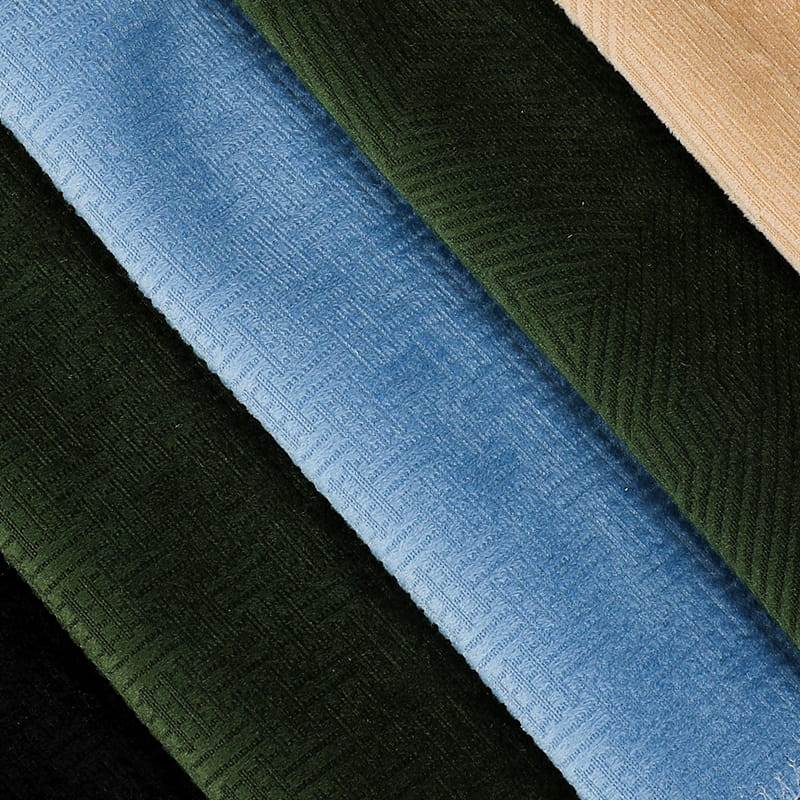
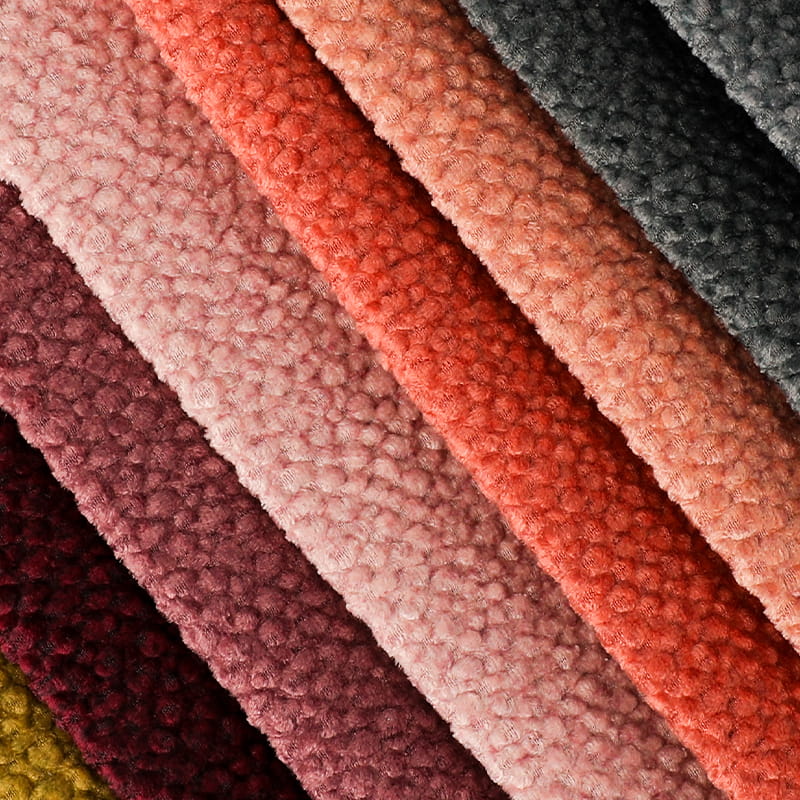
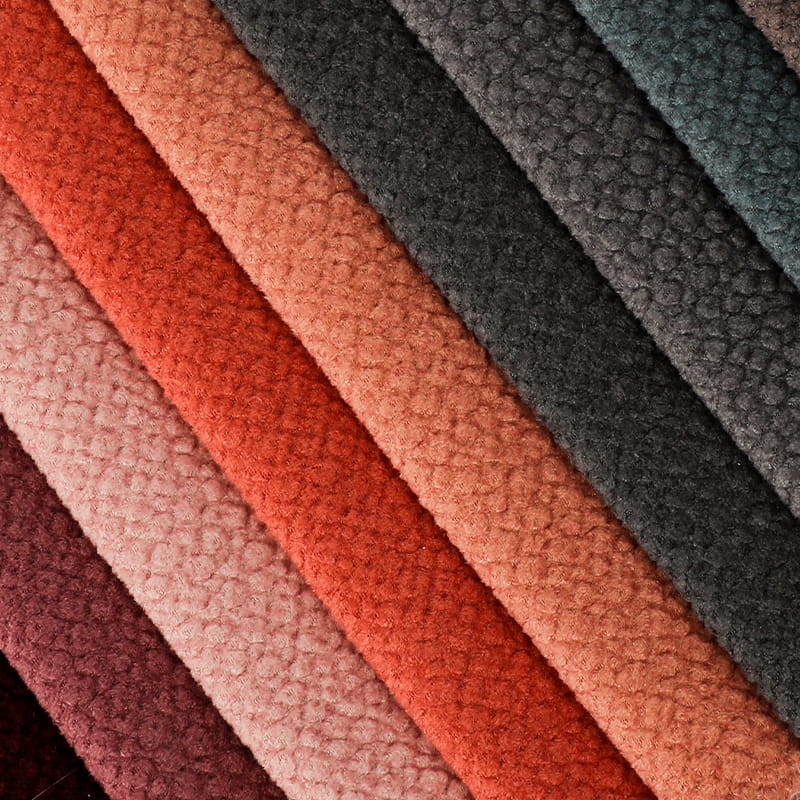
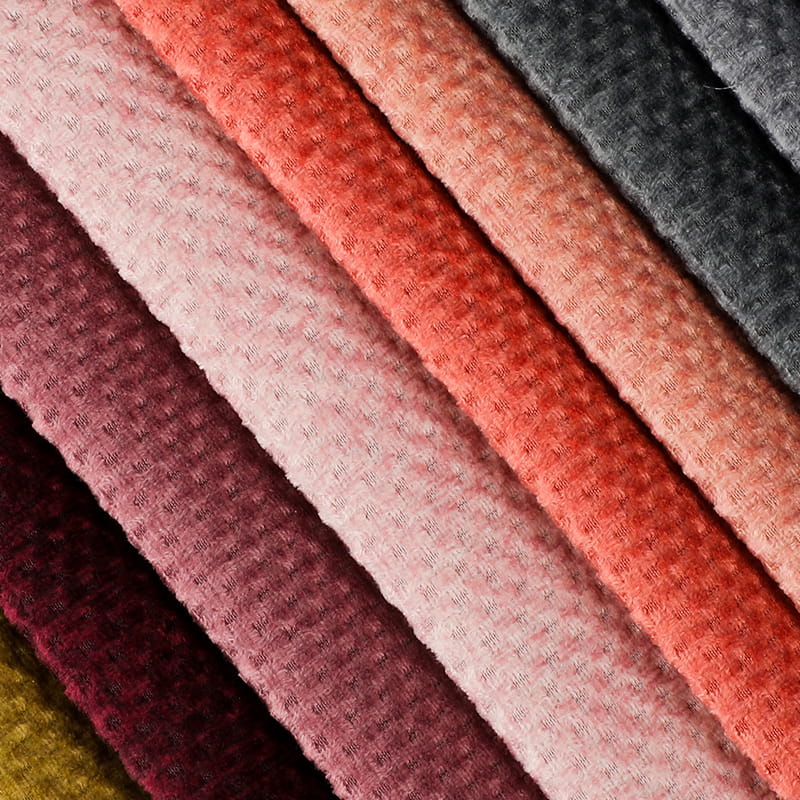
- Mosha velvet: a dense, short-pile base that takes fine detail well and is a common carrier for printed sofa fabrics.
- Pineapple velvet (also written as pienapple): a subtly textured surface that softens mid-tone prints.
- Snowflake velvet: a multi-tone, heathered pile that gives prints a muted, dimensional look.
- Super soft velvet: a high-touch pile that requires careful print selection to preserve its hand feel.
A printed velvet upholstery fabric combines a knitted or woven velvet substrate with a surface-applied pattern. Upholstery grade is defined by performance values such as weight, abrasion resistance, and colorfastness, not by appearance alone.
Five Specifications That Predict Printed Velvet Upholstery Fabric Performance
Five measurable values separate a printed velvet that wears well from one that looks good for a season: weight, finished width, backing type, print method, and abrasion performance. Ask the supplier to confirm each one in writing.
| Specification | Typical range | Why it matters |
| Fabric weight | 100-500 gsm; upholstery grades 300-450 | Controls drape, tear strength, and cost per meter |
| Finished width | 100-300 cm; 142 cm is a common single-roll width | Wider rolls produce more usable parts per cutting plan |
| Backing type | Fleece, pongee, or none | Determines stretch, seam slippage, and frame behavior |
| Print method | Rotary screen, transfer, digital | Affects color penetration, hand feel, and fade resistance |
| Abrasion resistance | 20,000-60,000 Martindale rubs | Predicts how long the pile survives daily friction |
Weight is the first filter. Below 300 gsm, a printed velvet behaves like a drapery cloth and often tears at the seam line of an upholstered armrest. Above 480 gsm, it becomes stiff, harder to tailor, and noticeably more expensive. The practical upholstery window is 300-450 gsm for most sofas and chairs.
Print Methods Change Durability and Hand Feel
The print method changes how deeply the color enters the pile and how much heat and chemistry alter the fabric's hand, which is why print selection is a durability decision, not just a design decision.
- Rotary screen printing is the workhorse for high-volume printed velvet. Color penetrates deeper, output is fast, and the hand stays close to the base cloth.
- Digital transfer printing delivers the highest detail and softest hand, but the ink sits closer to the surface, so abrasion and lightfastness must be validated for seating.
- Burnout printing dissolves part of the pile with an acid paste to create sheer or depressed areas. It adds visual depth but lowers abrasion in the treated zones.
- Embossed and ultrasonic printing flatten the pile with heat and pressure; the effect is durable when temperature and dwell time are controlled.
Large, solid areas of ink can stiffen the pile and show rub marks faster, while finely dispersed patterns hide wear. For a deeper look, read our analysis of how different printing patterns affect upholstery fabric durability.
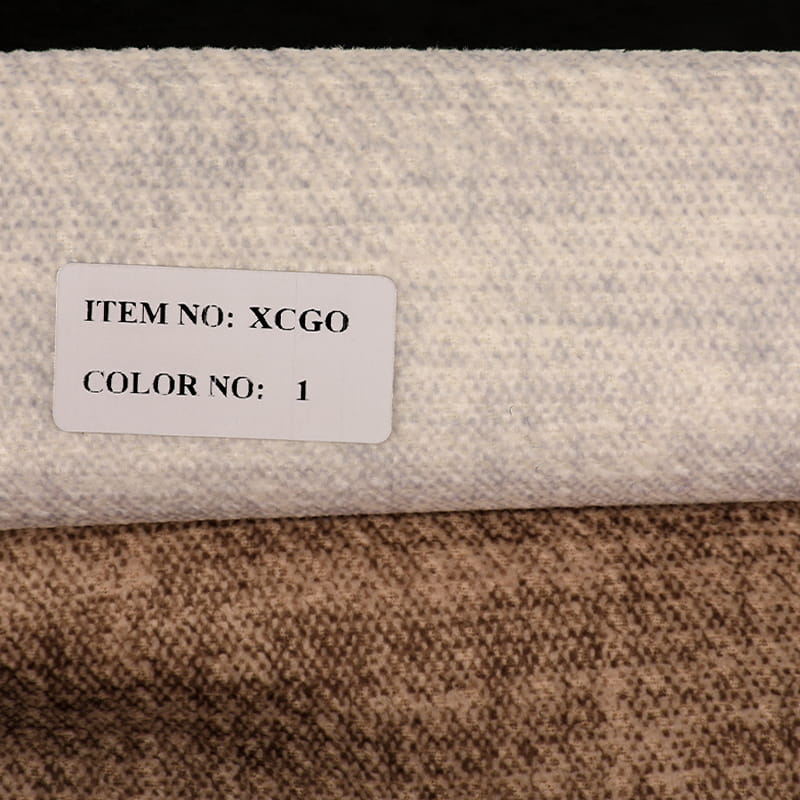 Soft Touch Printed Velvet for Sofa UpholsteryThis printed velvet is positioned for sofa use, where movement and pressure demand a fabric with enough body to resist abrasion while keeping a soft touch.View Product →
Match Printed Velvet Upholstery Fabric to the Application
Choose a printed velvet by the type of movement and pressure the piece must absorb: sofas demand the most from the fabric, chairs sit in the middle, and curtains need drape rather than abrasion. One material for all three uses usually ends in a compromise that is too heavy for the window and too light for the sofa.
The chart below shows the target weight ranges that furniture producers use as starting points for each application.
Target weights are starting points for material selection, not fixed production values.
| Application | Weight | Recommended backing | Minimum abrasion |
| Residential sofa | 370-450 gsm | Fleece | 30,000 rubs |
| Accent or dining chair | 300-360 gsm | Pongee or light fleece | 20,000 rubs |
| Curtain or drapery | 220-280 gsm | None | Not rated |
| Commercial seating | 420-500 gsm | Fleece or reinforced | 40,000+ rubs |
These values are starting points. Armrests, tufting, and piped seams add localized stress, so if your design includes heavy seam work, step up one weight class or request a stronger backing. Printed velvet fails at seams before it fails on flat surfaces.
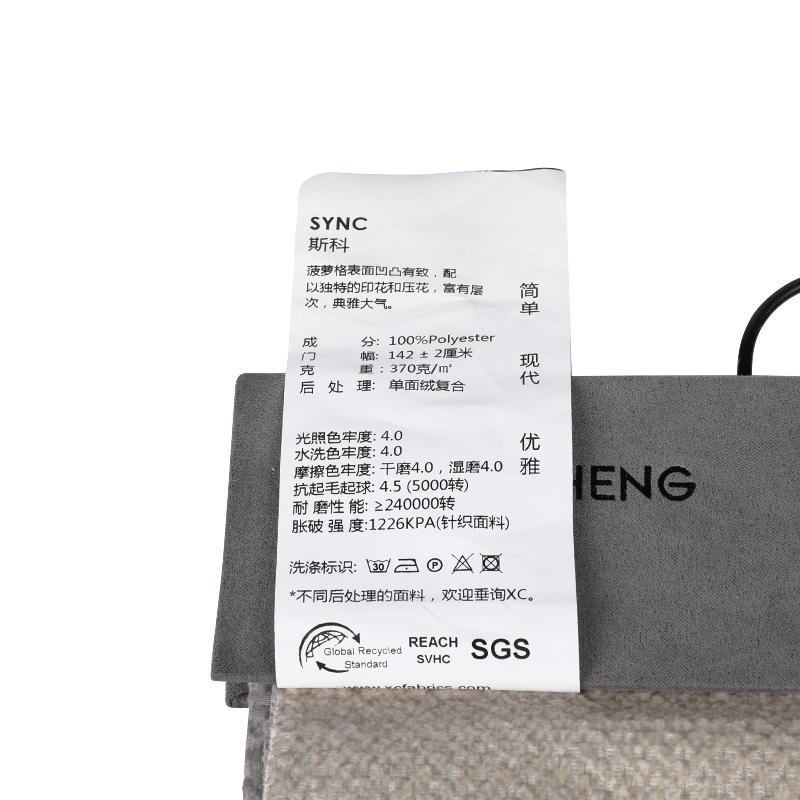 Decorative Printed Velvet with Durable BackingThe backing of this decorative printed velvet affects sewing behavior and frame performance, making it a practical choice when seam strength is a concern.View Product →
Backing Fabrics Are a Hidden Production Variable
The backing of a printed velvet upholstery fabric is often invisible in photography, yet it determines how the material behaves under a sewing machine and on a frame.
- Fleece backing adds body, tear strength, and stability, preventing stretch along the bias. Recommended for sofas and heavy-use pieces; adds roughly 50-80 gsm.
- Pongee backing is smooth, lightweight, and dimensionally stable. It suits accent chairs, decorative panels, and lighter daily loading.
- No backing gives the best drape for curtains but makes the fabric harder to control during upholstery, so it is not recommended for high-stress seams.
Ordering Printed Velvet Upholstery Fabric: Lock Down the Variables Before Production
A sample approval is only the beginning. The variables that cause reorders and claim disputes are color tolerance, batch consistency, finished width, and finishing details, so fix them in writing before the print line starts.
- Request a strike-off and a production-length sample from the actual print line, not from a sample lab.
- Define color tolerance numerically in Delta E and agree on lighting conditions for approval.
- Confirm finished width and shrinkage after heat-setting, and agree on a written tolerance.
- Ask about batch-to-batch shade matching if you plan to reorder the same pattern.
- For custom artwork, clarify design ownership, development cost, and exclusivity.
Supplier infrastructure reduces these risks. Zhejiang Xincheng New Materials Co., Ltd. has produced finished sofa and upholstery fabrics since 2002, operates warp-knitting and finishing lines covering printing, bonding, bronzing, and embossing, and reports a monthly capacity of 1,500,000 meters with a 30-person quality control team.
Before you place an order, send your spec sheet to our team and ask the supplier to confirm each value in writing.
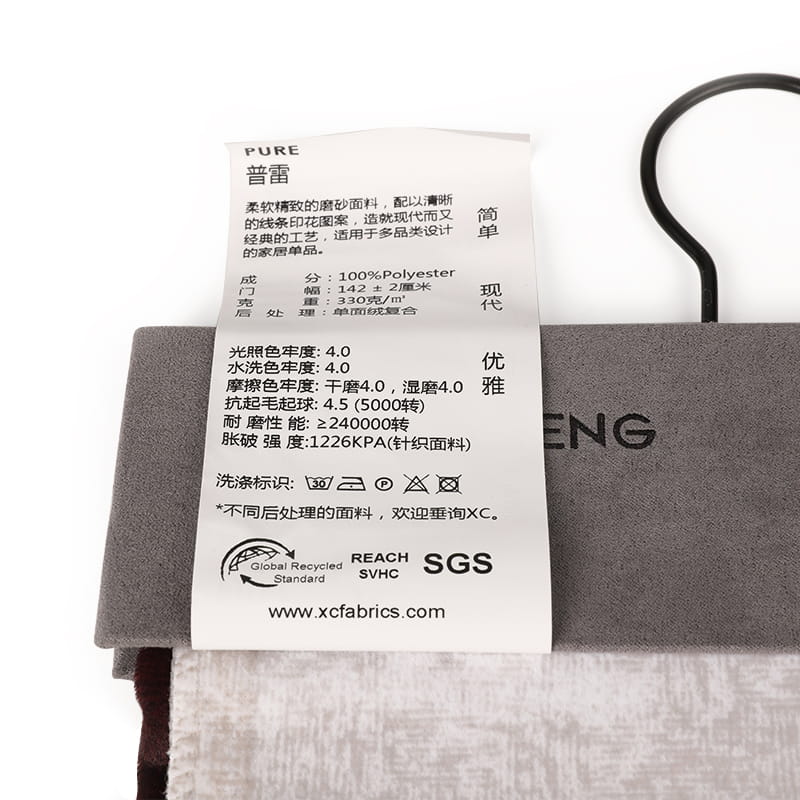 Pure Mosha Velvet Printed Fabric for SofasThis pure mosha velvet printed fabric suits sofa projects where confirming spec sheet values in writing before ordering helps ensure the intended pile and print quality.View Product →
Care and Cleaning: Protect the Pile and the Print
Cleaning guidance belongs on the spec sheet, because printed velvet needs low-moisture, low-heat care to protect both the pile and the printed surface.
- Vacuum regularly with a soft brush attachment to remove dust from the pile valleys.
- Blot spills immediately with a dry cloth; never rub, because rubbing flattens the printed pile.
- Spot-clean with a mild detergent solution and test an inconspicuous area first.
- Avoid steam cleaning and heat; use a professional low-moisture process for deep cleaning.
If the mill applies a stain-resistant or waterproof finish, cleaning intervals can be extended, but the finish degrades with each cleaning and may need reapplication.
Frequently Asked Questions
How durable is printed velvet upholstery fabric on a daily-use sofa?
Durable when specified correctly. Choose at least 370 gsm with a fleece or pongee backing and a Martindale result above 30,000 rubs. Surface-applied color can wear faster than the pile on high-contact areas.
What does gsm mean in a printed velvet specification?
GSM stands for grams per square meter. For upholstery-grade printed velvet, 300-450 gsm is the practical range; below 300 gsm the material behaves like drapery cloth, and above 480 gsm it becomes heavy and harder to tailor.
Can the same printed velvet pattern be used for sofas and curtains?
Yes, but on different specifications. Sofas need heavier weight, a stabilizing backing, and higher abrasion; curtains need lighter weight and no backing for drape. The two versions are not interchangeable.
How do I order a custom pattern on printed velvet upholstery fabric?
Send artwork to the mill, request a strike-off, then confirm color tolerance, finished width, and backing before bulk production. Clarify design ownership and development costs before approving the sample.