English
 Español
Content
Slide a length of stretch burnout velvet fabric off the roll and the difference is visible before you touch it: dense, plush shapes sit against a ground that is almost transparent. That contrast is the design, not a fault. Burnout velvet is a mixed-fiber velvet in which an acid paste dissolves the pile in printed pattern areas, and the stretch version builds the effect on a knit ground, usually with spandex, so the cloth moves with the body or over padded curves. If you are buying this fabric, three checks decide most of the outcome: the fiber blend, how much stretch and recovery the ground provides, and how sheer the burned-out areas really are. The rest of this guide walks through each check in practical terms.
What Stretch Burnout Velvet Fabric Is
Every velvet has two parts: a ground cloth and a layer of fibers standing above it as the pile. Burnout, also known as devore, works on exactly that structure. Mills spin the pile from fibers that dissolve under an acid paste, such as acetate, viscose or silk, and construct the ground from fibers that resist it, such as nylon, polyester or a stretch blend with spandex. The paste is printed onto the finished velvet following the design; wherever it touches, the pile dissolves and is washed away, leaving only the ground behind.
The result is a fabric with two personalities. Where the pile survives, the surface is soft, light-catching and opaque. Where it has been removed, the cloth turns sheer and slightly crisper, so the pattern reads as a two-tone effect that shifts under different lighting. In a stretch burnout, that ground is a fine knit with spandex, typically giving two-way stretch across the width, and four-way stretch on some constructions. That elasticity is why the fabric appears in fitted garments and curved applications where a rigid woven would pucker. The diagram below shows how the two zones coexist in one cloth.
Woven Burnout vs. Knit (Stretch) Burnout
Much of the confusion around this fabric comes from mixing up two constructions. A woven burnout feels stable and tailored; a knit burnout is what the market usually calls stretch burnout velvet fabric. Both carry the same dissolved-pile pattern, but they behave very differently once cut, sewn or upholstered.
| Property | Woven burnout velvet | Knit (stretch) burnout velvet |
|---|---|---|
| Ground cloth | Woven, stable, minimal give | Knit, usually blended with spandex |
| Stretch | Little to none unless elastic yarn is added | Two-way across the width, or four-way on some constructions |
| Drape | Structured, holds pleats and panels | Fluid, follows the body or padded curves |
| Typical weight | Mid to heavy | Lighter with a softer hand |
| Common uses | Curtain panels, overlays, stable upholstery designs | Fitted bodices, dancewear, leggings, soft accessories |
| Handling note | Cut edges fray; finish seams promptly | Edges may curl; use stretch needles and gentle tension |
A quick field test: stretch the fabric gently across the width. A knit burnout gives visibly and springs back; a woven barely moves. If you are still comparing velvet families in general, our guide to the main types of velvet fabrics explains how pile, ground and finishing differ across the whole category.
Burnout Velvet on Sofas and Furnishings
Stretch burnout velvet earned its reputation in clothing, so buyers often ask whether it belongs on furniture. The honest answer is that highly elastic knit versions are garment fabrics first. Upholstery needs dimensional stability, abrasion resistance and taut seams, which a very stretchy ground does not naturally provide. What furniture makers use instead is the burnout effect engineered on heavier, more stable bases, where the two-tone pattern becomes a decorative surface on a fabric that still performs under daily use.
Typical furniture applications include accent chairs, headboards, decorative cushions and panels where the sheer pattern adds depth, as well as coordinated curtain programs. When such fabrics are developed for sofas, the priorities are pile density, pattern edge definition and cleaning performance rather than elasticity.
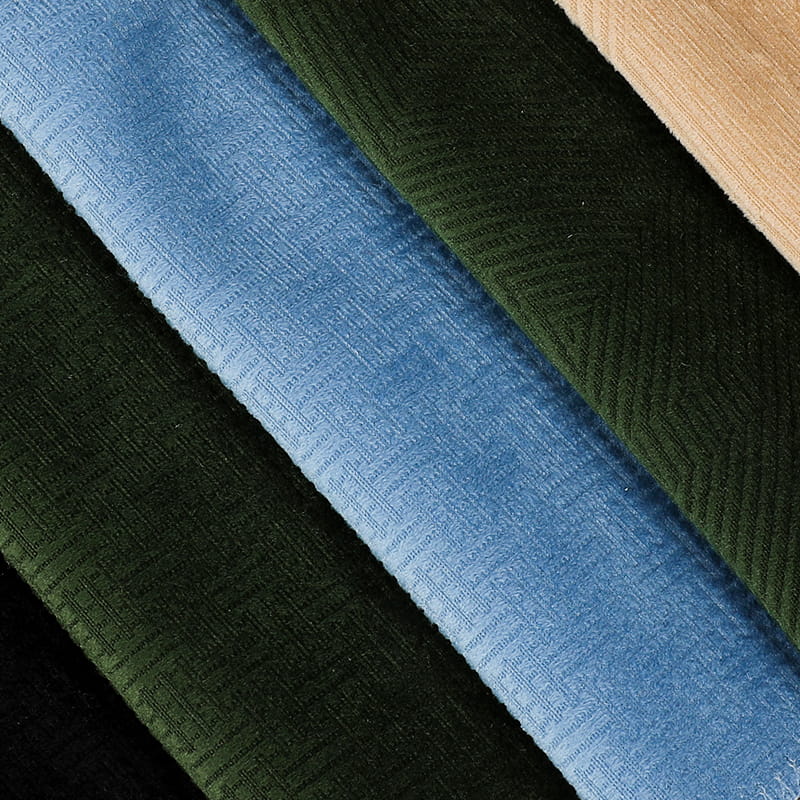 Burnout Super Soft Velvet Furniture Sofa FabricThis burnout velvet offers a sheer, dissolved-pile pattern suited to accent chairs, headboards and cushions where depth matters. For sofa programs, pile density, pattern edge definition and cleaning performance are the key priorities to review before ordering.View Product →
Printed Burnout and Custom Design Effects
Burnout rarely appears alone in modern collections. Mills combine the dissolved-pile pattern with direct printing so a motif gains a translucent halo, or pair it with embossing and foil finishes for layered texture. Because the burnout paste follows whatever artwork is engraved or screened, custom patterns are practical at production scale, and one design can run across a sofa-and-curtain program for a coordinated interior.
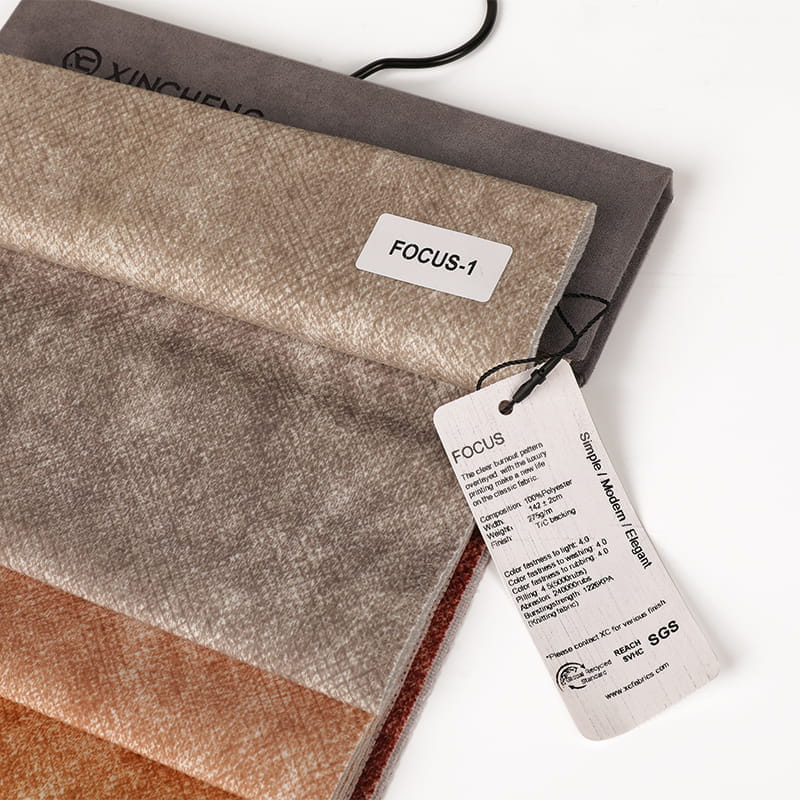 Burnout Printed Sofa Furniture FabricCombining burnout with direct printing gives motifs a translucent halo and layered texture. Since burnout paste follows engraved or screened artwork, custom patterns run practically at production scale across coordinated sofa and curtain programs.View Product →
How to Specify Stretch Burnout Velvet Fabric for Bulk Orders
Before a bulk order is confirmed, sample evaluation should be systematic. We recommend the following checks:
- Fiber content: confirm both pile and ground fibers on the spec sheet, since care instructions and burnout sharpness depend on them.
- Stretch and recovery: measure the extension, then check that the fabric returns to size without bagging after repeated pulling.
- GSM: garment knits and upholstery constructions differ widely; a supplier working across a 100 to 500 gsm range can match weight to end use instead of forcing one option.
- Opacity: lay the fabric over white and black cards and view the burned-out areas under both daylight and artificial light.
- Pattern edge definition: look for clean, sharp transitions between pile and sheer zones under magnification.
- Colorfastness and batch consistency: request lab dips and compare swatches from different production lots, especially for curtain use exposed to sunlight.
For furniture programs that genuinely need elasticity, dedicated categories such as 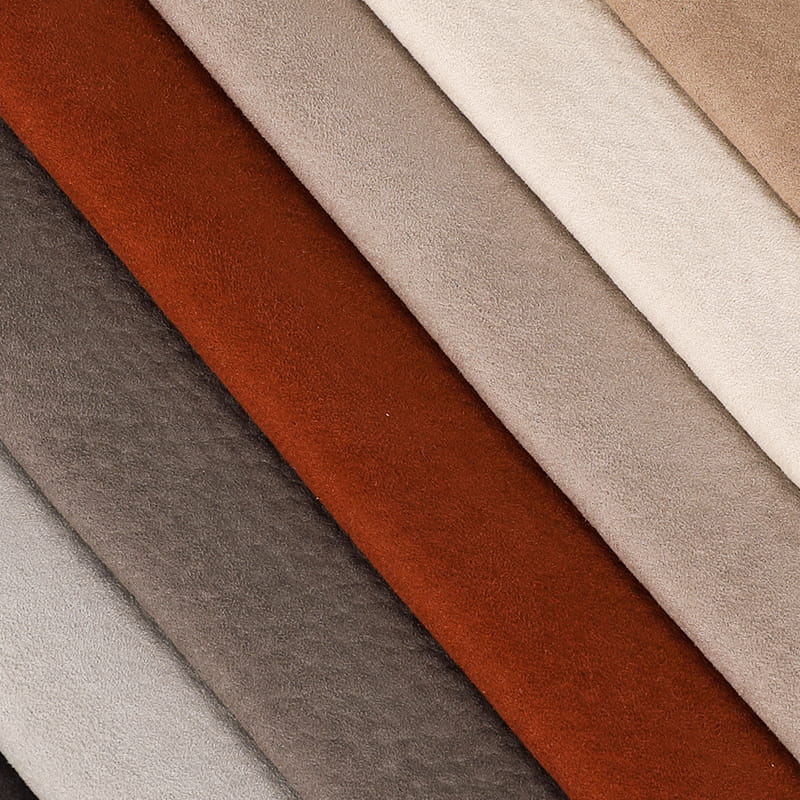 Waterproof Technology Velvet Fabric for SofasFor furniture programs that genuinely need elasticity, technology velvet is engineered for stretch performance in upholstery. Samples, lab dips and quotations can be requested directly, making it easy to evaluate fit before bulk orders.View Product → are engineered for stretch performance in upholstery. Swatches, lab dips and quotations can be requested directly through our contact page.
Care Basics That Protect Pile and Stretch
The sheer ground is delicate and spandex is heat sensitive, so aggressive laundering ruins both. Wash in cold water on a gentle cycle inside a mesh bag, or hand wash where the label allows it. Never wring or twist the fabric; press water out with a towel and dry it flat, away from direct sun.
For pressing, work from the reverse side with a pressing cloth and low heat, or hold a steamer slightly above the surface so the pile is not crushed. Store the fabric rolled rather than folded, because fold lines in the sheer areas tend to stay visible over time.
Frequently Asked Questions
Is stretch burnout velvet see-through?
Yes, in the burned-out areas. The dissolved zones leave only the sheer ground, so the fabric is translucent by design. Garments usually need a lining or considered layering, and in home decor the effect is planned around what sits behind the fabric.
Can burnout velvet be machine washed?
Often, but carefully: cold water, gentle cycle, mesh bag, mild detergent and no wringing. Hand washing is safer for dense pile or high spandex content, and dry cleaning remains the conservative choice for structured pieces.
How is burnout velvet different from ordinary velvet?
Ordinary velvet carries pile across its whole surface and is fully opaque. Burnout velvet removes the pile in pattern areas, producing a two-tone look and semi-sheer zones with a slightly lighter hand where the pile is gone.
Is it suitable for sofas?
High-stretch knit versions are best saved for garments. For sofas, choose burnout-effect fabrics built on stable, heavier upholstery bases, and verify abrasion resistance and seam stability before committing to production.
How much stretch should I expect?
Most stretch burnout velvets offer two-way stretch across the width; four-way versions exist and suit dancewear and fitted garments. Ask the supplier to state the stretch percentage and recovery on the spec sheet rather than relying on hand feel alone.